
Martindale-Hubbell: A History of Legal Directories
For over a century, the legal profession has relied on comprehensive directories to connect practitioners, businesses, and clients. The evolution of the Martindale-Hubbell directory reflects the broader transformation of legal information, moving from printed volumes of reliable contacts to a sophisticated digital ecosystem.
Key Facts
- Founded: Martindale's Directory first appeared in 1868.
- Merger: The combined Martindale-Hubbell Law Directory was first published in 1931.
- Scope: Includes law digests—summaries of legal principles—for various states, provinces, and countries.
- Digital Shift: Transitioned to online access in 2004 and integrated with Nolo and Lawyers.com by 2014.
The 19th Century Foundations
The origins of the directory date back to 1868, when James B. Martindale, a lawyer and businessman, published Martindale's Directory. His primary goal was to provide a reliable resource for lawyers, bankers, wholesale merchants, manufacturers, and real estate agents who needed trusted business correspondents in different cities and towns across the United States. Additionally, the directory provided state laws regarding commercial matters and debt collection.
Shortly after, in 1870, the first edition of Hubbell's Legal Directory was released. By 1896, Martindale's Directory had integrated the basic information structures still used today and introduced law digests (concise summaries of legal rules and precedents) for all provinces and states. That same year, Hubbell's Legal Directory reached its 26th edition.
20th Century Expansion and Consolidation
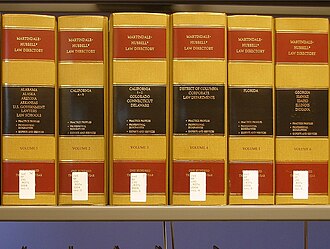
The two separate entities merged their efforts in 1931, resulting in the first edition of the Martindale-Hubbell Law Directory, which debuted as a two-volume set.
As the directory expanded globally, it added a digest for Israel in 1951. However, geopolitical tensions and communication barriers led to the temporary withdrawal of law digests for Bulgaria, Czechoslovakia, Hungary, Poland, and Romania. These were eventually revised and republished in the 1990s. Over time, the annually revised Martindale Hubbell Law Digest became recognized as an extensive, though incomplete, encyclopedia of comparative law (the study of differences and similarities between the laws of different countries) in English.
The corporate landscape shifted in 1990 when Martindale-Hubbell was acquired by Reed International P.L.C. In 1992, Reed International merged with the Netherlands-based scientific publisher Elsevier to form Reed Elsevier.
The 21st Century Digital Transformation
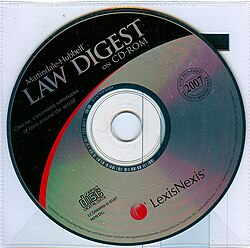
The arrival of the internet fundamentally changed how legal professionals accessed information. In 2004, the directory moved online, offering free access to legal professionals. By 2007, the LexisNexis Martindale-Hubbell Law Digest shifted its distribution model, becoming available exclusively via subscription online and CD-ROM.

Accessibility increased further in 2009, when all 150 Law Digests were made available free of charge on martindale.com. The modern era of the company was solidified in October 2013, when Reed Elsevier entered a joint venture with Internet Brands, LLC. This venture was completed in March 2014, combining Martindale-Hubbell with Lawyers.com and the Nolo legal division under the Martindale-Hubbell name.
Summary of Evolution
| Year/Period | Milestone | Format/Ownership |
|---|---|---|
| 1868 | Publication of Martindale's Directory | |
| 1870 | Publication of Hubbell's Legal Directory | |
| 1931 | First combined Martindale-Hubbell Law Directory | Two-volume set |
| 1990-1992 | Acquisition by Reed International / Reed Elsevier | Corporate Merger |
| 2004 | Directory goes online | Digital (Free for pros) |
| 2014 | Joint venture with Internet Brands, LLC | Integrated Digital Platform |
Frequently Asked Questions
What was the original purpose of Martindale's Directory?
It was created to provide lawyers, bankers, and merchants with the addresses of reliable law firms, banks, and real estate agents across the United States, as well as information on commercial laws.
When did the Martindale and Hubbell directories merge?
The first combined edition of the Martindale-Hubbell Law Directory was published in 1931 as a two-volume set.
What are law digests in the context of this directory?
Law digests are summaries of laws and legal principles for specific states, provinces, or countries, serving as a resource for comparative law.
How has the directory's availability changed in the 21st century?
The directory transitioned from print to online access in 2004. While some versions were subscription-based (such as the 2007 CD-ROM and online digest), all 150 Law Digests were made free on martindale.com by 2009.
Which companies are currently part of the Martindale-Hubbell joint venture?
Following a 2014 joint venture with Internet Brands, LLC, the entity combines Martindale-Hubbell, Lawyers.com, and the Nolo legal division.