
Melrose: A Journey Through Scotland's Border History
Nestled in the scenic Scottish Borders, Melrose is a town where ancient spirituality and royal legacy converge. From its origins as a remote monastic settlement to its growth around a grand Cistercian abbey, the area serves as a living museum of Scotland's complex past.
The Ancient Origins of Mailros
Long before the current town existed, the region was known as Mailros, a term in Old Welsh or Brythonic meaning "the bare peninsula." This original site was located several miles east of the modern town on a neck of land by the River Tweed. In the 6th century, a monastery associated with St Cuthbert was established here, a site recorded by the historian Bede and noted in the Anglo-Saxon Chronicle as Magilros.
Over time, this early settlement, now referred to as "Old Melrose," was abandoned by the 12th century, leaving the way open for a new era of development.
The Rise of Melrose Abbey
In 1124, King David I of Scotland ascended the throne with a vision to establish a new Cistercian monastery—an order of monks known for their austerity and devotion—on the site of the original Mailros. However, the monks preferred a location further west known as "Fordel." This led to the founding of Melrose Abbey in 1136, and the town of Melrose subsequently grew around this new religious center.
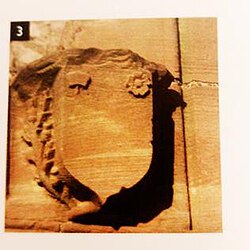
During the late Middle Ages, the town's identity was symbolized by two distinct icons: a mell (a mason's hammer) and a rose. The rose represented the Virgin Mary, to whom all Cistercian abbeys were dedicated.
Although the Abbey fell into ruin following the Reformation, it remains a striking architectural landmark. Today, the ruins are managed by Historic Scotland and are open to the public year-round. The site is also a place of royal significance; it serves as the burial place for several Scottish nobles and is the resting place of a casket believed to contain the heart of King Robert the Bruce.
Royal Visits and Local Landmarks
Melrose has long been a destination for Scottish royalty. In 1496, King James IV visited the town for Christmas, where he famously rewarded "gysaris" (guisers)—performers who entertained the court on December 27.
Beyond the Abbey, the surrounding landscape is rich with historical sites. Nearby visitors can explore Trimontium, an ancient Roman fort, and Dryburgh Abbey, the final resting place of the renowned author Sir Walter Scott, who was buried there in 1832.
The area also boasts Abbotsford House, the former home of Sir Walter Scott. In the town itself, the Corn Exchange stands as a testament to 19th-century architecture, completed in 1863 and designed by David Cousin. Additionally, the town honors its fallen with a war memorial designed by Sir Robert Lorimer and erected in 1920.
Key Facts
- Original Name: Mailros ("the bare peninsula" in Old Welsh/Brythonic).
- Founding: Melrose Abbey was established in 1136 by Cistercian monks.
- Royal Connection: The heart of King Robert the Bruce is believed to be buried in the Abbey.
- Symbols: The town is associated with the mell (mason's hammer) and the rose (Virgin Mary).
- Nearby Sites: Trimontium Roman fort and Abbotsford House.
Summary of Local Heritage Sites
| Site | Significance | Key Figure/Date |
|---|---|---|
| Melrose Abbey | Cistercian monastery ruins | Founded 1136 |
| Trimontium | Ancient Roman fort | Roman Era |
| Abbotsford House | Home of Sir Walter Scott | Sir Walter Scott |
| Dryburgh Abbey | Burial site of Sir Walter Scott | Buried 1832 |
| Corn Exchange | Architectural landmark | Completed 1863 |
Frequently Asked Questions
What does the name Melrose originally mean?
The original name was Mailros, which translates to "the bare peninsula" in Brythonic or Old Welsh, referring to a piece of land by the River Tweed.
Who is buried at Melrose Abbey?
Several Scottish nobles are buried there, and the Abbey also houses a casket believed to contain the heart of King Robert the Bruce.
What are the symbols of Melrose?
The town is represented by a mell, which is a mason's hammer, and a rose, symbolizing the Virgin Mary.
What is the significance of the "guisers" in Melrose history?
Guisers were performers who entertained King James IV during his Christmas visit to Melrose on December 27, 1496, for which they were rewarded by the King.
Which famous author is associated with the area?
Sir Walter Scott is closely linked to the region; he lived at Abbotsford House and was buried at nearby Dryburgh Abbey in 1832.