
Mesmerism and the Practice of P. P. Quimby
In the mid-19th century, the United States saw a surge of interest in mesmerism—a practice also widely known as hypnotism. This movement, rooted in the concept of animal magnetism, sought to influence the human body and mind through magnetic passes and psychological suggestion. Among the figures associated with this era was P. P. Quimby, whose evolution from a mesmerist to a practitioner of mental healing provides a fascinating glimpse into early psychological thought.
The Influence of Early Mesmerists
Around 1836, Charles Poyen, a French mesmerist following the tradition of the Marquis of Puységur, toured New England. While some historical accounts, such as the 1907 biographical serial of Mary Baker Eddy by Willa Cather and Georgine Milmine, suggested that Quimby was a devoted follower of Poyen, evidence from Quimby's own writings and family contradicts this. Quimby later described Poyen's public lectures as a "humbug," comparing the claims of mesmerism at that time to witchcraft and the marvelous.
Instead, Quimby's genuine interest in the field was sparked by Robert Hanham Collyer, another practitioner of animal magnetism. Collyer visited Belfast in 1841 and, according to Quimby, did more to excite a spirit of inquiry within the community than any other predecessor.
The Partnership with Lucius Burkmar
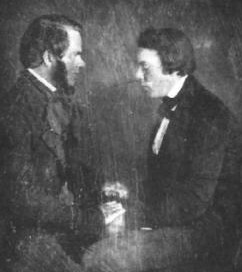
By approximately 1842, Quimby encountered Lucius Burkmar, a local youth who demonstrated a high susceptibility to hypnosis. Recognizing Burkmar's utility for demonstrations, Quimby partnered with him to launch a tour. Together, they performed mesmeric practices before large crowds, showcasing the effects of hypnosis in a public forum.
The Shift to Mental Healing
Eventually, Quimby and Burkmar ceased their touring activities. Quimby transitioned his focus toward healing ailments that traditional doctors of the time could not cure. He developed a philosophy asserting that disease was caused by false beliefs, and that the cure lay in the explanation of these errors to the patient.
In a flyer titled "TO THE SICK," published between the late 1850s and early 1860s, Quimby outlined his unique methodology. He explicitly stated that he provided no medicines and used no outward applications. Instead, he would sit with patients and describe their feelings and perceived diseases. If the patient agreed with his assessment, Quimby believed his explanation served as the cure by correcting the patient's error and "changing the fluids of the system."
Quimby was highly critical of "quackery," arguing that many physicians deceived patients by convincing them they were sick to sell medicines. He maintained that "The Truth is the Cure" and refused to charge patients if he could not provide an explanation that produced an effect.
Key Facts
- Charles Poyen introduced mesmerism to the U.S. around 1836, though Quimby viewed his lectures as fraudulent.
- Robert Hanham Collyer is credited by Quimby as the primary catalyst for his interest in animal magnetism.
- Lucius Burkmar served as Quimby's primary subject for public hypnosis demonstrations starting around 1842.
- Quimby's Philosophy: He believed disease originated from false beliefs and that correcting these beliefs was the only way to establish health.
- Medical Approach: Quimby eschewed all medicines and physical applications, relying solely on psychological explanation.
| Figure/Concept | Role/Definition | Impact on Quimby |
|---|---|---|
| Charles Poyen | French Mesmerist | Dismissed as a "humbug" |
| Robert Collyer | Animal Magnetism Practitioner | Excited his spirit of inquiry |
| Lucius Burkmar | Hypnosis Subject | Partner in public demonstrations |
| The Truth | Correcting false beliefs | The primary mechanism of cure |
Frequently Asked Questions
Did P. P. Quimby follow Charles Poyen?
No. Despite claims in a 1907 biographical serial, Quimby's own writings indicate he found Poyen's lectures to be delusive and compared them to witchcraft.
What was the role of Lucius Burkmar in Quimby's career?
Burkmar was a youth highly susceptible to hypnosis who worked with Quimby to perform mesmeric demonstrations for large crowds starting around 1842.
How did Quimby define the cause of disease?
Quimby believed that disease was caused by false beliefs and wrong impressions held by the patient.
What was Quimby's method of treatment?
He used no medicine or physical applications. Instead, he sat with patients, identified their feelings and errors in belief, and provided an explanation which he believed acted as the cure.
What was Quimby's view on traditional medicine and "quacks"?
He believed many practitioners were "robbers" who impressed patients with wrong ideas about their health specifically to sell them unnecessary medicines.