
Mexican Jurisdictions: Governance in the State of Mexico, Yucatán, and Mexico City
Mexico's administrative structure is characterized by a distribution of power across various jurisdictions, each operating under specific legal frameworks. While the nation follows a general federalist model, the governance of individual states and the unique status of the capital city reveal distinct organizational patterns in executive, legislative, and judicial authority.
The State of Mexico
The State of Mexico operates under the authority of the Constitution of the State of Mexico and its corresponding state laws. The current legal framework was established in 1917, replacing earlier constitutions from 1827, 1861, and 1870. The government is structured into three distinct branches to ensure a balance of power.
- Executive Branch: Comprised of the Governor, the Cabinet, and the Public Prosecutor.
- Legislative Branch: Vested in the Congress of the State of Mexico.
- Judicial Branch: Consists of the Judicial Council, the High Court of Justice, and various inferior courts.
Yucatán
Similar to other Mexican states, the government of Yucatán is divided into three powers: executive, legislative, and judicial. The executive power is held by the governor, who is elected by citizens via a secret ballot for a single six-year term, with no possibility of reelection.
Legislative authority is managed by the Congress of Yucatán, which is a unicameral legislature—meaning it consists of a single chamber—composed of 25 deputies. Judicial authority is centered in the Superior Court of Justice of Yucatán.
Mexico City
Mexico City holds a unique position as the capital of the country and the seat of the Powers of the Union. Unlike other jurisdictions, it does not belong to a specific state but belongs to the federation. While it is ultimately administered by the Powers of the Union, the city has been granted increasing autonomy and local jurisdictional power since the late 1990s.
The city's governance is split into three branches: the executive power is held by a head of government elected through a first-past-the-post plurality system; legislative power resides in a unicameral Congress; and judicial power is exercised by the Judiciary Council and the Supreme Tribunal of Justice.
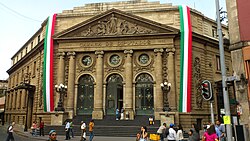
Administratively, Mexico City is divided into demarcaciones territoriales, or boroughs. While these boroughs are not fully equivalent to municipalities because they lack regulatory powers, they have acquired limited autonomy in recent years, and their representatives to the head of government are now elected by the citizens.
Key Facts
- The State of Mexico's current constitution dates back to 1917.
- The Governor of Yucatán serves a non-renewable six-year term.
- The Congress of Yucatán consists of 25 deputies in a unicameral system.
- Mexico City is the seat of the Powers of the Union and is not part of any state.
- Mexico City's boroughs (demarcaciones territoriales) have limited autonomy but no regulatory powers.
| Jurisdiction | Executive Head | Legislative Body | Primary Judicial Authority |
|---|---|---|---|
| State of Mexico | Governor | Congress of the State of Mexico | High Court of Justice |
| Yucatán | Governor | Congress of Yucatán (25 deputies) | Superior Court of Justice |
| Mexico City | Head of Government | Unicameral Congress | Supreme Tribunal of Justice |
Frequently Asked Questions
How is the Governor of Yucatán elected?
The Governor of Yucatán is directly elected by citizens using a secret ballot for a six-year term, and reelection is not permitted.
What is the status of Mexico City relative to the Mexican states?
Mexico City does not belong to any particular state; instead, it belongs to the federation as the national capital and the seat of the Powers of the Union.
What are demarcaciones territoriales?
Demarcaciones territoriales are the boroughs into which Mexico City is divided. They possess limited autonomy and elected representatives, though they lack the regulatory powers of a full municipality.
When was the current constitution of the State of Mexico adopted?
The current constitution was adopted in 1917, replacing previous versions from 1827, 1861, and 1870.
What is the structure of the legislative branch in Yucatán?
The legislative power in Yucatán is vested in a unicameral legislature known as the Congress of Yucatán, which is composed of 25 deputies.