
Michael Mosley: A Career in Science Communication and Medical Broadcasting
While he began his academic journey in medicine, Michael Mosley chose a path that diverged from clinical practice. Instead of becoming a doctor, he transitioned into the world of media, dedicating his career to making complex scientific and medical concepts accessible to the general public. Through his work with the BBC and other networks, he became one of the most influential science communicators of his era.
From Production to Presentation
Mosley entered the media industry in 1985 by joining a trainee assistant producer scheme at the BBC. For years, he worked behind the scenes as a joint executive producer for various science programs. His early portfolio included collaborations with Robert Winston, the John Cleese-presented series The Human Face, and the 2004 engineering series Inventions That Changed the World hosted by Jeremy Clarkson.
His transition to on-screen talent occurred in 2007. After pitching a series titled Medical Mavericks and finding no suitable host, Mosley stepped in to present the show himself. This marked the beginning of a prolific presenting career, leading to series such as Blood and Guts, The Story of Science, Make Me, and Trust Me, I'm a Doctor.
Exploring the Human Mind and Body
Mosley frequently used his platform to investigate the intersections of biology and behavior. In 2011, he presented The Brain: A Secret History, a series focusing on neuroscience and psychology. During the production, Mosley underwent testing to identify brain structure anomalies associated with psychopathy, discovering that his own results revealed these candidate characteristics.
He further explored human nature in 2013 with The Truth About Personality, where he examined the science of optimism and pessimism and whether an individual's outlook could be changed. He also presented The Genius of Invention in January 2013.
Medical Advancements and Public Health
Beyond psychology, Mosley focused on critical medical developments. In 2011, his two-part documentary Frontline Medicine (consisting of "Survival" and "Rebuilding Lives") detailed advancements in treating military personnel injured in Afghanistan and how those techniques were applied to civilian emergency medicine in Great Britain and the United States.
In 2012, he broadcast The Truth About Exercise, which analyzed how different exercise patterns impact health and the risks associated with prolonged sitting. The series highlighted that certain genotypes do not see significant improvements in VO2 max (the maximum rate of oxygen consumption during intense exercise) through endurance training. Mosley noted that his own genetic type benefited more from short, high-intensity sessions to improve insulin response, based on research by James Timmons.
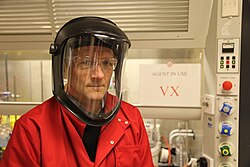
In 2016, he took viewers inside one of the UK's most secretive sites in the BBC Four documentary Inside Porton Down: Britain's Secret Weapons Research Facility.
Later Works and Controversies
In 2020, Mosley collaborated with medical specialists for the BBC Two series The Diagnostic Detectives, which followed doctors as they worked to solve complex patient problems. However, his later work drew significant scrutiny. In 2021, he presented Lose a Stone in 21 Days for Channel 4, suggesting that a calorie restriction of 800 calories per day could lead to a weight loss of 14 lb (6.4 kg) in three weeks.
This advice was criticized by medical experts and social media users. The charity Beat, which supports those with eating disorders, reported a 51% increase in contact to their helpline following the broadcast, stating the program caused significant stress and anxiety for their beneficiaries.
The Final Chapter: Just One Thing
One of Mosley's most enduring contributions was the BBC Radio 4 series Just One Thing, launched in March 2021. Each episode focused on a single, actionable health tip, such as Nordic walking, reading poetry aloud, taking evening hot baths, playing a musical instrument, or cooking tomatoes to enhance their health benefits.
By June 9, 2024, the series had broadcast 102 episodes. Following his death, a final tribute was aired featuring an interview from the Hay Festival. In this recording, Mosley admitted that he found it challenging to follow many of the health tips he advocated and found certain personality test results confronting.
Key Facts
- Career Shift: Graduated in medicine but chose a career in broadcasting via the BBC in 1985.
- Broadcasting Range: Presented diverse topics from neuroscience and military medicine to weight loss and general wellness.
- Genetic Insight: Discovered through his work that his genotype responds better to high-intensity training than endurance exercise for insulin response.
- Controversy: Faced criticism from medical experts and the charity Beat for promoting an 800-calorie-a-day diet.
- Legacy: Produced over 100 episodes of Just One Thing, focusing on small, accessible health improvements.
| Program Title | Year | Primary Focus |
|---|---|---|
| Medical Mavericks | 2007 | Medical innovation and unconventional approaches |
| The Brain: A Secret History | 2011 | Psychology and neuroscience |
| Frontline Medicine | 2011 | Military and emergency medical advancements |
| The Truth About Exercise | 2012 | Exercise patterns, VO2 max, and genetics |
| Inside Porton Down | 2016 | Secret weapons research facility |
| Lose a Stone in 21 Days | 2021 | Rapid weight loss via calorie restriction |
| Just One Thing | 2021-2024 | Single actionable health tips |
Frequently Asked Questions
Did Michael Mosley practice as a medical doctor?
No. Although he graduated in medicine, he elected not to pursue a career as a doctor and instead joined the BBC as a trainee assistant producer in 1985.
What was the controversy surrounding "Lose a Stone in 21 Days"?
The program suggested a restrictive diet of 800 calories a day to lose 14 lb in 21 days. This was deemed dangerous by some medical experts, and the charity Beat reported a 51% increase in helpline contacts due to the stress and anxiety caused by the program.
What did Mosley discover about his own genetics regarding exercise?
Through his research and the work of James Timmons, Mosley found that his genetic type does not gain significant aerobic fitness (VO2 max) from endurance programs but does see improvements in insulin response through short, high-intensity training.
What was the premise of the radio series "Just One Thing"?
The series explored a single, simple action a person could take to improve their health in each episode, ranging from cooking tomatoes to Nordic walking and reading poetry aloud.
Did Michael Mosley always follow the health advice he gave?
In a final interview recorded at the Hay Festival, Mosley confessed that he found it challenging to practice many of the health tips he had advocated on his various programs.