
Military Divisions and the 1964 Brazilian Coup: The Southern Front
The events of March and April 1964 marked a pivotal shift in Brazilian history. While the political turmoil centered in Rio de Janeiro and São Paulo, the loyalty and movement of the military divisions in the south were critical to the success of the coup d'état. The transition of power was not a uniform movement; it was a complex web of personal loyalties, internal pressures, and strategic calculations among generals and their subordinates.
Key Facts
- Strategic Shift: The 5th RM/DI broke with the 3rd Army to align with the 2nd Army in São Paulo.
- Critical Junctions: The 3rd Infantry Division's adhesion secured Santa Maria, a vital railroad nexus.
- Internal Friction: Many commanders joined the coup only after being pressured by their own subordinates.
- Goulart's Exit: President João Goulart refused to order bloodshed, leading to his exile in Uruguay on April 2.
- Command Transition: General Poppe de Figueiredo eventually assumed acting command of the 3rd Army.
The 5th Infantry Division and the Paraná Shift
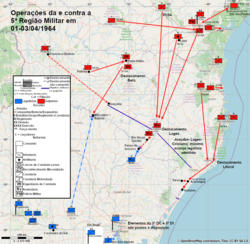
In Paraná, the situation was initially precarious for the government. With the primary commanders on vacation in Rio de Janeiro, interim command fell to General Dário Coelho of the Divisionary Artillery (AD/5). Dário's sympathies lay with the conspirators, a fact that provided significant optimism to key figures like General Carlos Luís Guedes and Governor Magalhães Pinto of Minas Gerais.
The regional governor, Ney Braga, initially showed indecision due to the presence of leftists in his government, but his eventual support for the coup proved decisive. By April 1, the regional command officially joined the rebellion of São Paulo and Minas Gerais, breaking ties with the 3rd Army.
The 3rd Infantry Division: The Battle for Santa Maria
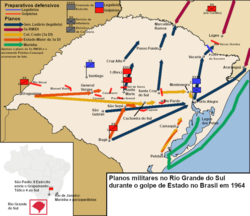
The 3rd Infantry Division (3rd DI) in Santa Maria joined the movement around 11:30 am on April 1. Commander Poppe de Figueiredo's decision was characterized by hesitation; he felt a sense of gratitude toward the Minister of War and only adhered to the coup under intense pressure from his colonels and peers.
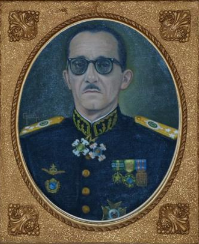
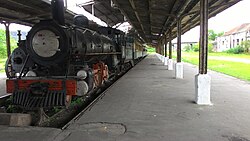
The adhesion of the 3rd DI was strategically devastating for the legalist forces. Santa Maria served as a critical railroad junction, and the loss of this hub—along with the arrest of strike leaders from the Gauchos Railroad Workers Union (UFG)—neutralized significant labor opposition in the region.
The 6th Infantry Division and Internal Conflict
The 6th Infantry Division experienced significant internal fragmentation. General Adalberto, refusing to hand over command, clandestinely took control of the garrison in Cruz Alta to support the coup. Meanwhile, in Porto Alegre, Colonel Jarbas Ferreira de Souza—a suspected Communist Party sympathizer—attempted to take command but faced stiff resistance from subordinates who remained loyal to Adalberto.
The division's regiments were split. While the Cruz Alta garrison supported Adalberto, the 18th and 19th Infantry Regiments were more divided, with some units remaining neutral or resisting the authority of the appointed commanders.
Cavalry Divisions: Loyalty and Pressure
The cavalry divisions presented a varied landscape of loyalty. The 1st Cavalry Division entered a state of lethargy after its commander, General Saraiva, traveled to Porto Alegre, allowing subordinates to align with the coup. The 2nd Cavalry Division in Uruguaiana, led by General Joaquim de Mello Camarinha, joined the movement after being told by subordinates that loyalty to Brazil outweighed loyalty to President Goulart.
In the 3rd Cavalry Division, the situation was more volatile. Sergeants in Bagé captured the headquarters and arrested officers, though they eventually surrendered. The division's alignment was achieved through a mix of explicit positioning by officers like Osmar Mendes Paixão Cortes and forced parlimentation in garrisons like Jaguarão and Dom Pedrito.
The Final Collapse and the 3rd Revolutionary Army
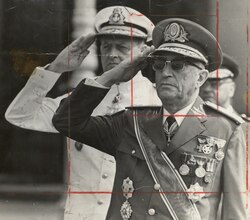
As the military apparatus crumbled, General Poppe de Figueiredo declared himself commander of the 3rd Army, a move supported by General Costa e Silva in Rio de Janeiro. This created a potential clash between Poppe's "3rd Revolutionary Army" and the official 3rd Army under General Ladário Teles.
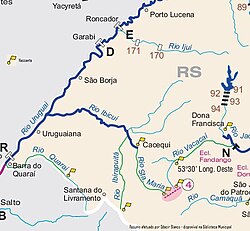
The conflict was avoided when President João Goulart, refusing to initiate a civil war, flew to São Borja and then into exile in Uruguay. With the president gone, General Ladário accepted the authority of Costa e Silva and departed for Rio de Janeiro on April 3, leaving General Poppe to assume acting command of the 3rd Army.
Summary of Division Alignments
| Division | Key Commander | Primary Outcome | Key Factor |
|---|---|---|---|
| 5th Infantry | Dário Coelho (Interim) | Joined Coup | Alignment with 2nd Army (São Paulo) |
| 3rd Infantry | Poppe de Figueiredo | Joined Coup | Pressure from subordinates; strategic rail control |
| 6th Infantry | General Adalberto | Joined Coup | Internal split between Cruz Alta and Porto Alegre |
| 1st Cavalry | General Saraiva | Joined Coup | Command lethargy and subordinate action |
| 2nd Cavalry | Joaquim de Mello Camarinha | Joined Coup | Pressure to avoid being on the "losing side" |
| 3rd Cavalry | Garrastazu | Joined Coup | Overcame sergeant-led uprisings via parlimentation |
Frequently Asked Questions
Why did General Poppe de Figueiredo hesitate to join the coup?
General Poppe felt a strong sense of gratitude toward the Minister of War and was initially undecided. He only joined the movement after significant pressure from his colonels and appeals from other generals.
What was the strategic importance of Santa Maria?
Santa Maria was a vital railroad nexus. By securing the 3rd Infantry Division there, the coup plotters gained control of essential transport infrastructure and were able to suppress the influential railroad workers' union.
How did the 5th Infantry Division break away from the 3rd Army?
Under the interim command of General Dário Coelho, who sympathized with the conspirators, the 5th RM/DI declared solidarity with the rebellion in São Paulo and Minas Gerais, eventually subordinating itself to the 2nd Army.
What role did the sergeants play in the 3rd Cavalry Division?
In Bagé, sergeants took control of the headquarters and arrested officers. While some remained legalists, they eventually surrendered after the coup plotters defeated civilian demonstrations and secured the region.
Why didn't General Ladário Teles fight to keep control of the 3rd Army?
President João Goulart refused to allow bloodshed to maintain power. Once Goulart went into exile, Ladário had no political mandate to continue fighting and accepted the authority of General Costa e Silva to avoid a violent clash.