
Military Provost Guard Service: History, Roles, and Requirements
The Military Provost Guard Service (MPGS) serves as a specialized security force within the British Army, providing essential protection for military installations. Established in 1997, the service was created in response to structural changes within the Armed Forces and a heightened threat of terrorism, ensuring that critical sites remain secure against evolving risks.
Unlike standard infantry units, the MPGS focuses on the specialized discipline of site security and access control, blending military discipline with police-style security protocols to maintain the integrity of Ministry of Defence assets.
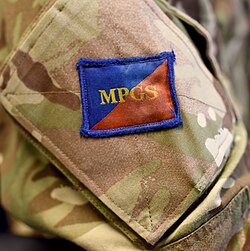
Key Facts
- Established: 1997.
- Primary Role: Site security and access control for military installations.
- Training Hub: Defence School of Police and Security (DSPS).
- Employment Terms: Military Local Service Engagement (MLSE).
- Legal Framework: MOUs with 26 police constabularies for firearm carriage on UK roads.
Operational Duties and Responsibilities
The MPGS is tasked with a wide array of security functions designed to prevent unauthorized access and respond to emergencies. Their primary objective is to ensure that military sites are defended and that daily operations proceed without disruption.
Site Access and Perimeter Control
A core component of their role is the management of entry and exit points. This includes controlling who enters a site and managing control room operations to ensure all visitors are processed efficiently. To maintain the outer shell of security, MPGS personnel regularly patrol site perimeters and take necessary actions to preserve the integrity of those boundaries.
Incident Management and Specialized Services
When security breaches or threats occur, the MPGS is the first line of defense. They are trained in security incident management, which includes handling suspicious packages, responding to bomb threats, and managing protests. Additionally, some sites utilize Military Working Dog services to enhance detection and deterrence capabilities.
Personnel and Recruitment Standards
Joining the MPGS requires a specific background of military or law enforcement experience. Applicants must have served at least three years in any arm or service, including the Army Reserve, Royal Naval Reserve, Royal Marines Reserve, or Royal Auxiliary Air Force.
To be eligible, this service must have been completed within six years of the application date. An exception is made for those who have served in the HM Prison Service or the Police since leaving the armed forces.
The Military Local Service Engagement (MLSE)
Successful applicants re-enlist into the Regular British Army under a Military Local Service Engagement (MLSE). This specific form of engagement is tailored for the MPGS and is renewable every three years, provided the soldier meets service standards and there is a continued operational need at their specific unit.
Training and Professional Development
All MPGS soldiers undergo rigorous training at the Defence School of Police and Security (DSPS), which is part of the Defence College of Logistics, Policing and Administration (DCLPA). This curriculum ensures that personnel can operate legally and effectively within the UK's complex security landscape.
The training program covers a comprehensive range of skills:
- Legal Authority: Instruction on powers of arrest and powers of search.
- Tactical Skills: Use of force, patrolling techniques, and incident handling.
- Administrative Rigor: Notebook instruction, maintenance of Security Registers, and the upkeep of Occurrence Books.
- Operational Logistics: Processing telephone calls and accounting for security equipment.
- Combat Proficiency: Weapons handling, marksmanship (including live firing), and judgmental assessment.
Inter-Agency Cooperation
Because the MPGS often operates in the public sphere, they maintain close ties with civilian law enforcement. Currently, there are 26 police constabularies that have a Memorandum of Understanding (MOU)—a formal agreement—with the MPGS. These agreements establish the legal authority for MPGS personnel to carry firearms on UK roads.
| Category | Details |
|---|---|
| Formation Year | 1997 |
| Training Institution | Defence School of Police and Security (DSPS) |
| Engagement Type | Military Local Service Engagement (MLSE) |
| Minimum Prior Service | 3 Years |
| Civilian Police MOUs | 26 Constabularies |
Frequently Asked Questions
When was the MPGS formed and why?
The MPGS was formed in 1997 following structural changes in the Armed Forces and an increase in the threat of terrorism.
What are the requirements to join the MPGS?
Applicants must have at least three years of service in any arm or service (including reserves) completed within the last six years, unless they have since worked in the Police or HM Prison Service.
What is a Military Local Service Engagement (MLSE)?
The MLSE is a specific type of enlistment into the Regular British Army designed for the MPGS. It is renewable every three years based on performance and unit requirements.
Where do MPGS soldiers receive their training?
Training is conducted at the Defence School of Police and Security (DSPS), which is part of the Defence College of Logistics, Policing and Administration (DCLPA).
How is the carriage of firearms on UK roads managed?
The MPGS operates under Memorandums of Understanding (MOUs) with 26 different police constabularies to provide the legal authority for carrying firearms on UK roads.