
MIM Museum: A Premier Private Mineralogy and Paleontology Collection in Beirut
Located in the heart of Beirut, Lebanon, the mim museum stands as a testament to the beauty of the natural world. This private institution is dedicated to the study and display of mineralogy—the scientific study of minerals—and paleontology. The museum's name, "mim," is derived from the 24th letter of the Arabic alphabet, which serves as the initial letter for the words "museum," "minerals," and "mines" in Arabic, mirroring the same linguistic coincidence found in English, French, and German.
Since its opening in 2013, the museum has grown into one of the most significant private mineral collections globally. It provides a curated window into the geological diversity of the Earth, housing thousands of specimens that span the globe.
Key Facts
- Established: 2013
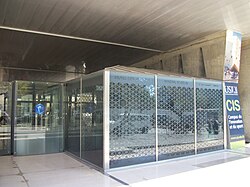
- Location: Saint Joseph University Campus, Beirut, Lebanon
- Mineral Collection: Over 2,300 samples representing 560 species from 80 countries (as of November 2025)
- Founder: Salim Eddé, a chemical engineer and co-founder of Murex
- Specializations: Mineralogy and Lebanese marine and flying fossils
History and Foundation
The origins of the mim museum date back to 1997, when Salim Eddé began assembling a personal collection of minerals. By 2004, Eddé sought to transition this private passion into a public resource, envisioning the first museum of its kind in Lebanon. To realize this vision, he collaborated with Father René Chamussy, the rector of the Saint Joseph University of Beirut.
The university provided 1,300 square meters of space in the basement of a new building on the campus, situated near the National Museum of Beirut. Funded entirely by Eddé's personal resources, the museum officially opened its doors to the public in October 2013.
Mineralogical Highlights
The mineralogy section is renowned for its breadth and quality. Among its most striking pieces is a massive, uncut di-hexagonal prismatic crystal weighing 1,390 carats. This deep green specimen is characterized by its transparency in the upper two-thirds and a translucent quality in its lower section.
Another standout exhibit is a Baryte specimen from Morocco, which the museum has affectionately nicknamed the "Blue Cedar" due to its distinct coloration and form.
Paleontological Collections
Beyond minerals, the mim museum is a critical site for the study of fossils—the preserved remains or impressions of prehistoric organisms. The museum specifically hosts an exhibition of marine and flying fossils native to Lebanon, primarily from the Cenomanian age of the Late Cretaceous period.
The collection includes several holotypes (the single physical example of an organism used to formally describe the species) and paratypes (additional specimens used to clarify the description). These fossils are largely sourced from the Sannine Formation, specifically from sites such as Hjoula, Nammoura, and Haqel.
| Catalogue Number | Taxon (Species) | Age | Unit/Location |
|---|---|---|---|
| MIM F1 | Mimodactylus libanensis | Cenomanian, Late Cretaceous | Hjoula, Sannine Formation |
| MIM F49 | Eupodophis descouensi | Cenomanian, Late Cretaceous | Nammoura, Sannine Formation |
| MIM F63 | Libanoliupanshania mimi | Cenomanian, Late Cretaceous | Hjoula, Sannine Formation |
| MIM F64 & F65 | Libanocordulia debiei | Cenomanian, Late Cretaceous | Hjoula, Sannine Formation |
| MIM F1001+ | Pinnichnus haqilensis | Cenomanian, Late Cretaceous | Haqel, Sannine Formation |
| MIM F1021 | Pinnichnus emmae | Cenomanian, Late Cretaceous | Nammoura, Sannine Formation |
Frequently Asked Questions
What does the name "mim" mean?
The name "mim" refers to the 24th letter of the Arabic alphabet. It was chosen because it is the first letter of the Arabic words for "museum," "minerals," and "mines."
Who founded the mim museum?
The museum was founded by Salim Eddé, a chemical engineer and co-founder of the computer company Murex, who funded the project personally.
Where is the museum located?
The museum is located in Beirut, Lebanon, specifically within the basement of a building on the Université Saint-Joseph Campus of the Innovation and Sport.
How large is the mineral collection?
As of November 2025, the collection features over 2,300 mineral samples representing 560 different species from 80 different countries.
What types of fossils are displayed at the museum?
The museum displays marine and flying fossils from Lebanon, specifically those from the Cenomanian stage of the Late Cretaceous period, including species like Mimodactylus libanensis and Eupodophis descouensi.