
Moncure Daniel Conway: A Life of Abolitionism, Freethought, and Internationalism
Moncure Daniel Conway was a man of profound intellectual and moral evolution. From his beginnings as a circuit-riding Methodist minister in Virginia to his later years as a champion of Freethought—a philosophical standpoint that holds that opinions should be formed on the basis of logic and reason rather than authority or tradition—Conway spent his life challenging the social and religious orthodoxies of the 19th century.
His journey was marked by a relentless pursuit of justice, specifically through his commitment to the abolition of slavery and the advancement of human rights across two continents.
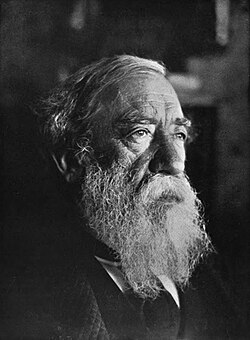
Key Facts
- Early Career: Transitioned from Methodist ministry to Harvard Divinity School, where he embraced Transcendentalism.
- Abolitionist Activism: Actively worked to end slavery, including escorting 31 escaped slaves to safety in Ohio.
- Religious Evolution: Moved from Methodism to Unitarianism, and eventually to non-theistic humanism.
- International Influence: Served as a minister at South Place Chapel in London and acted as a literary agent for figures like Mark Twain and Walt Whitman.
- Social Advocacy: A pioneer for women's suffrage in Great Britain and an advocate for religious tolerance.
Early Life and the Path to Abolitionism
Conway's moral awakening began in Warrenton, Virginia, where he studied law. The catalyst for his shift in direction was a moral crisis triggered by witnessing the lynching of a Black man. This experience led him to become a Methodist minister. In 1850, he published a pamphlet titled "Free Schools in Virginia," arguing for universal education as a means to combat poverty and vice. However, his efforts were blocked by pro-slavery politicians who feared that education influenced by Northern values would undermine the existing social order.
While serving the Rockville Circuit, Conway met Roger Brooke, a Quaker and avowed abolitionist. Following the deaths of his brother Peyton and his assistant Becky to typhoid fever in 1853, Conway left the Methodist church to attend Harvard University's school of divinity. At Harvard, he encountered Ralph Waldo Emerson and adopted Transcendentalism—a philosophical movement emphasizing the inherent goodness of people and nature. He also formed critical bonds with prominent abolitionists, including William Lloyd Garrison and Elizabeth Cady Stanton.
Conflict and Exile in America
Upon graduating in 1854, Conway's outspoken anti-slavery views made him a target. After accepting a position at the First Unitarian Church of Washington, D.C., he was asked to leave due to his abolitionist stances. His return to Virginia proved even more dangerous; rumors linked him to the rescue of fugitive slave Anthony Burns. Facing the threat of being tarred and feathered, Conway was forced to flee his home state.
He found refuge in Cincinnati, Ohio, where he served as a minister for an anti-slavery congregation from 1855 to 1861. During this time, Conway's theology continued to evolve. In 1859, he announced he no longer believed in miracles or the divinity of Christ. While this caused a third of his congregation to leave, the "Free Church" persisted. He also edited The Dial, a liberal periodical where he blended his spiritual views with his Transcendentalist roots and advocated for the acceptance of Jews and Catholics.
The Civil War and Humanitarian Efforts
As the American Civil War erupted, Conway became the editor of the anti-slavery weekly Commonwealth in Boston. He published The Rejected Stone; or Insurrection vs. Resurrection in America, a work distributed to Union soldiers. Conway's influence reached the highest levels of government; he and William Henry Channing met with President Abraham Lincoln to argue that a formal announcement of abolition would weaken the Confederacy.
Beyond political advocacy, Conway took direct action. He located 31 of his father's former slaves who had fled to Georgetown and personally escorted them through Maryland to the welcoming community of Yellow Springs, Ohio.
In 1862, Conway returned to Falmouth, Virginia, during the Union occupation. He discovered that his family home had been spared destruction because of his reputation, though it served as a hospital where Walt Whitman worked as a nurse. By 1863, Conway had grown dissatisfied with the conservatism of mainstream Unitarianism and left the denomination entirely.
Life in London and Global Influence
In 1863, Conway was sent to London to ensure the United Kingdom did not support the Confederacy. However, a diplomatic misstep occurred when he contacted James Murray Mason, the Confederate representative to Britain, offering a withdrawal of support for the war in exchange for emancipation. This private overture was rejected and caused a rift between Conway and his sponsors, as well as a conflict with US Secretary of State William H. Seward.
Choosing to remain in Europe, Conway eventually became the minister of the South Place Chapel in London. He transformed the institution into a hub for progressive thought, eventually leading the South Place Ethical Society. His home and social circle included some of the greatest minds of the era, including Charles Darwin, Charles Dickens, and Robert Browning.
Conway's contributions to society extended to gender equality. In 1868, he was one of four speakers at the first open public meeting for women's suffrage in Great Britain. He also attempted to endow a non-denominational women's college at the University of Oxford, an act that spurred the creation of Lady Margaret Hall, the university's first women's college.
Summary of Moncure Conway's Career Transitions
| Period | Primary Role | Key Affiliation/Location | Core Belief/Focus |
|---|---|---|---|
| Early 1850s | Methodist Minister | Virginia / Maryland | Universal Education |
| Mid 1850s | Unitarian Minister | Washington D.C. / Ohio | Abolitionism & Transcendentalism |
| 1861–1863 | Editor & Activist | Boston / Washington D.C. | Emancipation & Union Support |
| 1864–1897 | Minister / Ethical Leader | London (South Place) | Freethought & Humanism |
| Late Life | Writer / Pacifist | France / India | Peace Movement |
Later Years and Final Travels
In his later years, Conway's focus shifted toward pacifism, particularly as the Spanish-American War approached. He spent much of his remaining time in France, though he maintained a relationship with his hometown of Fredericksburg. He also traveled to India, documenting his journey in My Pilgrimage to the Wise Men of the East (1906). During his visit to India, he encountered Helena Blavatsky and publicly denounced the "Mahatma letters" as fraudulent, claiming the figure of Koot Hoomi was a fabrication.
Frequently Asked Questions
Why did Moncure Conway leave the Methodist church?
Conway left the Methodist church in 1853 following a period of personal loss—the deaths of his brother and assistant—and a desire to continue his spiritual journey, which led him to the Harvard University school of divinity.
How did Conway help escaped slaves during the Civil War?
Conway located 31 of his father's slaves who had fled to Georgetown. He provided them with train tickets and safe-conduct passes, personally escorting them through Maryland to safety in Yellow Springs, Ohio.
What was Conway's role in the women's suffrage movement?
Conway was a vocal supporter of women's rights; he was one of four speakers at the first open public meeting in support of women's suffrage in Great Britain in 1868 and attempted to establish a women's college at Oxford.
What was the South Place Ethical Society?
Originally the South Place Chapel and Religious Society, it was a progressive congregation in London led by Conway and later Stanton Coit. It became a center for Freethought and was notable for allowing women to preach.
Who were some of the famous literary figures Conway represented?
Conway served as a literary agent for several iconic writers, including Mark Twain, Walt Whitman, Louisa May Alcott, and Elizabeth Cady Stanton, and acted as the American agent for Robert Browning.