
Monheim: A Journey Through Centuries of Bavarian History
Nestled at the crossing of the Gailach river, Monheim is a town whose story is woven into the broader tapestry of German religious and political evolution. From its early days as a spiritual center to its role as a strategic trade hub, Monheim has weathered wars, religious upheavals, and political shifts to maintain its unique character in the heart of Bavaria.
Early Foundations and Religious Significance
The origins of Monheim date back to the 7th century. By 870, the town hosted a Benedictine convent (a community of monks or nuns living under the Rule of Saint Benedict). In 893, Mother Liubila, the abbess of the convent, transferred the institution to Erchanbald, the Bishop of Eichstätt, marking the first official documentary mention of Monheim.
The town grew into a prominent place of pilgrimage thanks to the relics of Saint Walpurga, a former abbess in Eichstätt. A notable ecclesiastical distinction remains to this day: while most of the Schwaben region belongs to the Diocese of Augsburg, Monheim remains part of the Diocese of Eichstätt.
The Rise of Town Rights and Trade
Around 1325, Monheim came under the ownership of the Graf von Oettingen, known today as the House of Oettingen-Wallerstein. Shortly thereafter, the settlement was granted town rights. The town's oldest seal, dating from 1340, features a moon—a symbol that persists in the town's crest today, although the name "Monheim" is not actually derived from the word for moon.
Strategically located at the intersection of the trade route from Augsburg to Nürnberg (the modern Bundesstraße 2) and the road from Nördlingen to Neuburg an der Donau, Monheim was fortified with walls and gates to protect its commerce. While the town's crest originally mirrored the red and silver colors of the House of Oettingen, it adopted its current blue and gold palette after 1821.
Religious Conflict and the Reformation
The political landscape shifted in 1505 following the Landshut war of succession, when Monheim was transferred to the duchy of Palatinate-Neuburg (Pfalz-Neuburg). In 1530, Duke Heinrich introduced the Reformation, leading to the dissolution of the local convent. This transition caused Monheim to lose its sacred relics and much of its regional religious influence.
Despite the dissolution, some architectural legacies survived. The Saint Walpurga church, dating from 1509, and a 12th-century Romanesque courtyard (a style of architecture characterized by semi-circular arches) remained. The courtyard was later fully restored in 1977.
Monheim also holds a place in Protestant history; Martin Luther spent a night in the town in 1518 while returning from an interrogation, an event commemorated by a large plaque at the site of his stay.
War, Recovery, and the Jewish Community
The 17th century brought both administrative growth and devastation. In 1614, Elector Wilhelm reintroduced Catholicism, though the convent was never restored. In 1632, during the Thirty Years' War, the town was ransacked by the Swedish army under King Gustav Adolf, leaving a scar that took decades to heal.
In 1650, a small palace (Schloß) was constructed for the duke's administrator, as Monheim had served as the seat of the regional county court (Landgerichtssitz) since 1523.
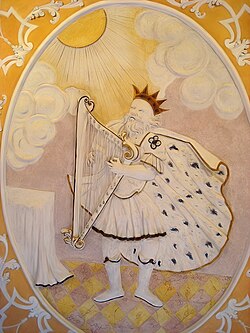
The town's social fabric was further enriched by the arrival of Jewish residents in 1697. Between 1714 and 1720, Abraham Elias Model, a wealthy "Court Jew" and chief creditor for the Graf von Wallerstein, built the current town hall. The building's upper floor features restored ceilings depicting motives from the Tanakh (the Hebrew Bible/Old Testament). These artworks survived the Nazi era because they had been covered with a layer of gypsum.
Modern Era and World Wars
By 1779, following the War of Bavarian Succession, Monheim returned to Bavarian control. While the Industrial Revolution largely bypassed the town, leaving it predominantly agricultural, the 20th century brought political turmoil. During the Nazi era, local leadership was forcibly changed, and resistance was largely passive, though Parish Priest Anton Geitner notably refused the Nazi salute in 1937.
Monheim was liberated on April 24, 1945. Due to the minimal damage sustained during the war, the town council established an annual church service on this date. Following a brief four-day US occupation, the town entered a period of growth in small industries. The county court was relocated in 1957, and between 1972 and 1978, Monheim expanded by incorporating several surrounding independent villages.
Key Facts
- First Mention: Officially documented in 893.
- Religious Tie: Remains part of the Diocese of Eichstätt, unlike most of Schwaben.
- Architectural Landmark: The town hall was built by Abraham Elias Model between 1714 and 1720.
- Historical Figure: Martin Luther stayed in the town in 1518.
- Heraldry: The town seal has featured a moon since 1340.
| Period/Year | Event | Significance |
|---|---|---|
| 7th Century | Village formation | Established at the Gailach river crossing. |
| 893 | Official mention | Convent transferred to the Bishop of Eichstätt. |
| 1340 | Oldest seal | Introduction of the moon symbol in the crest. |
| 1530 | Reformation | Convent dissolved; loss of Saint Walpurga relics. |
| 1632 | Thirty Years' War | Town ransacked by the Swedish army. |
| 1714-1720 | Town Hall construction | Built by Court Jew Abraham Elias Model. |
| April 24, 1945 | Liberation | End of WWII with limited fighting in town. |
Frequently Asked Questions
Does the name Monheim come from the word for moon?
No, although the town's seal has featured a moon since 1340 and it remains part of the crest today, the name Monheim is not derived from the moon.
Why is Monheim's diocesan affiliation unusual?
Most of the Schwaben region belongs to the Diocese of Augsburg, but Monheim remains part of the Diocese of Eichstätt.
What is the significance of the town hall's ceilings?
The ceilings contain restored motives from the Tanakh (Old Testament). They were preserved during the Nazi era because they had been covered by a layer of gypsum.
Who was Abraham Elias Model?
He was a wealthy Jewish merchant and "Court Jew" who served as the chief creditor for the Graf von Wallerstein and built the town's current town hall.
How did the Reformation affect Monheim?
Introduced by Duke Heinrich in 1530, the Reformation led to the dissolution of the Benedictine convent and the loss of the relics of Saint Walpurga, reducing the town's religious importance.