
Mount Athos Allied Postage Stamps of World War I
During the height of the First World War, the Allied forces planned a strategic occupation of the Holy Mountain, known as Mount Athos. To facilitate communication and administration for the Governing body of the Monastic Community, a specialized set of postage stamps was designed and produced. These artifacts provide a fascinating glimpse into the intersection of military planning and philately during a time of global conflict.
The Production of the Mount Athos Issues
In the winter of 1915–1916, preparations were made to issue these stamps on January 25, 1916. In a unique logistical arrangement, the stamps were printed on board the HMS Ark Royal, a seaplane carrier. The production process resulted in sheets of 12 stamps, organized in three rows of four.
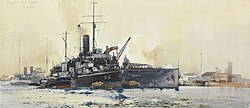
The set comprised six different denominations, with values reaching up to one shilling. While all the stamps were printed in black ink, the Allied forces utilized various types of paper to distinguish the different values.
Design and Symbolism
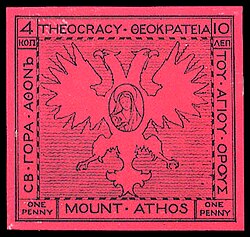
The visual composition of the stamps reflected the international nature of the Allied effort and the spiritual significance of the region. The design featured a square border with the words "MOUNT ATHOS" inscribed at the bottom in three languages: English, Russian (on the left), and Greek (on the right). The top of the border was inscribed with the word THEOCRACY, referring to a system of government in which priests rule in the name of God.
The central imagery was deeply symbolic, depicting a double-headed Byzantine eagle. On the eagle's breast sat an oval containing the effigy of the Madonna and Child. To ensure clarity across different nations, the denominations were placed in each corner: English in the lower corners, Greek in the top left, and Russian in the top right.
Philatelic Status
Despite the detailed preparation and production on the HMS Ark Royal, these stamps were never officially released for public or administrative use. In the world of stamp collecting, they are classified as "prepared for use but not issued." Consequently, they hold no official postal status but remain highly significant for historians and collectors of military postal history.
Key Facts
- Planned Issue Date: January 25, 1916.
- Production Site: HMS Ark Royal (seaplane carrier).
- Sheet Layout: 12 stamps per sheet (3 rows of 4).
- Denominations: Six values, up to one shilling.
- Visuals: Black ink on various paper types featuring a Byzantine eagle and the Madonna and Child.
- Languages Used: English, Greek, and Russian.
| Feature | Detail |
|---|---|
| Printing Location | HMS Ark Royal |
| Total Values | 6 |
| Ink Color | Black |
| Languages | English, Russian, Greek |
| Official Status | Unissued |
Frequently Asked Questions
Where were the Mount Athos stamps printed?
The stamps were produced on board the HMS Ark Royal, which served as a seaplane carrier for the Allied forces.
What was the intended purpose of these stamps?
They were intended for use by the Governing body of the Monastic Community in anticipation of the Allied occupation of the Holy Mountain.
What imagery was used in the stamp design?
The design featured a double-headed Byzantine eagle with an oval effigy of the Madonna and Child on its breast, surrounded by a border containing the word "THEOCRACY" and the name "MOUNT ATHOS" in three languages.
Are these stamps considered official postage?
No, they have no official status because they fall into the category of stamps that were prepared for use but never actually issued.
How many different values were created?
Six different values were produced, with the highest denomination being one shilling.