
Mount Desert Island History: From Indigenous Roots to Colonial Settlement
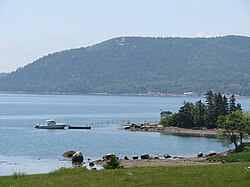
Mount Desert Island is a land of rugged beauty and deep historical layers. Long before it became a renowned destination, the island served as a vital resource for Indigenous peoples and a strategic point of contention between European empires. From the early voyages of French explorers to the establishment of permanent British settlements, the island's past is a story of adaptation, conflict, and industry.
Indigenous Peoples and Early Habitation
Archaeological evidence, specifically extensive shell middens (ancient mounds of shells and organic waste), proves that Indigenous peoples have inhabited Mount Desert Island for at least 6,000 years. The Wabanaki peoples, including the Penobscot and Passamaquoddy nations of the Abenaki linguistic group, referred to the island as Pemetic, which translates to "the sloping land."
The Wabanaki practiced a seasonal migration pattern to survive the region's volatile climate. During the winter, they stayed along the coast to utilize marine resources and avoid harsh inland conditions. In the summer, they moved inland to gather forest resources and participate in salmon runs. They utilized birchbark canoes—celebrated by later European observers for their speed and design—and lived in conical dwellings covered in bark.
The French Colonial Period (1604–1759)
Early Exploration and Naming
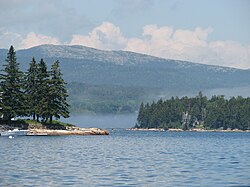
The first documented European encounter took place on September 6, 1604. Pierre Dugua, Sieur de Mons, led an expedition from the St. Croix Settlement in search of the legendary city of Norumbega. Samuel de Champlain, sailing in a patache (a small, light vessel), crossed Frenchman Bay toward Otter Creek. After striking a ledge near what is now Otter Cliff during high tide, Champlain observed the rocky, treeless summits of the island. He subsequently named it l'Isle des Monts-déserts, or the Island of the Desert Mountains.
The Saint-Sauveur Mission
In 1613, French Jesuit missionaries established the Saint-Sauveur Mission near Somes Sound at present-day Fernald Point. This site holds historical significance as the first French Catholic mission in North America. However, its existence was short-lived. On July 2, 1613, Captain Samuel Argall of the Virginia colony arrived aboard the Treasurer and destroyed the mission. The raid resulted in the deaths of three missionaries, the wounding of three others, and the capture of approximately twenty prisoners who were taken to Jamestown. Argall replaced the Catholic cross with a Protestant one before continuing his campaign to eliminate French settlements at Port-Royal and Saint Croix Island.
Cadillac's Ambitions and Queen Anne's War
In 1688, Antoine de la Mothe Cadillac was granted a royal land grant of 100,000 acres (400 km²) along the Maine coast, encompassing all of Mount Desert Island. While Cadillac envisioned a grand feudal estate, he and his wife abandoned the project after a short stay; Cadillac later went on to found Detroit. The island's highest peak, Cadillac Mountain (1,528 feet), is named in his honor and is one of the first places in the U.S. to see the morning sun during winter and fall.
Later, during Queen Anne's War, the island became a strategic staging ground. In 1704, Benjamin Church gathered forces on the island to launch raids against Acadian communities, including Castine, St. Stephen, and Grand-Pré.
British Colonialism and Early Statehood (1759–1850)
The British conquest of Acadia in 1759 shifted control of the Maine coast to the British. Sir Francis Bernard, the royal governor of Massachusetts, secured a grant for the island and attracted settlers by offering free land. The first permanent European settlers, Abraham Somes and James Richardson, established homesteads in 1760 at what is now Somesville.
The American Revolution disrupted these colonization efforts. Because Sir Francis Bernard was a Loyalist, his land claims were forfeited after independence. The western half of the island was granted to his son, John Bernard (a Patriot supporter), and the eastern half to Marie Thérèse de Grégoire, Cadillac's granddaughter. Both parties soon sold their holdings to absentee landlords.
By the time Maine achieved statehood in 1820, the island had developed a diverse economy based on farming, lumbering, fishing, and shipbuilding. Settlers produced everything from household goods to schooners, while agriculture focused on corn, potatoes, rye, and wheat. By 1850, the landscape was dominated by shipyards and fish-processing facilities. Additionally, the island's high-quality granite deposits became a major industry, with stone shipped from deep-water anchorages to major cities along the East Coast.
Key Facts
- Indigenous Presence: Habitation dates back at least 6,000 years by the Wabanaki peoples.
- First European Contact: Documented by Samuel de Champlain on September 6, 1604.
- Religious Milestone: Site of Saint-Sauveur, the first French Catholic mission in North America (1613).
- Highest Point: Cadillac Mountain reaches 1,528 feet (466 m).
- First Permanent Settlers: Abraham Somes and James Richardson arrived in 1760.
- Early Industries: Shipbuilding, granite quarrying, fishing, and agriculture.
| Period/Date | Key Event/Entity | Significance |
|---|---|---|
| Pre-1604 | Wabanaki Peoples | Continuous habitation for 6,000+ years; named the island Pemetic. |
| 1604 | Samuel de Champlain | First documented European encounter and naming of the island. |
| 1613 | Saint-Sauveur Mission | First French Catholic mission in North America; destroyed by Samuel Argall. |
| 1688 | Antoine de la Mothe Cadillac | Received royal grant for 100,000 acres. |
| 1760 | Somes and Richardson | First permanent European settlement at Somesville. |
| 1820-1850 | Early Statehood Era | Growth of shipbuilding, granite quarrying, and commercial fishing. |
Frequently Asked Questions
What did the Wabanaki call Mount Desert Island?
The Wabanaki peoples, specifically the Penobscot and Passamaquoddy nations, called the island Pemetic, which means "the sloping land."
Who gave the island its English name?
Samuel de Champlain named it l'Isle des Monts-déserts (Island of the Desert Mountains) in 1604 after observing the rocky, treeless summits.
What was the significance of the Saint-Sauveur Mission?
Established in 1613, it was the first French Catholic mission in North America before it was destroyed by English Captain Samuel Argall.
Why is Cadillac Mountain named after Antoine de la Mothe Cadillac?
It is named after Cadillac, who received a royal grant for 100,000 acres of the Maine coast, including the island, in 1688.
What were the primary industries on the island before 1850?
The economy was driven by shipbuilding, granite quarrying, commercial fishing, lumbering, and the farming of crops like wheat, rye, corn, and potatoes.