
Museum Wiesbaden Art Collection: A Journey Through Art History
The art collection of the Museum Wiesbaden is one of Germany's most prestigious repositories of creative expression, particularly renowned for its holdings from the 19th and 20th centuries. Originating from the private collection of Johann Isaak von Gerning of Frankfurt, the museum has expanded through strategic purchases, generous donations, and loans to become a cornerstone of European art history.
Beyond its curation, the museum is committed to ethical stewardship. It actively works to identify Nazi plunder—art stolen by the Nazi regime—and return these works to their legitimate heirs. A notable example of this commitment was the 2014 campaign "Wiesbaden schafft die Wende!" ("Wiesbaden is making the turn!"), which led to the legitimate purchase and subsequent return of Hans von Marées' painting Die Labung, which had been stolen in 1935.
Key Facts
- Jawlensky Hub: Holds one of the world's largest collections of Alexej von Jawlensky's work.
- Modernist Strength: Exceptional representation of Art Informel, Constructivism, and post-1945 art.
- Ethical Restitution: Active program for identifying and returning Nazi-looted art.
- Diverse Eras: Spans from 15th-century Old Masters to contemporary installation art.
- Prestigious Awards: Associated with the Alexej von Jawlensky Prize and the Otto Ritschl Prize.
The Old Masters and Early Works
While the museum's primary focus lies in later centuries, its Old Masters collection provides a refined look at Italian and Dutch art from the 15th century onward. Italian representation includes masters such as Prospero Fontana, Sebastiano del Piombo, and Luca Giordano. The Dutch section features artists like Joos van Cleve and Jan Lievens.
German heritage is preserved through Late Gothic and Renaissance works by Lucas Cranach the Elder and the Master of the Heisterbach Altar, while the Baroque and Classicism periods are highlighted by artists such as Angelika Kauffmann.
19th-Century Art and German Genre Painting
The 19th-century collection offers a comprehensive overview of the era. German genre painting—scenes of everyday life—is particularly strong, featuring Wilhelm von Kobell and Ludwig Knaus. Knaus is especially significant here, as the museum holds works like Spaziergang im Tuileriengarten (circa 1855), which shows an early transition toward Impressionism (a style characterized by small, thin, yet visible brush strokes).
The collection also bridges various schools of thought, from the Düsseldorf school (the Achenbach brothers) and the Munich School (Carl Spitzweg) to French Realism (Gustave Courbet) and Russian Realism (Ilya Repin). The century concludes with the influential German Impressionists Max Liebermann and Lovis Corinth.
![Friedrich Heyser's Ophelia, circa 1900, on exhibit at the Museum Wiesbaden[11][12]](/images/04/cc/04cc8a6b695b377c95f0d5a10056140c528dd8385517981f0e1605165a6d8158.jpg)
The Alexej von Jawlensky Collection
A crowning jewel of the museum is the work of Russian artist Alexej von Jawlensky, who lived in Wiesbaden for the final two decades of his life. With 57 paintings and 35 graphics, this is the largest collection of his work outside the Norton Simon Museum in Pasadena.
The collection tracks Jawlensky's evolution from early still lifes, like Stillleben mit Krug und Buch (circa 1902), to his expressive masterpieces and later meditative series, such as the Abstract Heads. The collection was further enriched in 1987 by the Hanna Bekker vom Rath Collection, adding key portraits and drawings.
Expressionism and the Hanna Bekker vom Rath Legacy
The museum's relationship with Expressionism—an art movement emphasizing emotional experience over physical reality—has been a turbulent but rewarding journey. After the Nazi regime purged the museum of "degenerate art" (Entartete Kunst), the museum rebuilt its collection after the war.
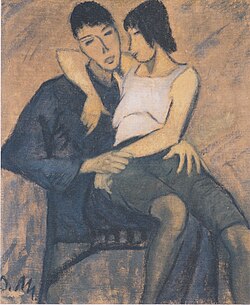
The acquisition of the Hanna Bekker vom Rath collection was a milestone, bringing in works by Wassily Kandinsky, August Macke, and Ernst Ludwig Kirchner. Other significant additions include Max Beckmann's Weiblicher Akt mit Hund (1927) and works by Otto Mueller.
Constructivism and Post-War Art
Constructivism, an art form focusing on geometric abstraction and industrial materials, is a focal point of the museum. Key works include László Moholy-Nagy's Architektur III (1920) and the archives of Friedrich Vordemberge-Gildewart.
The collection of art since 1945 is among the most important in Germany. It begins with Art Informel (a style of abstract painting that emphasizes spontaneous, intuitive creation), represented by Karl Otto Götz and Bernard Schultze. The museum also features the ZERO group, kinetic art, and five paintings by Gerhard Richter, including the famous Ein Wunder rettete (1964).
The museum's history is also tied to the 1962 Fluxus Festival, leading to the acquisition of works by Joseph Beuys and Nam June Paik. Additionally, it houses the largest collection of works by German-American artist Eva Hesse.
Summary of Collection Highlights
| Period/Movement | Key Artists | Notable Works/Focus |
|---|---|---|
| Old Masters | Prospero Fontana, Lucas Cranach the Elder | Italian, Dutch, and German Renaissance |
| 19th Century | Ludwig Knaus, Lovis Corinth | German Genre Painting & Impressionism |
| Expressionism | Alexej von Jawlensky, Max Beckmann | Largest Jawlensky collection in Germany |
| Constructivism | László Moholy-Nagy, Friedrich Vordemberge-Gildewart | Geometric abstraction and archives |
| Post-1945 Art | Gerhard Richter, Eva Hesse, Nam June Paik | Art Informel, ZERO, and Installation art |
Art Awards
The museum is closely linked to two prestigious awards that support contemporary art:
- Alexej von Jawlensky Prize: Established in 1991, this prize is awarded every five years. It includes a cash prize of 18,000 Euros, a special exhibition, and the purchase of a work for the museum. Past winners include Agnes Martin, Richard Serra, and Frank Stella.
- Otto Ritschl Prize: Established in 2001 by the Museumsverein Otto Ritschl e. V., this prize honors artists in the spirit of the post-war painter Otto Ritschl.
Frequently Asked Questions
What is the significance of the Alexej von Jawlensky collection?
The museum holds one of the world's most extensive collections of Jawlensky's work, featuring 57 paintings and 35 graphics. It is particularly significant because the artist spent the last twenty years of his life in Wiesbaden.
How does the museum handle Nazi-looted art?
The museum actively identifies works in its collection that were stolen by the Nazi regime and works to return them to the legitimate heirs, as seen in the 2014 "Wiesbaden schafft die Wende!" campaign.
Which post-war art movements are well-represented?
The museum is highly regarded for its collection of Art Informel, Constructivism, the ZERO group, and kinetic art, as well as a significant array of installation and object art from the last thirty years.
Who are some of the most famous modern artists in the collection?
The collection includes works by world-renowned artists such as Gerhard Richter, Pablo Picasso, Max Ernst, Joseph Beuys, and Eva Hesse.
What is the Alexej von Jawlensky Prize?
It is a prize awarded every five years to honor the legacy of the Russian artist. It includes an 18,000 Euro endowment, a solo exhibition at the museum, and the acquisition of a new work for the permanent collection.