
National Registration and Identity Cards of WWII Britain
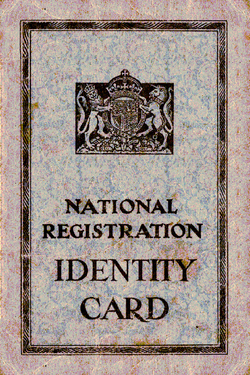
During the Second World War, the British government implemented a comprehensive system of population tracking known as the National Register. This initiative required every man, woman, and child to carry an identity (ID) card at all times, transforming the relationship between the citizen and the state to meet the urgent demands of total war.
The process began on Friday, 29 September 1939, when householders in England and Wales were required to record their details on registration forms. A massive operation involving 65,000 enumerators ensured the success of the rollout; these officials delivered the forms and subsequently visited every household on the following Sunday and Monday to verify the data and issue completed identity cards. In total, approximately 45 million cards were distributed to the population.
Key Facts
- Scale: Approximately 45 million identity cards were issued across the population.
- Purpose: Used for manpower planning, rationing administration, and population statistics.
- Enumeration: 65,000 enumerators were deployed to facilitate the 1939 registration.
- Living Document: Unlike a census, the register was updated over time, such as when maiden names changed to married surnames.
- Requirement: All residents, including children, were required to have a card, though parents held those for children under 16.
The Purpose of National Registration
The introduction of identity cards was driven by three primary strategic needs. First, the government faced a massive dislocation of the population due to military mobilisation and the mass evacuation of civilians. To maximise the efficiency of the war economy, the state required complete manpower control and planning.
Second, the cards were essential for the administration of rationing, which was introduced in January 1940 to ensure the fair distribution of scarce resources. Third, the government lacked current population statistics; the previous decennial census had occurred in 1931, leaving a significant data gap for vital planning decisions. Consequently, the National Register served as an "instant census," mirroring the Census Act 1920 in its execution.
Card Details and Evolution
Each identity card contained a comprehensive set of personal data, including the holder's name, sex, date of birth, address, and marital status. It also recorded their occupation or trade. For those in institutions, the register used specific initial letters to denote roles: Officer, Visitor, Servant, Patient, or Inmate. Additionally, the cards tracked membership in the Civil Defence Services, Auxiliary Forces, or the Naval, Military, and Air Force Reserves.
Color Coding and Variations
The appearance of the cards evolved over the course of the war. Initially, all cards were a brown or buff color. By 1943, a green version was introduced for adults, while children's cards remained manila (brown). Specific groups received distinct colors: government officials held green cards with photographs and endorsements, while members of the armed services or temporarily displaced persons were issued "Blue" versions.
These documents were critical for safety and administration. In the event of bombing or injury, ID cards helped identify casualties and reunite separated families. Because many citizens moved frequently during the conflict, the sections of the card dedicated to address changes were particularly vital.
Understanding Class Codes
For electoral and administrative purposes, the government utilized a system of Class Codes. These letters indicated the status and age of the cardholder:
- A: Individuals aged over 21.
- B: Individuals aged between 16 and 21. These cards included three digits: the first two indicated the birth year, and the third indicated the birth quarter. For example, "B. 252" signified a birth in the second quarter of 1925, alerting polling clerks that the person would reach adulthood (age 21) in the second quarter of 1946.
- C: Issued on yellow cards to workers from Eire (Ireland) who were conditionally admitted to Great Britain.
- N: Issued to those whose cards were re-issued under an altered name.
- V: Issued on yellow cards to people over 16 arriving in the UK who declared their usual residence was outside the country.
Children under 16 were issued temporary buff cards which did not carry a class code.
| Code | Target Group | Card Color/Detail |
|---|---|---|
| A | Adults (21+) | Standard |
| B | Youths (16-21) | Includes birth year and quarter |
| C | Workers from Eire | Yellow |
| N | Name Changes | Re-issued |
| V | Non-UK Residents (16+) | Yellow |
Frequently Asked Questions
Who was required to have an identity card?
Every man, woman, and child in the population was required to have an identity card and carry it at all times.
How did the National Register differ from a standard census?
Unlike a decennial census, the National Register did not record place of birth and was designed as a living document, meaning it was updated to reflect changes such as marriage and name changes.
Why were children's cards handled differently?
While children under 16 were issued identity cards, these documents were kept by their parents rather than carried by the children themselves.
What did the numbers on a Class B card represent?
The numbers indicated the holder's birth date; the first two digits represented the year of birth, and the third digit represented the quarter of the year they were born.
What was the purpose of the different card colors?
Colors helped distinguish between age groups and statuses. For example, green was used for adults (from 1943) and officials, blue for armed services or displaced persons, and yellow for specific non-resident or conditional entries.