
Nauru Railway: The History of Phosphate Transportation
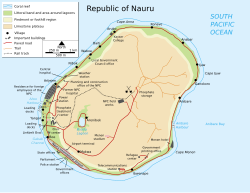
The island of Nauru possesses a unique industrial heritage centered around the extraction and transport of phosphate. Central to this operation was the Nauru railway, a system designed to move heavy mineral loads from the interior of the island to the coast for export.
The Evolution of the Railway System
The infrastructure at the Aiwo jetty—the primary loading point for phosphate—saw early technological shifts. In 1912, the railway at the jetty was electrified. However, this was eventually replaced by a conveyor belt system to streamline the movement of materials between the storage bins and the jetty head.
In 1920, the British Phosphate Commission implemented a significant technical upgrade, increasing the railway gauge (the distance between the two rails) to 914 mm (3 ft) to improve stability and capacity.
Motive Power and Operations
Over the decades, the method of hauling phosphate evolved. The system originally relied on steam engines to power the trains. As technology progressed, these were replaced by diesel engines, although tractors were occasionally utilized for transport tasks.
Current Status and Future Prospects
While the railway remained operational as of 2008, it is believed that operations ceased after 2011. Despite this hiatus, there is renewed interest in the system's utility. In March 2025, Nauru officials held meetings with Unirail, an Indian railway contractor, to explore cost-effective phosphate transportation methods, which included the potential restoration of the railway system.
Key Facts
- Gauge: Upgraded to 914 mm (3 ft) in 1920.
- Power Sources: Transitioned from steam to diesel, with occasional tractor use.
- Key Infrastructure: The Aiwo jetty featured an electrified rail system in 1912 before switching to conveyor belts.
- Recent Developments: Discussions with Unirail in 2025 regarding potential restoration.
| Feature/Event | Detail | Year/Period |
|---|---|---|
| Aiwo Jetty Electrification | Initial rail electrification | 1912 |
| Gauge Upgrade | Standardized to 914 mm (3 ft) | 1920 |
| Operational Status | Active until approximately 2011 | 2008–2011 |
| Restoration Talks | Meetings with Unirail | March 2025 |
Cultural Legacy
The importance of the phosphate trains to Nauru's identity is reflected in its philately. The trains were featured on several official Nauru stamps, most notably in a series released in 1980 (Yvert no. 211-213) and another in 1985 (Yvert no. 306, Scott no. 308).
Frequently Asked Questions
What was the purpose of the Nauru railway?
The railway was primarily used to transport phosphate from mining areas to the Aiwo jetty for export.
Who managed the gauge upgrade in 1920?
The British Phosphate Commission was responsible for upgrading the railway gauge to 914 mm (3 ft).
What types of engines powered the trains?
The trains were originally powered by steam engines, which were later replaced by diesel engines, though tractors were sometimes used.
Is the railway currently operational?
Operations are believed to have ceased after 2011, though officials discussed potential restoration with Unirail in March 2025.
How is the railway commemorated in Nauru's culture?
The phosphate trains have been featured on Nauru stamps issued in 1980 and 1985.