
Neponsit Beach Hospital: A History of Healing and Controversy
The story of Neponsit Beach Hospital is a reflection of New York City's evolving approach to public health, urban development, and social welfare. From its origins as a specialized facility for children battling tuberculosis to its later years as a municipal nursing home, the site has been a focal point of both medical progress and intense political conflict.
The Vision and Development
At the turn of the 20th century, social journalist Jacob Riis advocated for a children's hospital in the Rockaways to combat the city's rising tuberculosis cases. Supported by the Association for Improving the Condition of the Poor and Mayor George B. McClellan Jr., the effort gained momentum in 1906 when the New York State Legislature authorized the purchase of beach property for hospitals.
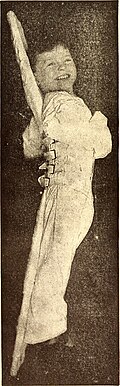
Funding was primarily private. The Association launched a nationwide campaign featuring "Smiling Joe," a boy with spinal tuberculosis whose image appeared in newspapers and magazines to raise money. The campaign attracted high-profile support, including a $125,000 pledge from John D. Rockefeller and visits from President Theodore Roosevelt.
Construction began on January 28, 1914, under the provisional name Seaside Hospital. The facility cost $250,000 to build and was officially relinquished to the city on March 2, 1915.
Early Years and WPA Expansion
The Neponsit Beach Hospital for Children opened on April 16, 1915, operated by the Bellevue and Allied Hospitals organization. It served as the successor to Sea Breeze Hospital in Coney Island. In its early days, the facility struggled with environmental challenges, specifically odors and fumes from waste disposal operations on the nearby Barren Island.
During the 1930s and early 1940s, the hospital underwent significant expansion as part of the Works Progress Administration (WPA), a New Deal agency designed to provide employment during the Great Depression. These improvements included:
- A new power plant completed in 1939.
- A nurses' residence completed in February 1941.
- The planting of 800 trees and the creation of gardens.
- A 1,000-foot sea wall standing 10 feet high.
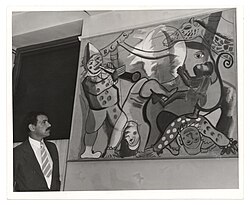
As part of the Federal Art Project, artist Louis Schanker created murals within the facility to enhance the environment for patients and staff.
World War II and Veteran Care
The hospital's operations were interrupted by World War II, closing temporarily on January 7, 1943, to conserve fuel. It reopened on March 1, 1945, after the United States Public Health Service leased the facility to treat servicemen and veterans suffering from tuberculosis. The site was eventually returned to city control in 1950.
Transition to a Nursing Home
By the mid-1950s, the need for specialized tuberculosis treatment declined. Consequently, the city closed the hospital on April 21, 1955. This closure sparked a fierce battle over the land, which was highly valued due to its location in the exclusive Neponsit neighborhood.
Conflict arose between Parks Commissioner Robert Moses, who wanted to expand Jacob Riis Park, and various local interests who desired residential development or a general hospital. After a series of legal battles and a ruling by Attorney General Jacob K. Javits stating the land was protected parkland, a compromise was reached.
In 1959, the city approved the conversion of the facility into the Neponsit Home for the Aged. Dedicated on August 31, 1961, it cost $2.4 million and became the first municipally-operated geriatric facility in New York City. As part of the deal, 10 acres of the property were ceded to expand Riis Park.
Final Years and Closure
The later history of the facility was marked by controversy. In 1985, Mayor Ed Koch's plan to transfer HIV/AIDS patients from Bellevue Hospital to a wing of the home was blocked by a judge following community opposition. The facility's end came abruptly between September 10 and 12, 1998, when a Labor Day storm caused bricks to fall from the roof, leading to an emergency evacuation of 300 residents.
The evacuation was later criticized by the federal government as unnecessary and deceptive, resulting in a $450,000 fine for the Health and Hospitals Corporation (HHC). A lawsuit by former residents and the Legal Aid Society eventually led to a $5 million out-of-court settlement in 2003.
While the HHC operated the Neponsit Adult Day Health Care on-site for a time, this service eventually moved to a permanent location in 2004.
Demolition and Legacy
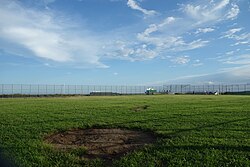
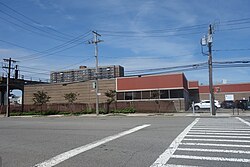
In its final years of abandonment, the buildings became a canvas for LGBTQ-affirming public art, including works by Hugo Gyrl. When the city announced demolition plans in April 2022, activists fought to protect the art and rescue a school of fish discovered in the flooded basement. The buildings were finally demolished in early 2023, with tentative plans to convert the site into a lifeguard station and parking lot.
Key Facts
- Founded: Opened April 16, 1915, as a children's tuberculosis hospital.
- Key Benefactor: John D. Rockefeller pledged $125,000 for construction.
- WPA Influence: Expanded in the 1930s with a power plant, nurses' residence, and sea wall.
- First of its Kind: The Neponsit Home for the Aged (1961) was NYC's first municipal geriatric facility.
- Final Closure: Evacuated in September 1998 following storm damage.
- Demolition: The structures were removed in early 2023.
| Period | Facility Name | Primary Purpose | Key Event |
|---|---|---|---|
| 1915–1955 | Neponsit Beach Hospital | Children's Tuberculosis Care | WPA expansion in 1930s |
| 1945–1950 | US Public Health Service Lease | Veteran Tuberculosis Care | Post-WWII recovery |
| 1961–1998 | Neponsit Home for the Aged | Geriatric Care | First municipal nursing home |
| 1998–2023 | Abandoned Site | None (Public Art Site) | Demolished in 2023 |
Frequently Asked Questions
Who was "Smiling Joe"?
"Smiling Joe" was a boy with spinal tuberculosis whose photographs were used in a nationwide fundraising campaign by the Association for Improving the Condition of the Poor to fund the construction of the hospital.
Why was the hospital converted into a nursing home?
The hospital was closed in 1955 due to a declining need for tuberculosis treatment. After a legal battle over whether the land should be used for a park or private housing, a compromise was reached to create a municipal nursing home for the elderly.
What caused the final closure of the nursing home in 1998?
The facility was evacuated after a Labor Day storm caused structural damage, specifically bricks falling from the roof, which city officials claimed made the building unsafe.
What happened to the residents after the 1998 evacuation?
Residents were transferred to Bellevue Hospital in Manhattan and the Coler and Goldwater Hospitals on Roosevelt Island. A later lawsuit resulted in a $5 million settlement for the patients and their estates.
What is the current status of the site?
The buildings were demolished in early 2023. The city has tentatively planned to use the land for a lifeguard station and a parking lot.