
Net Neutrality in India: The Battle for an Open Internet
The concept of net neutrality—the principle that Internet Service Providers (ISPs) should treat all data on the internet equally without discriminating or charging differentially by user, content, website, or application—has been a central point of contention in India's digital evolution. For over a decade, the struggle between telecom operators and digital rights advocates has shaped how millions of Indians access the web.
Key Facts
- TRAI's Final Stance: In February 2016, the Telecom Regulatory Authority of India (TRAI) barred discriminatory tariffs for data services.
- Major Controversies: Facebook's "Free Basics" and Airtel's "Airtel Zero" were key catalysts for the net neutrality movement.
- Public Engagement: TRAI received over one million emails from the public during its 2015 consultation process.
- Legal Outcome: The Department of Telecommunications officially approved TRAI's net neutrality recommendations on July 11, 2018.
The Early Years: 2006–2013
The conversation began as early as 2006, when TRAI invited opinions on whether regulatory intervention was needed to prevent ISPs from discriminating against competing applications, such as Internet telephony. While the internet had remained largely neutral since private ISPs began operations in 1998, regulators feared future shifts in market dynamics.
By 2012, tensions rose as telecom leaders argued that data-heavy platforms were profiting from infrastructure built by carriers. Sunil Bharti Mittal, CEO of Bharti Airtel, suggested that services like YouTube should pay an "interconnect charge," comparing data networks to highways that require a tax. Simultaneously, reports from M-Lab indicated that providers like BSNL, Airtel, and You Broadband were throttling BitTorrent traffic.
The conflict intensified in 2013 when government officials and BSNL leadership questioned the legality of VoIP (Voice over Internet Protocol)—technology that allows voice calls over the internet—and services like Skype.
Escalation and the Rise of Zero Rating: 2014–2015
In 2014, the debate shifted toward Over-the-Top (OTT) services—applications that provide services over the internet, bypassing traditional telecom networks. Telecom CEOs argued that messaging apps like WhatsApp and Skype should be regulated like telecom operators to ensure a level playing field.
A pivotal moment occurred in December 2014 when Airtel attempted to exclude VoIP data from its free data packs, charging high rates for such traffic. Although TRAI Chairman Rahul Khullar noted this was against the spirit of net neutrality, he clarified it wasn't illegal because India lacked formal regulations at the time. Following public backlash, Airtel eventually withdrew the plan.
In 2015, the introduction of "zero rating"—where certain apps are provided free of data charges—sparked a national outcry. Facebook launched Internet.org (later Free Basics) in partnership with Reliance Communications, offering free access to a limited set of websites. Shortly after, Airtel introduced "Airtel Zero." These moves were criticized for turning ISPs into "gatekeepers" who could decide which startups succeed or fail based on their inclusion in the free tier.
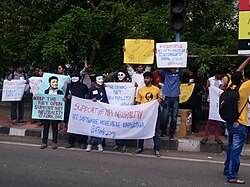
The Public Uprising
The movement gained massive momentum through digital activism. A viral video by the comedy channel All India Bakchod urged citizens to email TRAI, leading to over a million submissions. High-profile politicians, including Rahul Gandhi and Naveen Patnaik, and various organizations under the Free Software Movement of India, voiced their support for an open internet.
In response, the Cellular Operators Association of India (COAI) launched a counter-campaign, "Sabka Internet, Sab ka Vikas," arguing that VoIP apps should be treated as cellular operators.
The Regulatory Victory: 2016–2018
On February 8, 2016, TRAI delivered a landmark ruling in favor of net neutrality. The regulator prohibited telecom providers from charging discriminatory tariffs based on content, effectively banning Free Basics and Airtel Zero in their existing forms.
| Provision | Regulation/Status |
|---|---|
| Discriminatory Tariffs | Strictly prohibited based on content. |
| Third-Party Agreements | Contracts to evade neutrality rules are banned. |
| Emergency Services | Reduced tariffs permitted for public emergencies. |
| Enforcement | Financial disincentives for contravention. |
The momentum continued into 2017 and 2018. In November 2017, TRAI released further recommendations to ensure nationwide enforcement, allowing for legitimate traffic management while banning paid prioritization. The journey culminated on July 11, 2018, when the Department of Telecommunications formally approved these recommendations, cementing the legal framework for an open internet in India.
Frequently Asked Questions
What is net neutrality?
Net neutrality is the principle that Internet Service Providers must treat all data on the internet equally, without discriminating or charging differently based on the user, content, website, or application.
What were "zero rating" plans?
Zero rating refers to the practice where an ISP allows users to access specific websites or applications without those services counting against the user's data limit, such as Facebook's Free Basics or Airtel Zero.
Why did TRAI ban Free Basics?
TRAI blocked Free Basics because it created a non-neutral environment where only specific sites were accessible for free, while others required payment, effectively allowing the provider to act as a gatekeeper to the internet.
What are OTT services?
Over-the-Top (OTT) services are applications or content providers that deliver services over the internet, bypassing traditional telecommunications infrastructure (e.g., WhatsApp, Skype, and Netflix).
When did India officially adopt net neutrality recommendations?
While TRAI ruled in favor of net neutrality in February 2016, the Department of Telecommunications officially approved the recommendations on July 11, 2018.