
Northeast Italy Demographics and Urban Centers
The northeastern region of Italy is a dynamic area characterized by steady population growth, a diverse linguistic landscape, and a network of influential urban centers. From the industrial hubs of Emilia-Romagna to the historic waterways of Veneto, the region reflects a complex blend of cultural heritage and modern demographic shifts.
Key Facts
- Total Population: 11,618,783 as of 2026.
- Gender Distribution: 50.7% female and 49.3% male.
- Age Structure: Seniors comprise 25.3% of the population, while minors make up 14.5%.
- Largest City: Bologna, with 391,473 inhabitants.
- Primary Language: Italian, supplemented by several regional and minority languages.
- Top Foreign-Born Group: Romanians, representing 1.7% of the known birth-country residents.
Population Trends and Growth
Since the early 20th century, the region has experienced a consistent upward trajectory in its population. According to data from ISTAT (the Italian National Institute of Statistics), the population grew from approximately 8.2 million in 1921 to over 11.5 million by 2021.
While growth has been steady, the rate has fluctuated. The most significant jump occurred between 2001 and 2011, with a 7.5% increase. A slight dip was recorded in 1991, marking a rare period of negative growth (-0.3%) before the population began to rise again.
| Year | Population | Change (%) |
|---|---|---|
| 1921 | 8,234,944 | — |
| 1951 | 9,450,802 | +8.9% |
| 1981 | 10,429,548 | +3.8% |
| 2011 | 11,450,425 | +7.5% |
| 2021 | 11,541,332 | +0.8% |
Major Urban Centers
The region is home to several populous cities that serve as economic and cultural anchors. Bologna stands as the most populous city, followed by the major hubs of the Veneto region.
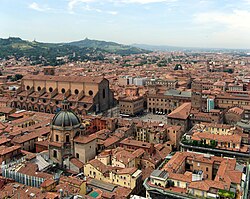
Bologna leads the list with 391,473 residents, acting as a primary center for the Emilia-Romagna region.
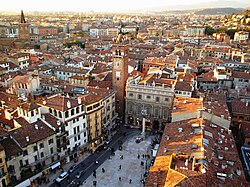
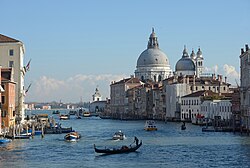
Verona and Venice follow closely, both located in Veneto, with populations of 255,139 and 249,385 respectively.
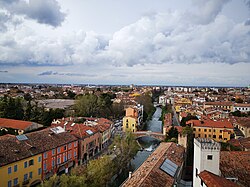
Padua also maintains a significant presence in Veneto with 208,202 inhabitants.
Cities with Over 100,000 Inhabitants
- Bologna (Emilia-Romagna): 391,473
- Verona (Veneto): 255,139
- Venice (Veneto): 249,385
- Padua (Veneto): 208,202
- Parma (Emilia-Romagna): 199,450
- Trieste (Friuli-Venezia Giulia): 198,622
- Modena (Emilia-Romagna): 184,361
- Reggio Emilia (Emilia-Romagna): 172,921
- Ravenna (Emilia-Romagna): 156,475
- Rimini (Emilia-Romagna): 150,774
- Ferrara (Emilia-Romagna): 129,048
- Trento (Trentino-Alto Adige/Südtirol): 119,359
- Forlì (Emilia-Romagna): 118,053
- Vicenza (Veneto): 110,741
- Bolzano (Trentino-Alto Adige/Südtirol): 106,901
- Piacenza (Emilia-Romagna): 103,737
Linguistic Diversity
While Italian is the primary language, the region is a mosaic of linguistic diversity, with several recognized minority languages and dialects.
- Venetian: Widely spoken in Veneto, along the coast to Trieste and Istria, in Pordenone and Gorizia (Friuli), and most of Trentino. It is recognized specifically by the Veneto region.
- Friulian: Spoken in most of Friuli and holds national recognition.
- Ladin: A language spoken by a few thousand people in the Dolomites.
- German: The primary language of South Tyrol, though approximately two-thirds of the inhabitants there also speak Italian.
- Slovene: Recognized by the Italian state and spoken on the border of Italy and Istria.
Immigration and National Origins
The demographic makeup of the region has been influenced by immigration. As of 2025, data for 11,348,020 residents indicates that while the vast majority (87%) were born in Italy, there are significant communities from other nations.
The most prominent foreign-born populations include:
- Romania: 197,297 (1.7%)
- Albania: 160,932 (1.4%)
- Morocco: 149,031 (1.3%)
- Moldova: 119,078 (1%)
Frequently Asked Questions
What is the current population of the region?
As of 2026, the population is 11,618,783.
Which city is the most populous in the area?
Bologna is the largest city, with a population of 391,473 as of 2026.
What are the most common languages spoken besides Italian?
Other significant languages include Venetian, Friulian, Ladin, German (primarily in South Tyrol), and Slovene.
What is the age distribution of the population?
Seniors make up 25.3% of the population, while minors account for 14.5%.
Which foreign-born community is the largest in the region?
The largest foreign-born community is from Romania, with 197,297 residents, representing 1.7% of the known birth-country population as of 2025.