
Norwegian Armed Forces: Structure and Capabilities
The Norwegian military is a sophisticated, multi-domain force designed for national sovereignty and international cooperation. From the rugged terrain of the north to the strategic waters of the North Sea, Norway maintains a comprehensive defense architecture comprising joint commands, specialized service branches, and a robust educational system for its leadership.
Key Facts
- Joint Command: Centered at the Norwegian Joint Headquarters in Bodø.
- Air Power: Transitioning to a fleet of 52 Lockheed Martin F-35A Lightning II jets.
- Land Force: Centered around Brigade Nord, utilizing Leopard 2A4NO tanks and CV90 vehicles.
- Naval Strength: Features Aegis frigates, Skjold-class fast missile boats, and Ula-class submarines.
- Special Operations: Unified under NORSOCOM, combining army and naval special warfare units.
- Home Guard: A massive reserve force of 40,500 personnel across 12 districts.
Joint Headquarters and Support Services
The Norwegian Joint Headquarters in Bodø serves as the central hub for coordinating military operations. This joint structure integrates various specialized units to ensure seamless intelligence and operational efficiency.
Key joint capabilities include the Norwegian Intelligence Service, the Joint ISTAR Unit (Intelligence, Surveillance, Target Acquisition and Reconnaissance), and the Norwegian Coastal Ranger Command. The force also maintains critical support functions such as NRBC protection (Nuclear, Radiological, Biological, and Chemical weapons), Explosive Ordnance Disposal, and Civil Military Coordination (CIMIC).
Additionally, the Joint structure manages the Norwegian Defence Security Department (NORDSD) and deployable logistical support, including two mobilization host country battalions designed to support allied reinforcements.
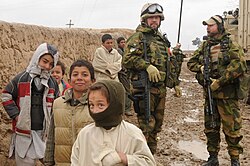
The Norwegian Army
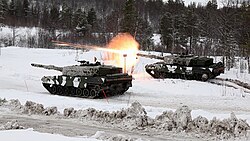
As of August 1, 2023, the Norwegian Army is structured to provide high-intensity combat capabilities and territorial defense. The primary operational core is Brigade Nord, which consists of several specialized battalions:
- Armoured Battalion (1.Bn): Based in Setermoen, operating Leopard 2A4NO main battle tanks and CV90 infantry fighting vehicles.
- 2nd Battalion: Mechanized infantry based in Skjold using Bandvagn 206 vehicles.
- Telemark Battalion: Based in Rena, also utilizing Leopard 2A4NO tanks and CV90s.
- Artillery Battalion: Based in Setermoen, equipped with K9 Thunder self-propelled howitzers.
- Support Units: Including the Combat Engineer Battalion (Skjold), Signals Battalion (Bardufoss), Medical Battalion (Setermoen), and Combat Service Support Battalion (Bardufoss).
Beyond Brigade Nord, the army includes the Finnmarksbrigaden (comprising the Porsanger and Ranger Battalions), the Army Land Warfare Centre, and His Majesty the King's Guard.
Royal Norwegian Navy and Coast Guard
The Royal Norwegian Navy is optimized for coastal defense and maritime surveillance. Its fleet is composed of high-tech assets designed for the challenging Norwegian coastline.
Naval Fleet and Assets
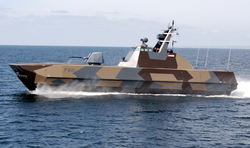
The navy operates four Fridtjof Nansen-class Aegis frigates, six Skjold-class fast missile boats, and six Ula-class submarines. Mine warfare is handled by a combination of Oksøy-class mine hunters and Alta-class minesweepers. The fleet is supported by the supply ship Maud and the Royal yacht Norge.
Coast Guard and Special Operations
The Coast Guard maintains a diverse fleet, including Svalbard-class, Barentshav-class, and Nordkapp-class offshore patrol vessels, alongside numerous leased vessels for inner coast guard duties. The navy also integrates the Tactical Boat Squadron, utilizing CB90-class fast assault craft.
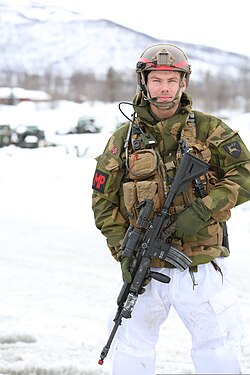
Royal Norwegian Air Force
The Royal Norwegian Air Force is currently undergoing a significant modernization of its combat fleet. The force is transitioning from the General Dynamics F-16A/B and AM/AB 30 jets to the Lockheed Martin F-35A Lightning II, with 49 aircraft currently in service and a total of 52 ordered.
Other critical air capabilities include:
- Maritime Surveillance: Five P-8 Poseidon aircraft.
- Transport: Five C-130J Super Hercules.
- Air Defence: NASAMS 3 systems.
- Rotary Wing: 16 AW101 search and rescue helicopters (replacing the Sea King) and over 18 Bell 412 transport helicopters.
Specialized Forces and Cyber Defence
Norway maintains elite capabilities through the Norwegian Special Operations Command (NORSOCOM), formed on January 1, 2014. This command unifies the Special Operations Command (FSK) of the army and the Naval Special Operations Command (MJK) of the navy.
The FSK is based at Rena Army Camp and includes specialized units like the Paratrooper Troop and the Hunter Troop (composed of female conscripts). The MJK, based at Haakonsvern Naval Base, consists of several specialized squadrons, including the Alfa Squadron (combat divers) and the Echo Squadron (special boats). Air support for these units is provided by the 339 Special Operations Aviation Squadron.
Complementing these physical forces is the Norwegian Cyber Defence Force, which protects national digital infrastructure.
Norwegian Defence University College (NDUC)
The NDUC (Forsvarets høgskole) is the central institution for officer and NCO training. Based at Akershus Fortress in Oslo, it operates independently from the individual service branches to ensure standardized military education.
Academic Departments
- Norwegian Military Academy: Army officer training (Linderud Barracks).
- Air Force Academy: Air force officer training (Trondheim).
- Naval Academy: Navy officer training (Bergen).
- Cyber Engineer Academy: Training for the Cyber Defence Force (Jørstadmoen).
- NCO School: A joint institution established in 2019 to train sergeants across all services.
- Defence Intelligence College: A three-year Bachelor program for intelligence officers.
The NDUC also houses the Institute for Defence Studies, which focuses on European security, civil-military relations, Asian studies, and transatlantic studies.
Summary of Force Structure
| Branch/Entity | Primary Focus | Key Assets/Units |
|---|---|---|
| Joint Headquarters | Command & Control | ISTAR, CIMIC, NORDSD |
| Army | Land Warfare | Brigade Nord, Leopard 2A4NO, K9 Thunder |
| Navy | Maritime Security | Aegis Frigates, Ula-class Submarines |
| Air Force | Air Superiority | F-35A Lightning II, P-8 Poseidon |
| NORSOCOM | Special Operations | FSK, MJK, 339 Squadron |
| Home Guard | Territorial Defense | 12 Districts, 40,500 Personnel |
| NDUC | Military Education | Service Academies, NCO School |
Frequently Asked Questions
What is the role of Brigade Nord in the Norwegian Army?
Brigade Nord is the primary operational unit of the Norwegian Army, providing heavy combat capabilities through armored, mechanized infantry, and artillery battalions to defend Norwegian territory.
How is NORSOCOM structured?
NORSOCOM unifies the army's special warfare unit (FSK) and the navy's special warfare unit (MJK) under a single command to streamline special operations.
Which aircraft is replacing the F-16 in the Royal Norwegian Air Force?
The Lockheed Martin F-35A Lightning II is replacing the F-16 fleet, with 52 aircraft ordered to modernize Norway's air combat capabilities.
What is the purpose of the Norwegian Defence University College (NDUC)?
The NDUC is responsible for the training, re-qualification, and military studies of officers and NCOs across all branches of the Norwegian Armed Forces.
How large is the Norwegian Home Guard?
The Norwegian Home Guard consists of 40,500 personnel distributed across 12 districts, providing rapid reaction and reinforcement forces.