
Note by Note Cuisine: The Evolution of Molecular Gastronomy
Imagine a world where recipes are not written in terms of vegetables, meats, or fruits, but as precise chemical compositions. This is the essence of Note by Note cuisine, a revolutionary approach to cooking that treats flavor as a series of individual components rather than traditional ingredients.
The concept was pioneered by Hervé This, a scientist who envisioned a future where chefs could construct dishes from the ground up using pure compounds. Instead of relying on the inherent flavors of a whole food, Note by Note cuisine allows for the exact calibration of taste and aroma.
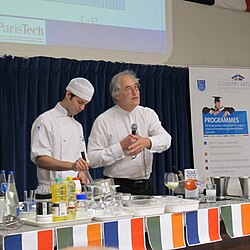
The Origins and Vision of Hervé This
The foundations of Note by Note cuisine were laid in 1994, though the style officially received its name in 1997. Hervé This imagined a paradigm shift in culinary arts where recipes would be as precise as laboratory formulas. For example, he envisioned instructions such as adding "two drops of a 0.001 percent solution of benzylmercaptan (a compound known for its distinct aroma) in pure alcohol" to a bouillon.
Despite the visionary nature of the project, promoting this style of cooking was a significant challenge. This spent several years advocating for the method before receiving any financial compensation for his work in 1999.
From Theory to the Restaurant Table
The transition from scientific theory to professional gastronomy occurred after 2006, when Hervé This collaborated with the renowned French chef Pierre Gagnaire. This partnership bridged the gap between the laboratory and the kitchen.
Approximately one year after their collaboration began, Gagnaire successfully served the first Note by Note dish in a restaurant setting. This milestone marked the first time the theoretical framework of Note by Note was translated into a tangible dining experience.
Global Debut and Artistic Influence
The movement gained international visibility on April 26, 2008, when the duo presented "Note à note N°1" in Hong Kong. This served as the official debut of the style on a global stage.
As the practice evolved, the dishes began to reflect artistic inspirations. One notable example is the second Note by Note dish, which Gagnaire named "Chick Corea," paying homage to the famous jazz pianist.
Key Facts
- Founded: The concept began in 1994 and was named in 1997.
- Pioneer: Developed by Hervé This.
- Culinary Partner: Pierre Gagnaire helped bring the concept to restaurants after 2006.
- First Public Dish: "Note à note N°1" was presented in Hong Kong on April 26, 2008.
- Methodology: Uses pure compounds (like benzylmercaptan) rather than traditional food ingredients.
| Year | Milestone |
|---|---|
| 1994 | Concept inception by Hervé This |
| 1997 | The style is officially named "Note by Note" |
| 1999 | Hervé This receives first payment for the work |
| Post-2006 | Collaboration with chef Pierre Gagnaire begins |
| 2008 | Presentation of "Note à note N°1" in Hong Kong |
Frequently Asked Questions
What exactly is Note by Note cuisine?
It is a culinary style where dishes are created using pure chemical compounds rather than traditional ingredients like plants or animals, allowing for precise control over flavor.
Who are the primary figures behind this movement?
The movement was started by Hervé This and later brought into the professional culinary world through his collaboration with French chef Pierre Gagnaire.
When was the first Note by Note dish served publicly?
The first dish, titled "Note à note N°1," was presented in Hong Kong on April 26, 2008.
Why is the dish "Chick Corea" significant?
It was the second Note by Note dish created by Pierre Gagnaire and is named after the renowned jazz pianist, illustrating the intersection of music, art, and science in this cuisine.
What is an example of a component used in this style?
Hervé This suggested the use of a 0.001 percent solution of benzylmercaptan in pure alcohol to add specific aromatic notes to a bouillon.