
Oliver Wolcott Sr.: Revolutionary Leader and Governor of Connecticut
Oliver Wolcott Sr. was a pivotal figure in early American history, transitioning from a scholarly youth to a military commander and a high-ranking statesman. His life spanned the critical transition from British colonial rule to the establishment of an independent United States, during which he served as a soldier, a diplomat, and the Governor of Connecticut.
Early Life and Education
Born on November 20, 1726, in Windsor, Connecticut, Oliver Wolcott was born into a prominent family. He was the son of colonial Governor Roger Wolcott and Sarah Drake Wolcott. Among 15 siblings, Wolcott was the second youngest, and one of ten who survived into adulthood. His brother, Erastus Wolcott, also became a notable politician.
Wolcott demonstrated academic excellence early on, attending Yale College and graduating in 1747 as the top scholar in his class. His entry into public service began immediately after graduation when New York Governor George Clinton granted him a captain's commission. This allowed him to raise a militia company to fight in the French and Indian Wars, specifically King George's War (1744–1748), where he defended the Canadian border against French forces until the Treaty of Aix-la-Chapelle was signed in 1748.
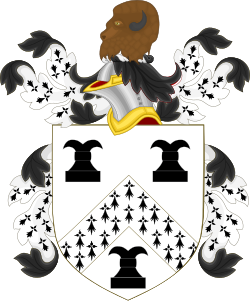
Following his military service, Wolcott pursued a diverse professional path. He initially studied and practiced medicine in Goshen, northwestern Connecticut, alongside his brother Alexander. He later transitioned into commerce as a merchant in Litchfield and entered local governance when he was appointed sheriff of the newly-created Litchfield County, a position he held from 1751 to 1771. On January 21, 1755, he married Lorraine (Laura) Collins of Guilford. The couple had five children, four of whom survived infancy: Oliver, Oliver Jr., Laura, Mariann, and Frederick.
Military Leadership in the American Revolutionary War
During the American Revolutionary War, Wolcott balanced two demanding roles: serving as a principal delegate to the Continental Congress and acting as a high-ranking militia officer. He rose through the ranks to become a brigadier general and eventually a major general in the Connecticut militia.
Wolcott was an early and vocal advocate for American independence. By February 1776, he recognized the deepening rift with Great Britain, stating that the difference between the two had become so great that it might result in a "total disseverance." This conviction solidified his importance to the revolutionary cause.
His military contributions were significant. On August 11, 1776, he led the Seventeenth Regiment of militia to New York to join George Washington's army. Governor Jonathan Trumbull subsequently appointed him brigadier general in command of all Connecticut militia regiments in New York. Wolcott notably led a force of 300 to 400 volunteers to assist General Horatio Gates and Benedict Arnold in the defeat of General John Burgoyne at the Battles of Saratoga.
Promoted to major general in May 1779, Wolcott took command of all Connecticut militia. That summer, he fought to protect the coastline from Tryon's raid. Despite being defeated by Major-general William Tryon, Wolcott later recorded in his memoirs that Tryon's forces had ignored the principles of civilized nations and committed gross indignities to human nature.
Diplomacy and the Continental Congress
Wolcott's experience on the northern frontier during the French and Indian War made him an ideal candidate for diplomatic relations with indigenous peoples. Consequently, the Continental Congress appointed him as a commissioner of Indian affairs. Alongside Richard Butler and Arthur Lee, Wolcott worked to persuade northern Indian nations to remain neutral, negotiating a peace treaty with the Six Nations at Fort Schuyler.
Elected to the Continental Congress in 1775, Wolcott's participation was briefly interrupted by a serious illness in 1776, which delayed his signing of the Declaration of Independence.
Political Ascent and Later Years
After the war, Wolcott continued his ascent in Connecticut politics as a member of the Federalist Party (a political party favoring a strong central government). In 1786, he was elected Lieutenant Governor of Connecticut, a role he held for a decade. Additionally, he served as a judge of the Connecticut Supreme Court of Errors from 1784 until his death.
Wolcott reached the pinnacle of state leadership on January 5, 1796, when he became Governor following the death of Samuel Huntington. He served as governor until his own death at the age of 71.
Key Facts
- Education: Graduated as the top scholar from Yale College in 1747.
- Military Rank: Attained the rank of Major General in the Connecticut militia.
- Key Conflict: Played a role in the victory at the Battles of Saratoga.
- Diplomacy: Negotiated with the Six Nations at Fort Schuyler to maintain neutrality.
- Political Offices: Served as Sheriff of Litchfield County, Lieutenant Governor, and Governor of Connecticut.
- Judicial Role: Judge of the Connecticut Supreme Court of Errors (1784–1796).
| Period/Year | Role/Position | Key Contribution/Event |
|---|---|---|
| 1744–1748 | Captain, Militia | Defended Canadian border in French and Indian Wars |
| 1751–1771 | Sheriff | Served Litchfield County, Connecticut |
| 1775 | Delegate | Elected to the Continental Congress |
| 1776–1779 | Brigadier General | Commanded CT militia in NY; fought at Saratoga |
| 1779 | Major General | Commanded all Connecticut militia; fought Tryon's raid |
| 1786–1796 | Lieutenant Governor | Served ten years as a Federalist |
| 1796 | Governor | Served as Governor of Connecticut until his death |
Frequently Asked Questions
Did Oliver Wolcott Sr. sign the Declaration of Independence?
Yes, although he did not sign it immediately in 1776 due to a serious illness, he signed the document some time later.
What was Wolcott's role in the Battles of Saratoga?
As a brigadier general, he led between 300 and 400 volunteers from his brigade to assist General Horatio Gates and Benedict Arnold in defeating General John Burgoyne.
How did Wolcott contribute to Indian affairs during the Revolution?
Using his previous experience on the northern frontier, he served as a commissioner of Indian affairs and negotiated a peace treaty with the Six Nations at Fort Schuyler to encourage neutrality.
What political party was Oliver Wolcott Sr. affiliated with?
Wolcott was a member of the Federalist Party during his tenure as Lieutenant Governor and Governor of Connecticut.
What were Wolcott's professional pursuits before entering politics?
Before his political career, Wolcott was a captain in the militia, studied and practiced medicine, and worked as a merchant.