
Organic Chemistry: The Art and Logic of Trivial Nomenclature
In the world of organic chemistry, naming molecules is a balance between rigid precision and practical convenience. While the International Union of Pure and Applied Chemistry (IUPAC) provides a systematic method for naming every possible structure, chemists frequently rely on trivial names. These are non-systematic names that often reflect a compound's origin, physical properties, or even a whimsical inspiration.
Trivial names persist because systematic names can become incredibly cumbersome. For example, while the pigment β-Carotene has a precise IUPAC name—1,3,3-trimethyl-2-[(1 E ,3 E ,5 E ,7 E ,9 E ,11 E ,13 E ,15 E ,17 E )-3,7,12,16-tetramethyl-18-(2,6,6-trimethylcyclohexen-1-yl)octadeca-1,3,5,7,9,11,13,15,17-nonaenyl]cyclohexene—it is far more efficient to use its trivial counterpart in daily laboratory communication.
Key Facts
- Origin-based names: Many trivial names derive from the source of the chemical, such as lecithin (from the Greek lékithos for egg yolk).
- Shape-based names: Some molecules are named after their geometric structure, such as cubane or basketane.
- Fictional influences: Certain chemical complexes are named after characters from opera or movies.
- Practicality: Trivial names are often used when IUPAC names are too long for everyday use.
- Potential Confusion: Trivial names can be misleading; for instance, theobromine contains no bromine despite its name.
Naming Based on Properties and Shape
Some trivial names are derived directly from a notable property or the source of the substance. A classic example is tartaric acid, found in wine, which is systematically known as 2,3-dihydroxybutanedioic acid.
Geometric and Shape-Based Nomenclature
Chemists also use "semitrivial" names for molecules with distinct geometries. These names combine a descriptive word for the shape with standard suffixes like -ane (for alkanes, saturated hydrocarbons) or -ene (for alkenes, unsaturated hydrocarbons). Examples include:
- Cubane and Tetrahedrane: Named for their cubic and tetrahedral shapes.
- Basketane: Shaped like a basket.
- Fenestrane: Featuring a window-pane motif.
- Ladderane: Shaped like a ladder.
- Olympiadane: Possessing a topology similar to the Olympic rings.
- Prismane, Housane, and Olympicene.
- Quadratic acid (also known as squaric acid).
The Influence of Fiction and Pop Culture
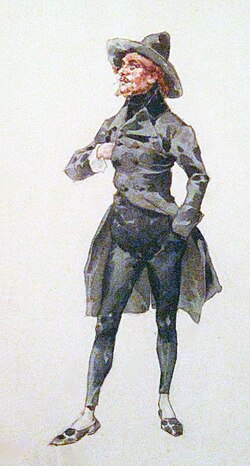
In some instances, the naming process is purely creative. The bohemic acid complex, a mixture of antitumor agents and anthracycline antibiotics obtained from actinobacteria fermentation, was named after Puccini's opera La bohème. This led to a series of character-based names for its components, including bohemamine, alcindoromycin (Alcindoro), collinemycin (Colline), marcellomycin (Marcello), mimimycin (Mimi), musettamycin (Musetta), rudolphomycin (Rodolfo), and schaunardimycin (Schaunard).
Similarly, researchers at Lepetit Pharmaceuticals, led by Piero Sensi, used nicknames for their discoveries. The antibiotic rifampicin was named after the French jewel-heist movie Rififi, and the antibiotic matamycin was originally nicknamed "Mata Hari."
Trivial Nomenclature for Common Functional Groups
Traditional nomenclature often uses specific prefixes for the carbon skeleton that differ from the modern system. This is particularly common in the naming of alcohols, aldehydes, acids, and ketones.
| Carbons | Modern Prefix | Alcohol | Aldehyde | Acid | Ketone |
|---|---|---|---|---|---|
| 1 | Meth- | Methyl alcohol | Formaldehyde | Formic acid | N/A |
| 2 | Eth- | Ethyl alcohol | Acetaldehyde | Acetic acid | N/A |
| 3 | Prop- | Propyl alcohol | Propionaldehyde | Propionic acid | Acetone |
| 4 | But- | Butyl alcohol | Butyraldehyde | Butyric acid | Methyl ethyl ketone |
| 12 | Dodec- | Lauryl alcohol | Lauraldehyde | Lauric acid | - |
| 16 | Hexadec- | Cetyl/Palmityl alcohol | Palmitaldehyde | Palmitic acid | - |
| 18 | Octadec- | Stearyl alcohol | Stearaldehyde | Stearic acid | - |
Naming Ketones and Aldehydes
Trivial names for ketones are often formed by listing the two alkyl or aryl groups bonded to the carbonyl group as separate words, followed by "ketone" (e.g., Ethyl isopropyl ketone). Some, like acetone, acetophenone, and benzophenone, remain acceptable IUPAC names.
For aldehydes, the trivial name is derived from the corresponding carboxylic acid. The word "acid" is dropped, and the suffix -ic or -oic is replaced with -aldehyde, resulting in names like formaldehyde and acetaldehyde.
Frequently Asked Questions
Why are trivial names still used if IUPAC names are more accurate?
Trivial names are used primarily for brevity and convenience. Systematic IUPAC names for complex molecules can be extremely long and difficult to communicate efficiently in a professional or academic setting.
Can trivial names be misleading?
Yes. Because they are not based on chemical structure, they can imply the presence of elements that aren't there. For example, theobromine's name suggests it contains bromine, but it is actually an alkaloid similar to caffeine.
How are shape-based names like "cubane" formed?
These are semitrivial names. They take a word describing the molecule's geometric shape (like "cube") and add a standard chemical suffix such as "-ane" for alkanes or "-ene" for alkenes.
What is the relationship between trivial aldehyde and acid names?
Trivial aldehyde names are directly derived from their corresponding carboxylic acids. By removing the word "acid" and changing the suffix from "-ic" or "-oic" to "-aldehyde," the name of the aldehyde is formed.