
Organic Compounds: From the Theory of Vitalism to Modern Chemical Classification
For centuries, the boundary between the living and the non-living was thought to be defined by a mysterious chemical divide. This divide separated organic compounds—those found in nature—from inorganic compounds, which were believed to be the sole domain of laboratory synthesis. While modern science has dismantled these myths, the terminology we use today still reflects this fascinating history.
The Rise and Fall of Vitalism
In the early 19th century, a philosophy known as vitalism dominated scientific thought. Vitalists believed that substances found in organic nature were formed by a "vital force" (vis vitalis) possessed only by living organisms. This force was thought to be the essential ingredient required to create complex organic molecules.
During the 1810s, Jöns Jacob Berzelius reinforced this idea, arguing that a regulative force existed within living bodies. He proposed a strict distinction: organic compounds required a living organism for their synthesis, whereas inorganic compounds did not. Under this framework, the creation of organic matter in a laboratory was considered fundamentally impossible.
The collapse of vitalism began in 1824 when Friedrich Wöhler synthesized oxalic acid—a compound previously known only in living organisms—from cyanogen. Wöhler dealt a decisive blow to the theory in 1828 by synthesizing urea from two inorganic salts: potassium cyanate and ammonium sulfate. Because urea was known to occur in the urine of living organisms, its creation from inorganic materials proved that the "vital force" was unnecessary. Subsequent experiments producing increasingly complex substances further discredited vitalism.
Modern Classification and Its Ambiguities
Although vitalism is long gone, the distinction between organic and inorganic chemistry remains. Today, an organic compound is generally defined as any compound containing a significant amount of carbon. Some scientists, such as E. J. Corey, have suggested the term carbogenic as a more accurate alternative, though it has not gained widespread use.
Defining "organic" is surprisingly difficult. Most authorities agree that certain carbon-containing substances must be excluded from the organic category. These typically include:
- Carbon alloys: Such as steel, which contains cementite (Fe3C).
- Carbides: Including ionic carbides (Al4C3, CaC2) and covalent carbides (B4C, SiC).
- Simple carbon oxides: Carbon monoxide (CO) and carbon dioxide (CO2).
- Carbon allotropes: Pure forms of carbon like diamond or graphite.
- Cyanide derivatives: Such as KCN and (CN)2.
The Organometallic Gray Area
The classification becomes even more complex with organometallic compounds, which contain at least one covalent bond between carbon and a metal. For example, nickel tetracarbonyl (Ni(CO)4) is a volatile liquid similar to many organic compounds, yet it is formed from a transition metal and carbon monoxide. While it fits the broad definition of organometallic, it is unclear if all such compounds should be considered organic. In contrast, metal-organic compounds contain organic ligands but no direct carbon-metal bonds (e.g., (CH3CO2)2Cu) and are more readily viewed as organic.
The Challenge of C–H Bond Definitions
Some attempt to define organic compounds strictly as those containing carbon-hydrogen (C–H) bonds. However, this narrow definition excludes historically significant organic substances. For instance, neither urea nor oxalic acid contains C–H bonds, yet the IUPAC Blue Book specifically classifies them as organic. Other examples include carbon tetrachloride and benzenehexol.
Broadening the definition to include any compound with C–H or C–C bonds still creates arbitrary divisions. Under such a rule, CF4 (tetrafluoromethane) would be inorganic, while CHF3 (fluoroform) would be organic, despite the two sharing very similar physical and chemical properties.
Key Facts
- Vitalism was the obsolete belief that organic compounds required a "vital force" from living organisms to be created.
- Friedrich Wöhler disproved vitalism in 1828 by synthesizing urea from inorganic salts.
- Modern organic chemistry focuses on carbon-containing compounds, though not all carbon compounds are organic.
- Exclusions: Metal carbonates, simple carbon oxides, and graphite are generally classified as inorganic.
- Organometallic compounds are defined by a covalent bond between a metal and a carbon atom.
| Category | Defining Characteristic | Examples |
|---|---|---|
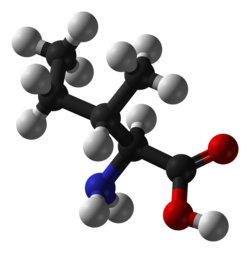
| Organic | Significant carbon content (usually C–H or C–C bonds) | Urea, Oxalic Acid, L-isoleucine |
| Inorganic | Carbon-containing but lacking organic structure | CO2, KCN, Al4C3 |
| Organometallic | Covalent carbon-to-metal bond | Nickel tetracarbonyl, Cementite |
| Metal-Organic | Organic ligands without carbon-metal bonds | (CH3CO2)2Cu |
Frequently Asked Questions
What was the significance of Wöhler's synthesis of urea?
It proved that organic compounds could be synthesized from inorganic materials in a laboratory, effectively disproving the theory of vitalism which claimed a "life-force" was necessary.
Are all carbon-containing compounds organic?
No. Many carbon-containing substances, such as carbon dioxide, metal carbonates, and graphite, are traditionally classified as inorganic.
What is the difference between organometallic and metal-organic compounds?
Organometallic compounds must have at least one covalent bond between a carbon atom and a metal. Metal-organic compounds contain organic ligands but lack that specific carbon-metal covalent bond.
Why is the definition of an organic compound considered ambiguous?
Because simple criteria (like the presence of C–H bonds) either exclude traditionally organic molecules like urea or create arbitrary distinctions between chemically similar substances like CF4 and CHF3.
What is a "carbogenic" compound?
Carbogenic is a term proposed by E. J. Corey as a modern, more precise alternative to the word "organic" to describe carbon-based chemistry.