
OSCE Community Security Initiative: Enhancing Police Presence and Public Safety in Kyrgyzstan
Ensuring public safety in remote regions requires a proactive approach to law enforcement and community engagement. To address these needs in Kyrgyzstan, the Organization for Security and Co-operation in Europe (OSCE) implemented the Community Security Initiative (CSI), a comprehensive project designed to bridge the gap between citizens and security forces while fostering a culture of professionalism and tolerance.
Key Facts
- Funding: €7 million provided by the European Union and 21 OSCE participating states.
- Reach: Over 80,000 people utilized mobile police receptions between 2011 and 2015.
- Infrastructure: 18 equipped minivans donated to establish police presence in remote areas.
- Capacity Building: More than 150 professional training sessions conducted for police officers.
Expanding Police Accessibility in Remote Districts
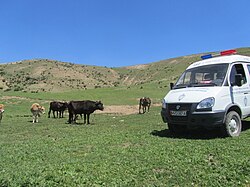
One of the primary challenges in maintaining security across Kyrgyzstan is the geographical isolation of certain districts. To combat this, the OSCE deployed unarmed police advisers and donated 18 mobile police receptions. These are specialized minivans equipped with the essential tools required to provide police services on the move, allowing officers to re-establish a visible and accessible presence in underserved areas.
The impact of this initiative was significant; from 2011 to 2015, more than 80,000 citizens approached these mobile units to seek assistance or report issues.
Professional Development and Crime Prevention
Beyond physical presence, the CSI focused on the quality of policing. The project organized over 150 training sessions aimed at improving the professionalism of police officers. By enhancing the skills of the force, the initiative sought to create a more efficient and responsive security apparatus.
The CSI also provided critical support to neighborhood inspectors—officers responsible for specific local beats—and local crime prevention centers. By monitoring and supporting these entities, the project helped increase the efficiency with which everyday citizen concerns and security threats were addressed.
Youth Empowerment and Social Education
Recognizing that long-term security begins with education, the CSI invested in youth empowerment. The project provided educational opportunities for young people to learn about critical social issues, including:
- The prevention of school bullying and racketeering.
- The importance of ethnic tolerance.
- Career building and professional development.
- The prevention of harmful habits.
Collaborative Governance and Funding
The success of the CSI relied on a vast network of partnerships. Internally, the project worked with the OSCE's Police Reform Programme and the High Commissioner on National Minorities (HCNM). Externally, it collaborated with key Kyrgyz national authorities, including the Ministry of Interior, the Ministry of Justice, the Ministry of Health, the Prosecutor General, the State Penitentiary Service, and the Ombudsman.
The initiative was made possible through €7 million in financing from the European Union and 21 OSCE participating states, including Andorra, Austria, Belgium, Canada, Denmark, Finland, France, Germany, Hungary, Ireland, Kazakhstan, Liechtenstein, Lithuania, Luxembourg, Norway, Sweden, Switzerland, Turkey, the United Kingdom, and the United States.
| Category | Details |
|---|---|
| Total Funding | €7 million |
| Mobile Units Provided | 18 minivans |
| Police Trainings | 150+ sessions |
| Citizen Engagement (2011-2015) | 80,000+ people |
Frequently Asked Questions
What were mobile police receptions?
Mobile police receptions were minivans equipped with basic necessary gear, used to bring police services and presence to remote areas of Kyrgyzstan where permanent stations may have been lacking.
How many people benefited from the mobile receptions?
Between 2011 and 2015, over 80,000 people approached these mobile units for assistance.
What topics were covered in the youth empowerment programs?
Young people were educated on ethnic tolerance, career building, the prevention of bad habits, and the fight against racketeering and school bullying.
Who funded the Community Security Initiative?
The project was funded with €7 million from the European Union and 21 OSCE participating states, including nations such as Canada, Germany, Turkey, and the United States.
Which national authorities in Kyrgyzstan collaborated with the CSI?
Collaborators included the Ministry of Interior, Ministry of Justice, Ministry of Health, the Prosecutor General, the State Penitentiary Service, and the Ombudsman.