
Pacific Northwest National Laboratory: A History of Scientific Innovation
The Pacific Northwest National Laboratory (PNNL) stands as a cornerstone of American scientific research, evolving from a wartime necessity into a multidisciplinary powerhouse. From its roots in the Manhattan Project to its current leadership in clean energy and national security, PNNL has consistently translated complex science into practical technologies that impact global health, safety, and the environment.
From the Manhattan Project to PNNL
The origins of the laboratory date back to 1943 with the establishment of the Hanford Site, where extensive research and development were required to produce plutonium for the Manhattan Project. By 1946, the General Electric Company (GE) took over operations, eventually consolidating these R&D efforts into the Hanford Laboratory in 1953.
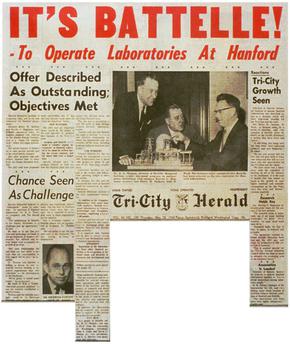
To avoid conflicts with its expanding commercial nuclear business, GE ended its contract in 1963. Consequently, the Atomic Energy Commission (AEC) divided the Hanford contract among several entities, awarding the laboratory management to the Ohio-based Battelle Memorial Institute. On January 4, 1965, Battelle officially began operations under the name Pacific Northwest Laboratory (PNL).
Early Breakthroughs and Diversification
In its early years, PNL focused heavily on nuclear energy and non-destructive applications of nuclear materials. A primary example was the design of the Fast Flux Test Facility, created to test materials and fuels for the AEC's commercial nuclear power program. However, the laboratory's impact extended far beyond government mandates.
During the 1960s and 1970s, Senior Scientist Jim Russell patented a method for optical digital recording and playback—a breakthrough that eventually paved the way for the development of compact discs (CDs) and digital video discs (DVDs). Additionally, in 1969, NASA tasked PNL with measuring radionuclides produced by solar and galactic cosmic rays in lunar materials collected during the Apollo program.
Expanding into Health and Environment
The 1970s marked a strategic shift as the AEC was succeeded by the Energy Research and Development Administration (ERDA) in 1974, and later the Department of Energy (DOE) in 1977. PNL expanded its scope to include national security, health, and environmental research. Two landmark achievements from this era include:
- Vitrification: A process used to lock hazardous waste securely inside glass.
- Acoustic Holography: A medical imaging technique allowing doctors to locate blood clots, detect fetal abnormalities, and view internal organs without invasive surgery.
By the 1980s, the laboratory continued its medical contributions by introducing the first portable blood irradiator for leukemia treatments, developed in cooperation with the Fred Hutchinson Cancer Research Center. In the mid-1980s, PNL was designated as one of the DOE's multiprogram laboratories.
The Modern Era: Global Security and Climate Science
In 1995, the institution was renamed the Pacific Northwest National Laboratory. The 1990s saw a surge in work regarding nuclear nonproliferation and global environmental issues. The Pacific Northwest Center for Global Security was created to coordinate these efforts.
To combat smuggling and terrorism, PNNL developed the Material Identification System and the Ultrasonic Pulse Echo instrument, which were deployed to customs inspectors in the former Soviet Union and Eastern Europe. Simultaneously, researchers began studying global climate models, focusing on the radiative properties and formation of clouds, and collaborating with the United Nations on climate change assessments.
This commitment to climate science was recognized in 2007, when more than 20 PNNL scientists contributed to the Intergovernmental Panel on Climate Change (IPCC), which shared the Nobel Peace Prize with former Vice President Al Gore.
Current Frontiers in Security and Energy
In recent years, PNNL has focused on countering terrorism through the expansion of radiation portal monitoring technology, used at U.S. ports of entry to detect radiological and nuclear materials. In 2004, the Department of Homeland Security established the National Visualization and Analytics Center (NVAC) at the lab to help the nation synthesize massive amounts of data to predict and respond to disasters.
Looking toward a sustainable future, PNNL scientists are currently designing catalysts to convert water into hydrogen using solar energy. By utilizing proton relays and energy matching, they are creating affordable molecular complexes containing cobalt and nickel. To support this, the DOE awarded $22.5 million over five years to the Center for Molecular Electrocatalysis to study the conversion of electrical energy into chemical bonds.
Key Facts
- Founded: 1965 (tracing origins to the 1943 Hanford Site).
- Management: Operated by Battelle Memorial Institute since January 4, 1965.
- Major Innovations: Contributed to the development of CDs/DVDs, vitrification, and portable blood irradiators.
- Global Impact: Provided nonproliferation tools to Eastern Europe and the former Soviet Union.
- Recognition: Scientists contributed to the IPCC's 2007 Nobel Peace Prize.
- Current Funding: $22.5 million DOE award for the Center for Molecular Electrocatalysis.
| Era/Year | Key Milestone/Focus | Major Outcome |
|---|---|---|
| 1943-1963 | Hanford Site / Hanford Laboratory | Plutonium production and early nuclear R&D |
| 1965 | Establishment of PNL | Management transferred to Battelle |
| 1960s-70s | Diversification | Optical recording (CDs/DVDs) and Apollo lunar analysis |
| 1970s-80s | Health & Environment | Vitrification and acoustic holography |
| 1995 | Renaming to PNNL | Focus on global security and nonproliferation |
| 2000s-Present | Security & Clean Energy | Radiation portal monitoring and molecular electrocatalysis |
Frequently Asked Questions
How did PNNL start?
PNNL traces its origins to the 1943 establishment of the Hanford Site for the Manhattan Project. It was formally established as the Pacific Northwest Laboratory in 1965 when the Battelle Memorial Institute took over management from General Electric.
What is vitrification and why is it important?
Vitrification is a process developed by PNL researchers to lock hazardous waste inside glass, providing a stable and safe method for long-term waste storage.
Did PNNL contribute to any consumer technologies?
Yes. Senior Scientist Jim Russell patented a method for optical digital recording and playback while at PNL, which was eventually used in the creation of compact discs (CDs) and digital video discs (DVDs).
What role does PNNL play in national security?
PNNL develops technologies to prevent terrorism, such as radiation portal monitors for ports of entry and the Material Identification System used by customs inspectors to reduce smuggling.
How is PNNL contributing to green energy?
The laboratory is designing inexpensive nickel and cobalt catalysts to use solar energy to turn water into hydrogen, supported by the DOE-funded Center for Molecular Electrocatalysis.