
Pay What You Want Pricing: History and Commercial Applications
Pay What You Want (PWYW) is a flexible pricing strategy where the customer decides how much to pay for a product or service, sometimes including a minimum price or a suggested amount. While once confined to the margins of the economy—seen primarily in tips, street performances, and charitable donations—PWYW has increasingly migrated into mainstream commercial industries.
From digital music and software to dining and physical retail, this trust-based model challenges traditional pricing norms by shifting the power of valuation from the seller to the consumer.
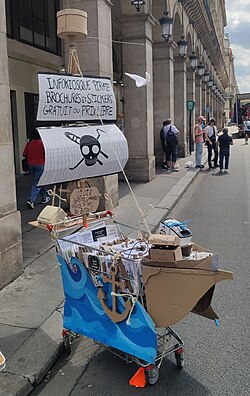
Key Facts
- Diverse Adoption: PWYW has been utilized across music, software, restaurants, and physical goods.
- Digital Pioneer: Radiohead's 2007 release of In Rainbows brought significant global awareness to the model for major artists.
- Software Success: The Humble Indie Bundle raised $1.27 million with its first PWYW sale in 2010.
- Psychological Impact: Some artists, like Jane Siberry, found that self-determined pricing actually increased average income per song.
- Service Integration: The model is a staple of the "free tour" tourism industry via platforms like GuruWalk.
PWYW in the Music Industry
The music industry has been a primary testing ground for PWYW, often used by artists to increase accessibility or challenge corporate distribution.
Early Adopters and Independent Artists
In 1980, Contemporary Christian artist Keith Green used a PWYW structure for his album So You Wanna Go Back to Egypt, distributed via mail-order coupons through Last Days Ministries. By 2005, Jane Siberry introduced a self-determined pricing policy on her website, offering options ranging from a standard price (approx. US$0.99/track) to "a gift from Jane." Siberry noted that her average income per song from customers actually slightly exceeded the standard price.
Similarly, Jeff Rosenstock launched Quote Unquote Records in 2005, describing it as "The First Ever Donation Based Record Label." His first release, Album Minus Band by Bomb the Music Industry!, was offered as a free download with an optional donation.
Mainstream and Platform Integration
The model gained massive visibility in October 2007 when Radiohead released In Rainbows as a PWYW download, marking the first time a major musical act adopted the system. Other artists followed, including Wheatus in 2008, who applied the model to all albums they owned the rights to, and Michael Stipe in 2019, who suggested a price of 77 cents for his solo single "Your Capricious Soul."
Platforms like Bandcamp (launched 2007) have institutionalized this by allowing musicians to set minimum prices while letting fans pay more if they choose. Meanwhile, the duo Koo Koo Kanga Roo uses PWYW to ensure their music is widely available, viewing themselves primarily as a live performance act.
Dining and Hospitality
In the food industry, PWYW is often linked to social missions or community support.
- Annalakshmi Restaurant: Started in 1984 in Kuala Lumpur, Malaysia, inspired by Swami Shantananda Saraswati, this "Pay What Your Heart Feels" initiative later expanded to other cities.
- Lentil as Anything: This Australian chain opened its first PWYW location in St Kilda, Melbourne, in 2000, later expanding to Abbotsford Convent, Thornbury, and Newtown Sydney.
- One World Everybody Eats: Operated in Salt Lake City from 2003 until its closure in 2013.
- Panera Cares: Panera Bread launched "Community Cafes" in a St. Louis suburb in 2010, though the last of these closed in February 2019.
- Terra Bite Lounge: A Washington coffeehouse that used PWYW for its first year (2006–2007) before switching to fixed pricing.
Software and Digital Goods
In the tech world, PWYW often manifests as donationware—freeware that encourages users to donate to the author, distinct from the shareware model.
Gaming and Operating Systems
The Humble Indie Bundle (May 2010) revolutionized digital game sales by bundling six indie titles under a PWYW model with a charitable component. This first sale earned $1.27 million, and the company eventually generated over $19 million in total revenues, securing a $4.7 million investment from Sequoia Capital in 2011.
Other examples include McPixel, which held a PWYW weekend in 2012 via The Pirate Bay to encourage game trials, and Canonical, which allows users to contribute between $0 and $125 when downloading the Ubuntu operating system.
Physical Goods and Other Services
While less common for physical items, some retailers have used PWYW to build trust or manage inventory.
In 2013, Headsets.com offered PWYW, with CEO Mike Faith reporting that 90% of customers still paid full price. In 2015, the fashion retailer Everlane used a three-tiered PWYW system for an after-Christmas sale, allowing customers to choose between cost recovery, basic overhead recovery, or full sustainable investment.
Beyond retail, PWYW has appeared in theaters for select nights, the webcomic The Private Eye by Panel Syndicate (2013), and a BIG4 Holiday Park in Australia (August 2017). It is also the standard for "free tours" in tourism, facilitated by platforms like GuruWalk.
Summary of PWYW Applications
| Sector | Example Entity | Key Detail |
|---|---|---|
| Music | Radiohead | First major act to use PWYW for In Rainbows (2007). |
| Software | Humble Indie Bundle | Raised $1.27M in its first sale (2010). |
| Dining | Annalakshmi | "Pay What Your Heart Feels" started in 1984. |
| Retail | Everlane | Three-tier pricing based on cost/overhead recovery. |
| Tourism | GuruWalk | Connects travelers with PWYW "free tours." |
Frequently Asked Questions
Does PWYW always result in lower revenue for the seller?
Not necessarily. For example, artist Jane Siberry found that her average income per song actually increased slightly after implementing a self-determined pricing policy.
What is the difference between donationware and shareware?
Donationware is software provided for free that prompts the user to make a voluntary donation to the author, whereas shareware typically provides a trial period before requiring payment.
How does the Humble Indie Bundle use PWYW?
It allows buyers to choose the price they pay for a bundle of games, with the option to control how much of that payment goes to charity.
Can PWYW be used for physical products?
Yes. Companies like Headsets.com and Everlane have implemented PWYW models for physical goods, with some using tiered options to cover specific costs like overhead or sustainable investment.
What are "free tours" in the tourism sector?
These are guided tours where participants decide how much to pay the guide after the experience is completed, often coordinated through digital platforms like GuruWalk.