
Pedestrian Signals: Global Systems, Safety Technologies, and Accessibility
Pedestrian signals are essential urban tools designed to inform people when it is safe to cross a road. While the basic concept—stopping and going—is universal, the visual cues, sequences, and technologies used to manage foot traffic vary significantly across the globe. From simple two-light systems to complex auditory aids for the visually impaired, these signals are critical for reducing accidents and improving the flow of city life.
Key Facts
- Standard Indicators: Most signals use a 'walk' light (typically a green or white figure) and a 'don't walk' light (typically a red or orange figure or hand).
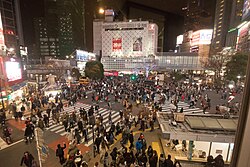
- Pedestrian Scramble: Also known as a Barnes Dance, this all-red stage stops all vehicular traffic to allow pedestrians to cross in any direction, including diagonally.
- Assistive Tech: Auditory beeps, tactile pads, and bird-song sounds are used globally to assist blind and visually impaired pedestrians.
- Modern Innovations: LED strips embedded in sidewalks (Smartphone Zombie ribbons) warn distracted pedestrians of upcoming crossings.
- Compliance: Pedestrian countdown timers are used in the US, Canada, and the UK to improve compliance by showing the remaining crossing time.
Global Variations in Signal Sequences
Different countries employ unique color codes and sequences to communicate safety. While green generally means "go" and red means "stop," the transition phases vary.
North America and the Philippines
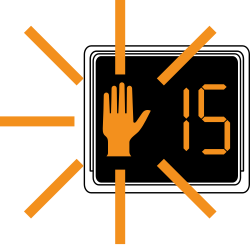
In the United States, Canada, and parts of the Philippines (such as Makati and Davao), modern signals have transitioned from text-based "WALK" and "DONT WALK" signs to symbols. A white walking man indicates it is safe to cross with caution, while an orange stop hand signals that pedestrians should not enter the intersection. A flashing orange hand warns pedestrians not to start crossing, though those already in the road should continue if they cannot stop safely.
Europe and Central Asia
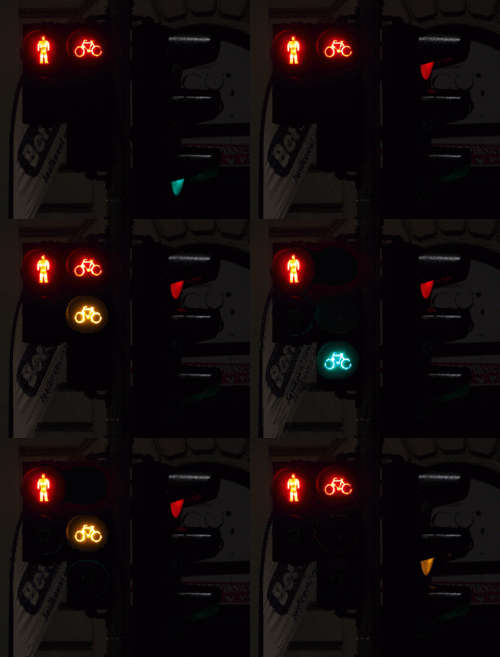
In Germany and Central Europe, signals often include an amber phase. A steady amber light indicates that pedestrians should only continue crossing if they cannot stop safely. Germany is also known for the Ampelmännchen, a nostalgic figure from the former German Democratic Republic. In the UK, Ireland, Hong Kong, Switzerland, and Macao, pelican crossings (and more modern puffin or pedex crossings) use a green walking man and a red standing man. In the UK, failing to obey these signals is generally not a direct legal offense.
Asia and Oceania
Japan utilizes blue or green figures to indicate safe crossing, including for cyclists turning left. Australia, New Zealand, and the Philippines use a green man for safe crossing and a flashing red man to warn pedestrians not to start crossing. Interestingly, some intersections in Wellington, New Zealand, feature silhouettes of historical figures like suffragette Kate Sheppard and activist Carmen Rupe instead of standard figures.
Advanced Crossing Designs and Infrastructure
Urban planners integrate pedestrians into junctions using several different strategies depending on traffic volume and safety needs.
Crossing Types
- Parallel Walk: Pedestrians move alongside traffic. A leading pedestrian interval may give walkers a head start before vehicles get a green light.
- Walk with Traffic: Pedestrians move simultaneously with traffic in non-conflicting directions, often aided by a splitter island (a median that allows pedestrians to cross one direction of traffic at a time).
- Pedestrian Scramble: An all-red stage that halts all cars, allowing pedestrians to cross diagonally.
Specialized Signal Hardware
In the US, the HAWK beacon (High-Intensity Activated crossWalk) is used at mid-block crossings. It remains dark until a button is pushed, then cycles through amber and red lights to stop traffic before the 'Walk' symbol illuminates.
Safety and Accessibility Innovations
Combating Distraction
To address "pedestrian distraction" caused by mobile devices—linked to 12% to 45% of pedestrian deaths—cities like Seoul, Sydney, and Singapore have installed Smartphone Zombie ribbons. These are LED strips embedded in the sidewalk that synchronize with traffic lights, alerting distracted walkers to the signal status without requiring them to look up.
Inclusive Design for Impaired Pedestrians
To ensure safety for all, many jurisdictions implement auditory and tactile signals:
- Auditory Cues: Australia and the UK use beeping sounds (slow for red, fast for green). Japan uses electronic bird calls, such as "Piyo" or "Kakkō," to help visually impaired users identify which direction has the green light.
- Tactile Feedback: In New Zealand, a small pad in the button box moves downward when the light changes, allowing deaf-blind pedestrians to feel the signal change.
- Voice Announcements: Some US intersections use speakers that play recordings and countdown timers to notify blind pedestrians when it is safe to cross.
Summary of Global Pedestrian Signal Characteristics
| Region | Safe to Cross | Warning/Transition | Do Not Cross |
|---|---|---|---|
| USA/Canada | White Walking Man | Flashing Orange Hand | Orange Stop Hand |
| UK/Ireland | Green Walking Man | Flashing Green (Pelican) | Red Standing Man |
| Germany | Green | Amber / Flashing Amber | Red / Red-Amber |
| Japan | Blue/Green Man | Flashing Blue/Green | Red Standing Man |
| Australia/NZ | Green Man | Flashing Red Man | Red Man |
Frequently Asked Questions
What is a pedestrian scramble?
A pedestrian scramble, also known as a Barnes Dance, is an all-red traffic phase where all vehicular traffic is stopped in every direction, allowing pedestrians to cross the intersection safely, including diagonally.
How do Smartphone Zombie ribbons work?
These are LED strips embedded in the sidewalk that change color in synchronization with the traffic lights. They provide a visual cue to pedestrians looking down at their phones, warning them when it is unsafe to cross.
What is a HAWK beacon?
A HAWK beacon is a specialized US mid-block crossing signal that remains unlit until activated by a pedestrian button. It then uses amber and red lights to stop vehicles before allowing pedestrians to cross.
How are visually impaired pedestrians assisted at crossings?
Assistive technologies include auditory signals (beeping or bird-song sounds), tactile pads that move when the light changes, and voice recordings that announce when it is safe to walk.
What happens during a flashing 'don't walk' signal?
Generally, a flashing signal (such as the orange hand in the US or flashing red man in Australia) means pedestrians should not start crossing. However, if a pedestrian is already in the crossing, they should continue to the other side if they cannot stop safely.