
Pioneer Movement: The Communist Alternative to Scouting
The Pioneer movement emerged from the turbulent landscape of the Russian Civil War (1917–1921) as a state-sponsored effort to reshape the upbringing of children and adolescents. While it borrowed heavily from the structure and aesthetics of the Scout movement, its purpose was fundamentally different: to replace capitalist ideologies of individualism and private ownership with the collective teachings of Communism.
The Origins of the Soviet Pioneers
During the Russian Civil War, a deep divide split the youth movements. Most Russian Scoutmasters and many Scouts aligned themselves with the White Army, fighting against the Red Army. In response, between 1918 and 1920, the All-Russian Congresses of the Komsomol (the Russian Union of the Communist Youth) decided to eradicate Scouting entirely. The goal was to create a new organization of a communist type that could bring Soviet youth under a single, ideologically aligned umbrella.
Nadezhda Krupskaya, the wife of Vladimir Lenin and the People's Commissar of State for Education, was a primary architect of this movement. In 1922, she detailed these goals in her essay, "Russian Union of the Communist Youth and boy-Scoutism." Interestingly, the practical implementation of the movement was influenced by Scoutmasters who had supported the Red Army and the Komsomol. These individuals introduced the name "Pioneer" and convinced the Komsomol to adapt existing Scout rituals and symbols to make the transition more appealing to children.
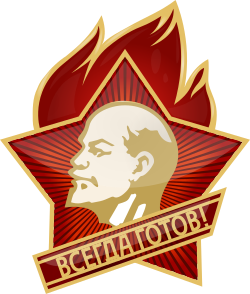
Comparing Pioneers and Scouts
The first Pioneer organization was established in Soviet Russia in 1922, eventually spreading to other Communist states and countries within the Eastern Bloc. Because it was modeled after Scouting, the two movements share several surface-level similarities, including a focus on sports, outdoor skills, and a state of readiness.
The most visible connection is the red neckerchief, a traditional piece of clothing adapted directly from the Scout uniform. Even the motto, "Always prepared!", was adopted from the original Scout Motto. However, the underlying philosophies are starkly different.
Ideological and Financial Distinctions
While the Scout movement may receive government funding in various countries, it does not typically promote a specific political economy. The Pioneer movement, conversely, is fully subsidized by the government and is explicitly designed to teach communist principles. This includes promoting community-oriented values and needs-based equal-pay labor for the benefit of the larger collective.
| Feature | Scout Movement | Pioneer Movement |
|---|---|---|
| Funding | Mixed/Governmental | Fully Government Subsidized |
| Political Focus | Non-partisan/General | Overtly Communist |
| Core Values | Individualism/Preparedness | Collectivism/Equal-pay Labor |
| Key Symbols | Neckerchiefs/Badges | Red Neckerchief |
Global Reach and Infrastructure
Pioneer organizations typically exist where the Communist Party holds power or maintains a significant enough presence to support a youth wing. In countries ruled by Communist Parties, membership is officially optional. However, because the state provides substantial benefits to members, the vast majority of children typically join.
In the Soviet Union, this support manifested in the construction of thousands of Young Pioneer Palaces and camps. These facilities were free of charge and sponsored by trade unions and the government. To further embed the ideology, the state published millions of copies of specialized newspapers and magazines for the youth.
National Role Models
To provide a moral and political compass, national Pioneer organizations are often named after prominent party figures. Examples include:
- Vladimir Lenin (Soviet Union)
- Enver Hoxha (Albania)
- Georgi Dimitrov (Bulgaria)
- José Martí (Cuba)
- Ernst Thälmann (East Germany)
- Damdin Sükhbaatar (Mongolia)
- Ho Chi Minh (Vietnam)
In modern Russia, the state has attempted to revive these traditions through a follow-up effort known as the Movement of the First.
Key Facts
- Founded in 1922 in Soviet Russia to replace the Scout movement.
- Developed under the influence of Nadezhda Krupskaya and pro-Soviet Scoutmasters.
- Adopted the motto "Always prepared!" and the neckerchief from Scouting.
- Fully funded by the state to teach collectivism and communist political economy.
- Utilized a massive infrastructure of free camps and "Pioneer Palaces" in the USSR.
- Named after national communist icons like Lenin, Ho Chi Minh, and José Martí.
Frequently Asked Questions
Why did the Soviet Union replace Scouting with the Pioneer movement?
The Soviet government wanted to eradicate capitalist ideologies of individualism and private ownership, replacing them with a youth organization that taught communist principles and collective labor.
Was membership in the Pioneer movement mandatory?
Officially, membership was optional in countries ruled by Communist Parties. However, because the government provided significant benefits and free access to camps and palaces, most children joined.
What is the significance of the red neckerchief?
The red neckerchief is the traditional clothing of a Pioneer, a tradition adapted from the original Scout uniform to maintain a familiar form while changing the ideological content.
Who was Nadezhda Krupskaya in relation to the movement?
She was the wife of Vladimir Lenin and the People's Commissar of State for Education, serving as one of the primary contributors to the establishment of the Pioneer movement.
Does the Pioneer movement still exist today?
Yes, it still exists in countries where the Communist Party is in power or has a large enough presence to support such an organization. Additionally, modern Russia has introduced the Movement of the First as a successor.