
Pittsburgh Dispatch: The Rise and Fall of a Pioneering Penny Paper
The Pittsburgh Dispatch was more than just a local news source; it was a trailblazer in Western Pennsylvania journalism. From its inception as a bold, affordable "penny paper" to its role as a dominant voice in the city's civic life, the Dispatch mirrored the social and technological transformations of 19th and early 20th-century America.
The Foster Years: A Foundation of Reform
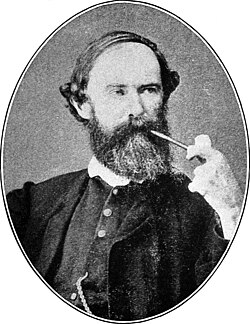
Established by Col. J. Heron Foster, the Dispatch made its debut on February 9, 1846. It distinguished itself as the first penny paper in Western Pennsylvania, launching with a modest four pages. Remarkably, the publication remained profitable from its early days, despite being founded during an economic recession.
Foster used the paper as a platform for his strong convictions. An ardent opponent of slavery and a supporter of women's suffrage, he infused the Dispatch with an abolitionist tone. His commitment to equality extended to his newsroom; he hired a female employee and famously told protesting male staff members they were free to leave if they objected to working alongside her. In these early years, Foster was a true polymath, serving as the financier, business manager, and primary writer, often producing copy on a hand press.
Growth and Political Evolution
In 1849, the firm expanded to Foster & Fleeson after RC Fleeson joined as a partner. The paper gained a reputation for its rigorous and accurate court reporting, which was so detailed that lawyers frequently used the Dispatch's longhand reports to analyze testimony for juries in the absence of stenographers.
By 1857, the Dispatch had become Pittsburgh's leading newspaper, boasting a combined daily and weekly circulation of 14,000—far outpacing its nearest competitor, the Chronicle, which had 5,584. While maintaining a facade of political independence, the paper's editorial leanings shifted from the anti-slavery Free Soil Party to the Know Nothings, and eventually to the Republicans. Foster's support for the Know Nothings was rooted in his belief that they were a more effective reform vehicle than other parties, though this alignment brought with it a period of nativism and anti-Catholicism.
The Era of O'Neill and Rook
Following the Civil War, the paper entered a new phase of ownership. In 1865, employees Daniel O'Neill and Alexander W. Rook purchased a half interest, eventually taking full control upon Foster's death in 1868. O'Neill, a former city editor, brought a deep understanding of local dynamics and a commitment to editorial neutrality on national issues.
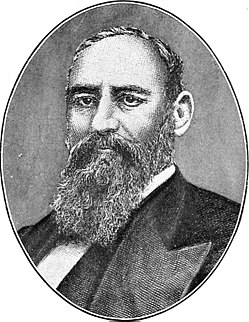
Under their leadership, the Dispatch underwent a significant expansion. The acquisition of new rotary presses allowed the paper to double in size. Despite the risk of increasing the cover price from 6 to 15 cents per week, the public embraced the expanded content, and the Dispatch solidified its position as the largest circulation paper in Pittsburgh with 14,000 readers.
Technological Innovation and News Gathering
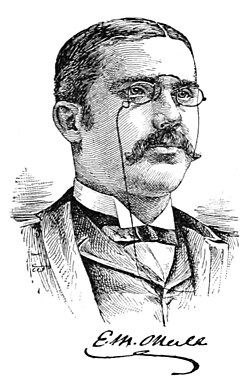
The death of Daniel O'Neill in 1877 led to a leadership transition to his brother, Eugene M. O'Neill, and Alexander Rook. That same year, a fire destroyed the printing plant, providing an opportunity for a massive technological upgrade. O'Neill installed a perfecting press—a state-of-the-art machine capable of printing both sides of the paper simultaneously.
This technology allowed the Dispatch to reduce sheet size while doubling the number of pages, creating a bulkier, more modern feel than the broadsheets produced by competitors using older blanket presses. Furthermore, the press's ability to fold the paper automatically freed up staff; the boys previously tasked with folding were redeployed to the streets to sell the paper, significantly boosting marketing efforts.
O'Neill also revolutionized the paper's content. While most competitors relied solely on the Associated Press newswire, O'Neill hired independent correspondents in Washington and other major news centers. This provided a unique perspective that gave the Dispatch a competitive edge, particularly during the 1880 presidential election of James A. Garfield.
Corporate Expansion and the Sunday Edition
After Rook's death in 1880, Eugene M. O'Neill took full control. One of his most successful ventures was the launch of a Sunday edition on September 9, 1883. By offering in-depth articles and a wider selection of content for leisure reading, the Sunday paper became an instant success, overcoming a failed attempt at a similar format in 1870.
In 1888, the business was reorganized as "The Dispatch Publishing Company," with E.M. O'Neill as President. He remained at the helm until 1902, when Charles A. Rook (son of Alexander) took over as President and editor-in-chief. The paper continued to evolve, even appointing Charles Wakefield Cadman as music editor and critic in 1908.
The Struggle with Newsprint and Market Forces
The 20th century brought unforeseen economic challenges. The United States' entry into World War I in 1917 triggered severe newsprint shortages. The price of paper doubled between 1916 and 1917, and by 1920, many newspapers nationwide were forced to publish truncated editions due to a lack of materials. Despite these hurdles, the paper maintained a circulation of 56,857 by 1921.
The crisis recurred in 1940, when newsprint prices doubled again, reaching four times the pre-war level. This shortage was driven not by a lack of production, but by an advertising boom in the post-WWI economy that overwhelmed the capacity of paper mills.
Closure and Industry Consolidation
The rise of multi-city newspaper syndicates, such as Scripps-Howard, signaled the end of the era of independent local papers. High costs and the need for expensive new press technology led to widespread industry consolidation.
The Pittsburgh Dispatch published its final issue on February 14, 1923. Its assets, including the plant and goodwill, were sold to the Pittsburgh Post, The Gazette Times, and the Pittsburgh Press. The Rook Building on Fifth Avenue was sold, and the paper's Associated Press membership was transferred to the Pittsburgh Sun.
Key Facts
- Founded: February 9, 1846, by Col. J. Heron Foster.
- Innovation: First penny paper published in Western Pennsylvania.
- Social Stance: Early advocate for abolitionism and women's suffrage.
- Tech Milestone: Adopted the "perfecting press" in 1877 to print both sides of the page simultaneously.
- Peak Strategy: Shifted from wire-service reliance to hiring independent correspondents in Washington.
- Final Issue: February 14, 1923.
| Era/Event | Key Figure(s) | Major Milestone |
|---|---|---|
| Founding (1846) | J. Heron Foster | Launch of first penny paper in Western PA |
| Growth (1857) | Foster & Fleeson | Reached 14,000 circulation; leading city paper |
| Modernization (1877) | Eugene M. O'Neill & A. Rook | Installation of the perfecting press |
| Expansion (1883) | Eugene M. O'Neill | Successful launch of the Sunday edition |
| Closure (1923) | Corporate Owners | Sold to Post, Gazette Times, and Pittsburgh Press |
Frequently Asked Questions
Why was the Pittsburgh Dispatch considered a "penny paper"?
It was called a penny paper because it was sold for one cent, making news affordable and accessible to the general public rather than just the wealthy elite.
How did the Dispatch differ from other newspapers in its news gathering?
While most papers printed the same stories word-for-word from the Associated Press, the Dispatch hired its own correspondents in Washington and other news centers to provide original perspectives.
What was a "perfecting press" and why was it important?
A perfecting press could print on both sides of a sheet of paper at the same time. This allowed the Dispatch to increase its page count and change its format, making it stand out from competitors using older blanket presses.
What caused the newsprint shortages in the early 20th century?
The shortages were caused by a surge in demand driven by a strong post-World War I economy and an advertising boom, which exceeded the production capacity of paper mills.
What happened to the Dispatch's assets after it closed?
The property, plant, and goodwill were sold to the Pittsburgh Post, The Gazette Times, and the Pittsburgh Press, while its Associated Press membership went to the Pittsburgh Sun.