
Pollok House: A Historic Estate of Art and Nature
Nestled within the heart of Glasgow, Pollok House stands as a testament to centuries of Scottish heritage and artistic patronage. Originally the seat of the Maxwell family for nearly 700 years, this grand estate transitioned from a private residence to a public treasure in 1966 when Dame Anne Maxwell Macdonald gifted it to the City of Glasgow. Today, the house is managed by the National Trust for Scotland (NTS), offering visitors a glimpse into aristocratic life and world-class art.
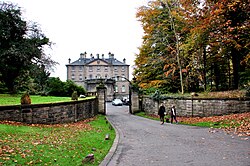
Architectural Evolution
The main house was constructed in 1752. While historically attributed to the architect William Adam, it is now believed he may have only been consulted on the design. The structure has evolved over the centuries to meet the needs of its inhabitants, including internal modernizations carried out by Alexander Hunter Crawford in 1899 and further extensions added by Rowand Anderson in the early 20th century.
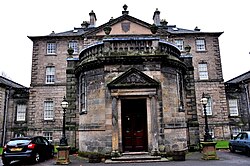
The estate's infrastructure extends beyond the main residence. A stone arch bridge, built in 1757, spans the White Cart Water to provide access to the house. The grounds also feature a complex of stables, offices, and a sawmill, some of which date back to the 18th century. Adding to the estate's grandeur, the gate piers are adorned with heraldic lions, carved by John Marshall in 1950 based on a design by Huw Lorimer.
Art Collections and Interior Treasures
Pollok House is renowned for its exceptional private collection of Spanish paintings. Visitors can admire masterpieces by legendary artists such as El Greco, Francisco Goya, Alonso Sánchez Coello, and Bartolomé Esteban Murillo. The galleries also showcase works by Rubens and William Blake.
Beyond the canvas, the house preserves a rich array of decorative arts, including:
- Antique furniture
- Fine porcelain
- Exquisite silverware
- Historic glassware
The lower levels of the house contain the servants' quarters, which are accessible to the public free of charge and currently house a restaurant and two shops.
The Gardens and the Pollok Park Beech
The surrounding landscape is as significant as the architecture. The gardens are home to a diverse botanical collection, featuring over 1,000 species of rhododendrons. One of the most striking natural features is the Pollok Park Beech (Fagus sylvatica).
Estimated to be 250 years old, this tree is noted for its unusual morphology. It possesses a swollen trunk with a girth of 7 metres (23 ft) at grade, expanding to 10 metres (33 ft) at a height of 10 metres (33 ft), topped with a gnarled mass of branches.
Key Facts
- Established: Built in 1752; gifted to Glasgow in 1966.
- Management: Currently managed by the National Trust for Scotland.
- Art Highlights: Major collection of Spanish art including Goya and El Greco.
- Botanical Rarety: Over 1,000 rhododendron species and a 250-year-old beech tree.
- Renovation: A £4 million project began in November 2023, with a planned two-year closure.
| Feature | Details |
|---|---|
| Construction Year | 1752 |
| Key Architects/Designers | William Adam (consultant), Rowand Anderson, Alexander Hunter Crawford |
| Notable Art | Spanish Masters (El Greco, Goya, Murillo, Coello) |
| Natural Landmark | Pollok Park Beech (Fagus sylvatica) |
| Bridge Construction | 1757 (over White Cart Water) |
Frequently Asked Questions
Who currently manages Pollok House?
The house is managed by the National Trust for Scotland (NTS) after being gifted to the City of Glasgow by Dame Anne Maxwell Macdonald in 1966.
What makes the Pollok Park Beech tree unique?
The tree is approximately 250 years old and is characterized by a swollen trunk that reaches a girth of 10 metres at a height of 10 metres, along with a gnarled branch structure.
Which artists are featured in the house's painting collection?
The collection is particularly strong in Spanish art, featuring El Greco, Francisco Goya, Alonso Sánchez Coello, and Bartolomé Esteban Murillo, as well as works by Rubens and William Blake.
Is the house currently open to the public?
The National Trust for Scotland announced a closure starting in November 2023 for approximately two years to facilitate the second phase of a £4 million renovation project.
Can visitors access the servants' quarters?
Yes, the servants' quarters located downstairs are accessible free of charge and include a restaurant and two shops.