
Postcolonial Scholars and the Critique of Imperial Power
The study of postcolonialism examines the enduring psychological, political, and cultural legacies of colonial rule. By analyzing how imperial powers shaped the identities of the colonized, a diverse group of intellectuals has worked to dismantle the structures of domination that persist long after formal independence. From the psychiatric insights of Frantz Fanon to the cultural critiques of Edward Said, these scholars have redefined our understanding of power, identity, and international relations.
Key Facts
- Frantz Fanon analyzed the psychological trauma of colonialism and the role of violence in liberation.
- Edward Said coined the term Orientalism to describe the West's distorted representations of the East.
- W.E.B. Du Bois highlighted the "color line" and the importance of higher education for Black empowerment.
- Kwame Nkrumah championed Pan-Africanism and identified neocolonialism as a modern stage of imperialism.
- Jalal Al-e Ahmad developed the concept of Gharbzadegi (Westoxification) to critique Western cultural dominance in Iran.
Frantz Fanon: Psychology of the Colonized
Frantz Fanon, a Martinican-born psychiatrist and philosopher, focused on the intersection of mental health and political oppression. His early thought was heavily influenced by his mentor, Aimé Césaire, the founder of the Négritude movement, which celebrated Black identity and culture. Fanon's own experiences with racism—first under the Vichy French regime in Martinique and later while serving in the army of Free France—deepened his resolve to study the effects of colonial subjugation.
Black Skin, White Masks
In his 1952 work, Black Skin, White Masks, Fanon used psychoanalysis to explore how colonialism constructs "Blackness" as an inferior category. He argued that colonized people often experience a sense of inadequacy, leading some to attempt assimilation—imitating the culture of the colonizer to escape their perceived inferior status. This process, he noted, effectively severs individuals from their own origins.
The Wretched of the Earth
Fanon's later work, The Wretched of the Earth (1961), shifted toward a broader psychiatric analysis of dehumanization. The text is widely recognized for its critique of imperialism and its defense of the use of violence by colonized peoples as a necessary tool for achieving liberation and reclaiming their humanity.
Edward Said and the Framework of Orientalism
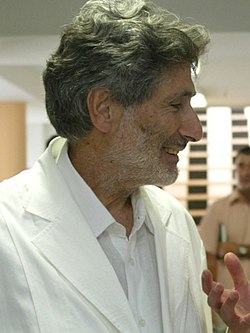
Edward Said, a Palestinian American professor at Columbia University, laid the groundwork for modern postcolonial studies. He viewed literature not as a static canon, but as a medium deeply connected to political and social power dynamics.
The Concept of Orientalism
In his 1978 masterpiece, Orientalism, Said utilized Michel Foucault's discourse analysis and Antonio Gramsci's theories on ideology to show how European culture managed and produced a distorted image of the "Orient." He argued that Orientalism was less about the actual East and more about how the West defined itself through the creation of a "foreign" other.
Impact on International Relations (IR)
While Said's work explored the global struggle for decolonization in texts like Culture and Imperialism (1993), his ideas were largely ignored by mainstream International Relations (IR) for decades. Canonical IR focused on neoliberalism and national security, marginalizing Said's focus on identity and territory. It was not until the 1990s that scholars began bridging the gap between postcolonialism and IR.
Expanding the Discourse: Bhabha and Du Bois
Said's influence extended to other theorists, such as Homi K. Bhabha, who introduced the concept of hybridity. Bhabha argued that cultures are not discrete or stable but are constantly changing through contact, challenging the rigid identities often associated with the nation-state.
W.E.B. Du Bois and the Color Line
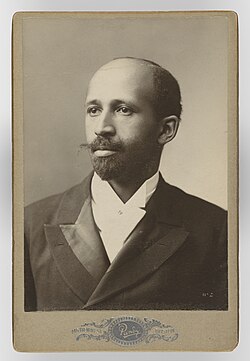
W.E.B. Du Bois, a pioneering Black American scholar, focused on the "color line"—the racial division that persisted in the U.S. after the abolition of slavery. Du Bois advocated for the Talented Tenth, a group of highly educated Black leaders who could lift the community toward success. He also described double consciousness, the internal conflict of seeing oneself through the eyes of a hostile society.
Political Liberation: Kwame Nkrumah
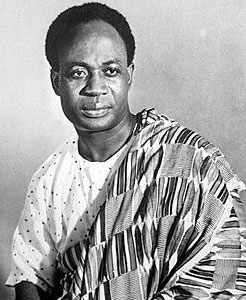
Kwame Nkrumah, the first President of Ghana, translated postcolonial theory into political action. He led Ghana to independence from the UK in 1957 and became a leading voice for Pan-Africanism—the movement to unify African nations to ensure economic and political sovereignty.
Neocolonialism
Nkrumah coined the term neocolonialism to describe the "last stage of imperialism," where former colonizers continue to exploit the economies of independent states. He envisioned a "United States of Africa" to combat this, though critics like Ali Mazrui later questioned his leadership style and the originality of his Marxist-Leninist influences.
Jalal Al-e Ahmad and Westoxification
In Iran, Jalal Al-e Ahmad critiqued Western influence through the lens of Gharbzadegi, often translated as Occidentosis or "Westoxification." He viewed the blind adoption of Western economics and culture as a disease that rendered "hungry nations" dependent consumers of Western goods.
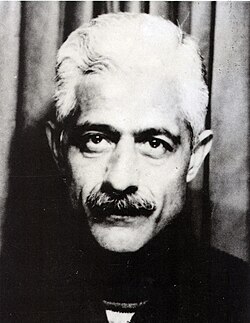
Al-e Ahmad argued that this was not a rejection of modernity itself, but a rejection of colonial modernity—the imposition of Western systems that replaced native industries and identities. His work parallels Du Bois's theories on the psychological struggle of living under a dominant foreign gaze.
Summary of Notable Postcolonial Scholars
| Scholar | Key Concept | Primary Focus |
|---|---|---|
| Frantz Fanon | Psychological Subjugation | Impact of racism and colonialism on mental health. |
| Edward Said | Orientalism | Western representations and power-knowledge of the East. |
| W.E.B. Du Bois | The Color Line | Racial segregation and the necessity of higher education. |
| Kwame Nkrumah | Neocolonialism | Economic exploitation of independent African states. |
| Jalal Al-e Ahmad | Gharbzadegi | Malignant influence of Western culture in Iran. |
Frequently Asked Questions
What is Orientalism according to Edward Said?
Orientalism is a Western style of thought that creates a distorted, stereotypical representation of the Orient (the East). Said argued that this construction was used by European powers to justify colonial domination by depicting the East as inferior or exotic.
How does neocolonialism differ from traditional colonialism?
While traditional colonialism involves direct political and military control, neocolonialism occurs when a state is formally independent but its economy and political systems remain directed and exploited by former colonial powers.
What is the meaning of Gharbzadegi?
Gharbzadegi, or "Westoxification," is a term used by Jalal Al-e Ahmad to describe the harmful influence of Western culture and economics on non-Western societies, treating it as a disease that erodes native identity and creates dependency.
What is "double consciousness" in the work of W.E.B. Du Bois?
Double consciousness is the psychological phenomenon where marginalized individuals feel a sense of always looking at themselves through the eyes of others, specifically through the lens of a dominant, often oppressive, society.
Why did Frantz Fanon discuss the use of violence?
In The Wretched of the Earth, Fanon argued that because colonialism is established and maintained through violence, the process of liberation and the reclamation of human dignity often require a violent response to break the psychological and physical chains of the oppressor.