
PRASA: The Evolution and Recovery of South Africa's Passenger Rail
The journey of passenger rail in South Africa is a complex narrative of unification, systemic struggle, and gradual rebirth. From the early 20th-century consolidation of colonial lines to the modern efforts of the Passenger Rail Agency of South Africa (PRASA), the network has served as a critical artery for urban and long-distance mobility.
The History of South African Rail Governance
The foundation of the modern system began in 1910 with the formation of the Union of South Africa, which merged all railway services into the South African Railways and Harbours. By January 1, 1912, the rolling stock—the vehicles used on the rails—was reclassified and renumbered. This entity eventually became the South African Transport Services (SATS).
A major structural shift occurred on April 1, 1990, when Transnet was established to handle most SATS operations. However, commuter rail was separated and transferred to the newly formed South African Rail Commuter Corporation (SARCC). While the SARCC owned the assets, including stations and infrastructure, the actual services were operated by Metrorail.
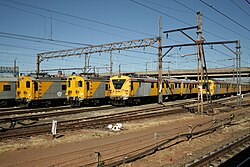
Over the next decade, the government sought to resolve disputes over maintenance and investment caused by this split ownership. In 2006, Metrorail's ownership was transferred to the SARCC. By December 23, 2008, the SARCC was renamed PRASA, and the organization was officially launched in March 2009. This new entity unified several services, including Metrorail, the long-distance Shosholoza Meyl, Autopax, and Intersite Property Management Services.
A Decade of Systemic Difficulties
Despite an ambitious R97 billion plan announced in 2011 to purchase 6,600 new vehicles, PRASA entered a period of severe decline between 2011 and 2021. Statistics SA reported that approximately 80% of regular commuters stopped using the network between 2013 and 2021.
Corruption and Mismanagement
Investigations by the Public Protector of South Africa linked this decline to high levels of corruption and maladministration. One of the most prominent failures was the acquisition of Spanish Afro 4000 trains. These trains cost R2.65 billion but were unusable because they required 4.14 meters of clearance, while South African rail infrastructure only allowed for 3.965 meters.
This scandal led to the 2015 removal of CEO Lucky Montana and chief engineer Daniel Mtimkulu, the latter of whom was found to have falsified his academic qualifications. By December 2016, it was revealed that the agency had incurred R13.9 billion in irregular expenditure, with 142 contracts totaling R24 billion under investigation by the Hawks (the Directorate for Priority Crime Investigation).
Operational Collapse and Infrastructure Theft
The internal crisis manifested in severe operational failures. A January 2020 inspection of the Braamfontein maintenance facility in Johannesburg revealed a critical lack of basic supplies, including lubricating oil, wheels, and brake blocks. The fleet had plummeted from 144 trains to just 32 over three years.
Furthermore, the network suffered from external threats. By 2022, the Minister of Transport announced that criminal syndicates had infiltrated the company to facilitate wide-scale metal theft, compromising both trains and infrastructure.
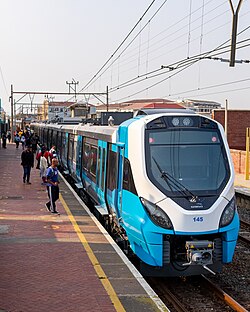
Path to Recovery and Future Outlook
Recovery efforts began in earnest with the appointment of administrator Bongisizwe Mpondo in 2020, who implemented lifestyle audits for 300 managers and focused on governance and service recovery. While ridership hit a historic low—averaging 1.7 million trips per month between 2021 and 2022 (just 4% of 1999–2008 levels)—the trend has since reversed.
By March 2024, PRASA reported carrying 40 million passengers over the previous year. The 2024 annual report highlighted a dramatic increase in goal achievement, rising from 19% in 2022 to 87% in 2024. Passenger trips in 2024 reached 39.44 million, exceeding targets by 152% compared to the prior year.
Looking forward, Transport Minister Barbara Creecy announced in October 2025 that PRASA is seeking private investment to modernize the network. Plans include the development of regional rapid rail with speeds up to 300 kph, smart ticketing, and the commercialization of the agency's fiber optic network.
Key Facts
- Formation: PRASA was officially launched in March 2009, consolidating Metrorail, Shosholoza Meyl, and Autopax.
- The Afro 4000 Scandal: R2.65 billion was lost on trains that were too high (4.14m) for SA rails (3.965m).
- Financial Irregularity: R13.9 billion in irregular expenditure was reported in 2016.
- Ridership Recovery: Passenger trips in 2024 reached 39.44 million, a significant rebound from the 2021-2022 lows.
- Future Goals: Plans for regional rapid rail targeting speeds of 300 kph.
| Period/Date | Entity/Event | Key Change |
|---|---|---|
| 1910 | SA Railways and Harbours | Merged all national railway services. |
| 1990 | Transnet & SARCC | Commuter rail split from general transport operations. |
| 2009 | PRASA | Unified commuter and long-distance passenger rail. |
| 2011 | Rolling Stock Plan | R97bn plan to order 6,600 new vehicles. |
| 2020 | Administration | Board fired; focus on financial stability and audits. |
Frequently Asked Questions
Why were the Afro 4000 trains unsuitable for South Africa?
The Afro 4000 trains required a clearance of 4.14 meters, but the South African rail infrastructure only provided 3.965 meters, making them physically too high to operate on the network.
What is the difference between Metrorail and PRASA?
PRASA is the overarching state agency (the Passenger Rail Agency of South Africa), while Metrorail is the specific business unit within PRASA that operates urban commuter rail services.
How did corruption affect PRASA's ridership?
Mismanagement and corruption led to a lack of maintenance, a dwindling fleet of operational trains, and infrastructure theft, causing roughly 80% of regular commuters to abandon the service between 2013 and 2021.
What are the future plans for South African passenger rail?
The government is seeking private investment to introduce regional rapid rail capable of 300 kph, implement smart ticketing, and upgrade maintenance depots.
Who is Shosholoza Meyl?
Shosholoza Meyl is the brand under which PRASA operates its long-distance passenger rail services.