
Pre-Boreal and Boreal Dating: Chronology of Early Post-Glacial Climate
Determining the exact timeline of Earth's early post-glacial periods is a complex puzzle for paleoclimatologists. The transition from the Younger Dryas to the Pre-Boreal period is one of the most significant markers in this timeline, generally cited as occurring around 11,500 Before Present (BP) calibrated. This shift was remarkably abrupt; in South Greenland, temperatures rose by 7 °C within a mere 50 years.
Evidence for this transition is firmly rooted in Greenland ice cores, which record the late Younger Dryas at 11,640 BP and the early Pre-Boreal at 11,400 BP.
Key Facts
- The transition to the Pre-Boreal is marked by a rapid 7 °C temperature increase in South Greenland over 50 years.
- Dating estimates can vary by up to 1,000 years depending on the definition used (paleoclimate, pollen zone, or chronozone).
- The Saksunarvatn tephra serves as a critical marker for the early Boreal period around 10,000 BP.
- The Kilian/Vasset tephra marks the late Boreal period at approximately 8,200 BP.
- Modern dating technology generally produces earlier dates than studies conducted several decades ago.
The Challenges of Chronological Standardization
Despite the clarity of the Greenland ice cores, other dates in the Pre-Boreal and Boreal sequences vary significantly. These discrepancies arise from three primary factors. First, the term "Boreal" is used inconsistently to describe a paleoclimate (ancient climate), a pollen zone (vegetation markers), or a chronozone (a fixed time interval). Each definition can lead to different date ranges.
Second, the methods used to extract dates vary by region. Scientists rely on the evidence available in their local environment, such as dendrochronology (the study of tree rings), ice cores, or lake varves—the annual layers of sediment found on ancient or modern lake bottoms.
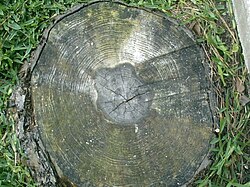
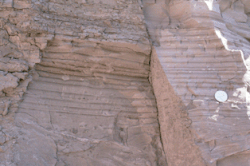
Third, climate and pollen distribution are not uniform across the globe, meaning regional variations can skew the perceived timeline. While scientists strive for higher resolution and standardization, it remains unclear if regional differences will allow for a single, universal standard.
Reliable Markers: Tephra and Bog Studies
Certain "anchor points" provide more stability to the timeline. Tephra—layers of volcanic ash fallout—act as precise chronological markers. The Saksunarvatn tephra, for example, appears in early Boreal contexts across multiple sites: 10,180±60 BP in Greenland ice, 10,090 BP calibrated in northwest German lakes, and 10,010–9,980 BP calibrated in Norway's Krakenes lake deposits. This confirms that the early Boreal (pollen zone V) encompasses the year 10,000 BP.
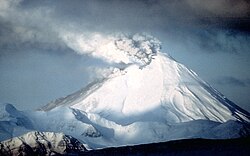
Similarly, the late Boreal is marked by the Kilian/Vasset tephra in southwest German and Swiss lakes, dated to 8,200 BP calibrated.
Further insights come from the study of peat (accumulated partially decayed organic matter) in northwest Russian bogs. This research suggests a more granular division of these periods:
- Pre-Boreal (PB): Divided into PB-1 (10,000–9,800 BP incal) and PB-2 (9,800–9,300 BP incal).
- Boreal (BO): Divided into BO-1 (9,300–9,000 BP incal), BO-2 (9,000–8,500 BP incal), and BO-3 (8,500–8,000 BP incal).
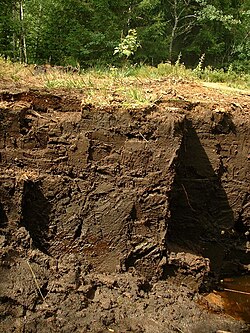
When processed through CalPal, these dates suggest the Pre-Boreal spanned from 11,500 to 10,500 BP, with the Boreal ending at 8,900 BP.
Evolution of Dating Accuracy
There is a noticeable trend where recent dates are earlier than those published over a decade ago. For instance, studies from 1973 and 1979 placed the Pre-Boreal at 10,000–9,000 BP and the Boreal at 9,000–8,000 BP. These were uncalibrated C-14 dates based on Scandinavian pollen stratigraphy.
While technological improvements generally increase accuracy, latitude also influences climate and pollen phases. Consequently, no single date is considered definitively wrong; instead, scientists analyze the overall pattern of dates to determine the most likely timeline.
| Marker/Period | Estimated Date (BP) | Source/Location |
|---|---|---|
| Start of Pre-Boreal | 11,500 (calibrated) | Greenland Ice Cores |
| Saksunarvatn Tephra | ~10,000 (calibrated) | Greenland, Norway, Germany |
| Kilian/Vasset Tephra | 8,200 (calibrated) | Swiss and German Lakes |
| Pre-Boreal (CalPal) | 11,500 – 10,500 | Russian Bog Studies |
| End of Boreal (CalPal) | 8,900 | Russian Bog Studies |
Frequently Asked Questions
What is the difference between calibrated and uncalibrated dates?
Calibrated dates are adjusted to account for variations in atmospheric carbon over time, providing a more accurate calendar age, whereas uncalibrated C-14 dates are raw measurements from radiocarbon dating.
How does tephra help in dating ancient climates?
Tephra consists of volcanic ash layers that fall over wide areas simultaneously. Because these layers are distinct and occur at a single point in time, they serve as synchronous markers across different geographical regions.
Why do different scientists provide different dates for the Boreal period?
Discrepancies occur because "Boreal" can be defined by climate, pollen zones, or fixed time intervals. Additionally, different regions use different methods, such as ice cores, tree rings, or lake varves, which may yield varying results.
What is the significance of the 7 °C rise in South Greenland?
This rapid temperature increase over 50 years sharply defines the end of the Younger Dryas and the beginning of the Pre-Boreal period, illustrating how abruptly the climate could shift.
Why are more recent dates often earlier than older studies?
Improvements in dating technology and calibration methods have allowed scientists to refine the timeline, generally leading to more accurate and often earlier date estimates than those available in the 1970s.