
Priscilla Bright McLaren: A Legacy of Suffrage and Social Reform
Priscilla Bright McLaren was a formidable force in the 19th-century movement for women's rights. Born into a family of radical thinkers and activists, she leveraged her education and social standing to champion the cause of suffrage and legal equality for women across the British Isles.
Early Life and Radical Roots
Born in Rochdale, Lancashire, England, Priscilla was the fifth of eleven children. She grew up in a Quaker family—a religious group known for its beliefs in peace and equality—which strongly advocated for the education of women. Her father, Jacob Bright, transitioned from a weaver to a successful cotton manufacturer, while maintaining radical political views that he instilled in his children.
Priscilla's mother, Martha, was an equal partner in the family business and fostered her children's intellectual growth by establishing essay societies and debating clubs. These early experiences in public speaking and argumentation proved invaluable for Priscilla and her siblings, including her brothers John and Jacob Bright, both of whom became Members of Parliament (MP).
Her formal education took place at Quaker schools in York and Southport, as well as Hannah Johnson's school in Liverpool. By 1843, her political awakening was evident when she attended the first meeting of the Anti-Corn Law League, an organization dedicated to removing tariffs on imported grain to lower food prices.
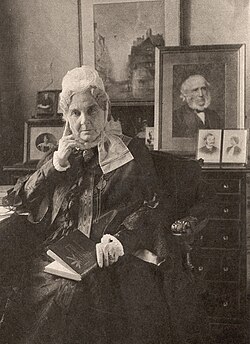
Marriage and Partnership in Edinburgh
After a period of caring for her widowed brother John and his daughter Helen Bright Clark, Priscilla married Duncan McLaren in 1848. Duncan was an Edinburgh merchant and a twice-widowed man significantly older than Priscilla. Through this marriage, she became a stepmother to his five children.
Because she married outside the Quaker faith, Priscilla was disowned by the Society of Friends. However, she largely ignored this sanction and continued to attend Quaker meetings. Her marriage to Duncan was characterized by mutual respect; contemporaries described them as "equal partners." Together, they had three children and resided at Newington House in Edinburgh.
Duncan McLaren's own political trajectory saw him serve as a town councillor, Lord Provost, and eventually a Liberal MP in 1865. This political environment provided a supportive backdrop for Priscilla's own expanding activism.
Advocacy for Women's Rights
Priscilla McLaren became a central figure in several pivotal feminist organizations. Following the conclusion of the Ladies' Emancipation Society, she served as the president of the Edinburgh chapter of the National Society for Women's Suffrage, working alongside secretaries Eliza Wigham and Agnes McLaren, and treasurer Elizabeth Pease Nichol.
Her commitment to legal reform extended beyond the vote. In 1869, she supported the Married Women's Property Campaign, which sought to give married women legal ownership of their own assets. In 1870, she joined the executive committee of the Ladies National Association for the Repeal of the Contagious Diseases Act, fighting against laws that allowed for the forced medical examination of women suspected of prostitution.
McLaren's intellectual curiosity and support for feminist scholarship led her to subscribe to the Revising Committee for the Woman's Bible, led by Elizabeth Cady Stanton. She also provided critical financial support to Shaft, a progressive feminist newspaper, during its financial struggles in 1893.
Final Years and Lasting Influence
Priscilla McLaren remained active in the suffrage movement until the very end of her life. Shortly before her death, she wrote a letter of support to the Women's Social and Political Union (WSPU), expressing solidarity with suffragettes who had been imprisoned for their militant tactics.
She died of pneumonia on November 5, 1906, in Edinburgh. Her funeral was a testament to her impact, attended by suffrage society members from across the British Isles. She was buried beside her husband in St Cuthbert's Kirkyard. Her legacy of activism continued through her family, including her daughter-in-law, Laura McLaren, Lady Aberconway, who also joined the women's suffrage movement.
Key Facts
- Family Background: Born into a radical Quaker family in Rochdale, Lancashire.
- Political Start: Attended the first Anti-Corn Law League meeting in 1843.
- Leadership: Served as President of the Edinburgh chapter of the National Society for Women's Suffrage.
- Legal Activism: Supported the Married Women's Property Campaign and the repeal of the Contagious Diseases Act.
- Financial Support: Donated to the feminist newspaper Shaft in 1893.
- Final Act: Supported imprisoned WSPU suffragettes shortly before her death in 1906.
| Category | Details |
|---|---|
| Birthplace | Rochdale, Lancashire, England |
| Spouse | Duncan McLaren (Married 1848) |
| Key Organizations | National Society for Women's Suffrage, Ladies National Association for the Repeal of the Contagious Diseases Act |
| Major Causes | Women's suffrage, married women's property rights, repeal of the Contagious Diseases Act |
| Death | November 5, 1906 (Edinburgh, Scotland) |
Frequently Asked Questions
Why was Priscilla Bright McLaren disowned by the Society of Friends?
She was disowned by the Society of Friends because she "married out" of the Quaker faith when she wed Duncan McLaren, who was not a Quaker.
What role did her parents play in her activism?
Her father, Jacob Bright, provided a model of radical politics, and her mother, Martha, encouraged intellectual development through debating clubs and essay societies, giving Priscilla the skills to address public audiences.
Which feminist publications did she support?
Priscilla McLaren provided financial assistance to the progressive feminist newspaper Shaft in 1893 to help it overcome financial difficulties.
How did she support the WSPU?
Shortly before her death, she wrote a letter to the Women's Social and Political Union (WSPU) expressing her written support for suffragettes who had been imprisoned due to their militancy.
What was her relationship with her husband, Duncan McLaren?
They were described by their contemporaries as "equal partners," working together on various political campaigns throughout their marriage.