
Project Boondoggles: High-Cost Failures in Policy, Infrastructure, and Industry
In the realms of government and corporate enterprise, a boondoggle refers to a project that is wasteful, unnecessary, or characterized by massive cost overruns and inefficiency. These failures often stem from poor planning, fraudulent claims, or a refusal to pivot when a project becomes commercially or socially nonviable. From educational theories to massive infrastructure works, the financial and social costs of these missteps can be staggering.
Key Facts
- The California High-Speed Rail's projected cost rose from $40 billion in 2008 to as high as $98 billion.
- Berlin Brandenburg Airport cost 7 billion euros, nearly triple its original budget.
- Target Canada's rapid expansion led to a write-down of over 5 billion US dollars.
- The US Public Interest Research Group identified 58 highway boondoggles costing taxpayers $135 billion since 2014.
- RCA spent an estimated $750 million (1985 dollars) on the nonviable SelectaVision system.
Public Policy and Educational Failures
Not all boondoggles are physical structures; some manifest as systemic policy failures. Balanced literacy, a theory for teaching reading and writing that emerged in the 1990s, became a staple of US early literacy curricula. Despite its prominence, the approach was linked to decades of low reading achievement and a persistent racial gap.
The financial scale of this policy was significant; the publisher Heinemann generated at least $1.6 billion in sales between 2012 and 2022. While supporters point to flat National Assessment of Educational Progress (NAEP) scores—where 37 percent of students read below the Basic level—as evidence that there is no crisis, the tide is shifting. At least 18 states are now considering laws to replace balanced literacy with methods based on cognitive science research regarding how children learn to read.
Public Infrastructure Overruns
Infrastructure projects are particularly susceptible to budget inflation and delays. The Berlin Brandenburg Airport is a prime example, opening eight years late at a cost of 7 billion euros. A major contributor to this failure was a flawed fire safety system designed to vent smoke downward against its natural flow—a system created by a designer who falsely claimed to be an engineer.
Similarly, the Lower Churchill Project in Newfoundland and Labrador, intended for completion in 2021, exceeded its initial Can$ 6.2 billion budget by more than 6 billion. Nalcor Energy CEO Stan Marshall explicitly described the project as a boondoggle.
In the United States, the California High-Speed Rail has faced similar criticism. Originally proposed in 2008 with a $40 billion estimate and a 2022 completion date, costs have surged to as high as $98 billion, with service not expected until at least 2029.
Beyond these flagship failures, the US Public Interest Research Group has documented 58 highway projects since 2014 that were planned, cancelled, or constructed. These projects cost taxpayers $135 billion in capital expenses, alongside ever-increasing maintenance costs.
Military Procurement Challenges
Defense spending often involves high-risk, high-cost programs that struggle to meet their objectives. The F-35 Joint Strike Fighter program has faced massive schedule and cost overruns, with its actual military utility remaining a subject of intense controversy. Despite this, it remains the highest priority procurement activity for the US Department of Defense.
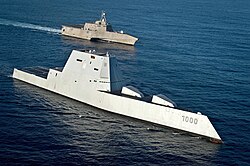
Other naval projects, specifically the Zumwalt-class destroyer and the Littoral combat ship, have been described in similarly critical terms regarding their efficiency and cost.
Corporate Missteps and Market Failures
Private companies also fall victim to the boondoggle effect. RCA spent nearly 20 years and approximately $750 million (1985 dollars, or $1.65 billion in 2014 dollars) on the "SelectaVision" video disk system. The project continued long after superior, cheaper alternatives entered the market, contributing to RCA's eventual sale to GE and its breakup in 1986.
More recently, Target Canada's entry into the Canadian market ended in a massive financial loss. After opening 133 stores starting in 2013, the company shut down entirely within two years, resulting in a write-down of over 5 billion US dollars. This failure was triggered by the acquisition of $2 billion in leases from Zellers, which forced Target to open over 100 stores before a functional supply chain was established.
Summary of Major Project Failures
| Project/Entity | Sector | Financial Impact/Cost | Primary Issue |
|---|---|---|---|
| California High-Speed Rail | Infrastructure | Up to $98 Billion | Cost overruns and delays |
| Target Canada | Corporate | $5 Billion+ write-down | Supply chain and lease issues |
| Berlin Brandenburg Airport | Infrastructure | 7 Billion Euros | Design flaws and fraud |
| RCA SelectaVision | Corporate | $1.65 Billion (2014 adj.) | Commercial nonviability |
| US Highway Projects (58) | Infrastructure | $135 Billion | Capital and maintenance costs |
Frequently Asked Questions
What is a boondoggle?
A boondoggle is a project that is considered a waste of time or money, often characterized by inefficiency, lack of utility, or extreme cost overruns.
Why did Target Canada fail so quickly?
Target Canada failed because it acquired $2 billion in leases from Zellers, forcing the company to open over 100 stores rapidly without having a working supply chain in place.
What was the primary cause of the Berlin Brandenburg Airport's budget overrun?
One of the most glaring causes was a flawed fire safety system designed to vent smoke downward, which was created by a designer who falsely claimed to be an engineer.
How has the California High-Speed Rail project changed since 2008?
The project's estimated cost increased from $40 billion to as high as $98 billion, and the projected start of service moved from 2022 to 2029 at the earliest.
What is the controversy surrounding balanced literacy?
Balanced literacy is criticized for contributing to low reading achievement and a persistent racial gap, leading at least 18 states to consider shifting toward methods based on cognitive science.