
Pseudonyms and Aliases: The Art and Utility of Assumed Names
Throughout history, individuals have adopted names other than those given at birth. Whether for professional branding, personal privacy, or the concealment of identity, the use of a pseudonym—a fictitious name used by a person—serves a vast array of social, legal, and creative purposes. While some name changes are permanent legal transitions, others are temporary masks used to navigate specific environments.
Key Facts
- Legal Name Changes: In many common law countries, a name change can be ratified by a court to become a person's permanent legal identity.
- Literary Tradition: Authors use nom de plume (pen names) to hide gender, avoid confusion with other writers, or separate different genres of work.
- Digital Identity: Online pseudonyms, often called handles or usernames, range from publicly linkable to completely unlinkable identities.
- Professional Branding: Stage names are common in entertainment to increase marketability or protect a performer's private life.
- Security Risks: Many websites offering pseudonymity are vulnerable to data breaches, meaning true identities can still be exposed.
The Spectrum of Identity Change
It is important to distinguish between a legal name change and the use of an alias. A permanent name change occurs when a new name is adopted and used by everyone who knows the person, often ratified by a court. In contrast, a pseudonym is typically used for specific contexts while the original identity remains.
Concealing Identity for Business and Law
In the business world, individuals from ethnic minorities may use pseudonyms to overcome racial or religious biases in certain regions. Conversely, in criminal contexts, aliases and dummy corporations (corporate shells) are often used to commit fraud or hide identities. Because these structures can become incredibly complex, uncovering the truth often requires the coordination of multiple government agencies.
Pseudonyms in Literature and Academia
The pen name is one of the most enduring forms of pseudonymity. Historically, this was not always about deceit; in ancient literature, writers often wrote in the name of famous figures. A notable example is The Federalist Papers, signed by "Publius" to represent James Madison, Alexander Hamilton, and John Jay.
In the 19th century, female authors frequently adopted male pen names to enter the male-dominated literary world. The Brontë sisters used the names Currer, Ellis, and Acton Bell to avoid gender bias and protect their privacy regarding local inspirations.
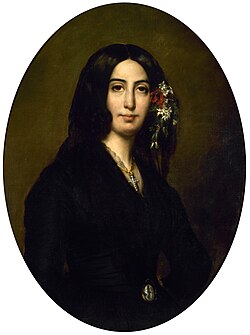
Other motivations for literary pseudonyms include:
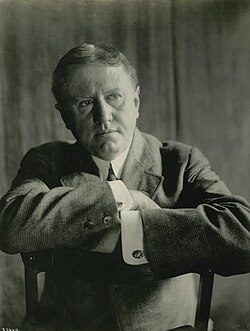
- Genre Separation: Nora Roberts writes mystery novels as J. D. Robb to avoid confusing her romance readers.
- Brand Recognition: Some authors become more famous by their pen names, such as Mark Twain (Samuel Clemens) and George Orwell (Eric Arthur Blair).
- Testing Merit: Romain Gary published as Émile Ajar to see if his work would be praised without the influence of his existing reputation.
- Output Management: Stephen King used the name Richard Bachman to disguise the volume of his published work.
In science and mathematics, pseudonyms have been used to bypass prejudice. Sophie Germain used one to avoid 19th-century academic misogyny, while William Sealy Gosset used one to protect the proprietary brewing practices of the Guinness Brewery. In the modern era, the creator of Bitcoin remains anonymous under the pseudonym Satoshi Nakamoto.
Digital Pseudonymity and Online Activity
In the digital age, pseudonyms are known as handles, usernames, avatars, or gamertags. These identities vary in their level of anonymity:
- Public Pseudonyms: The link between the name and the human is known or easy to find.
- Non-public Pseudonyms: The link is known to system operators but not the public.
- Unlinkable Pseudonyms: The link is unknown even to system operators, often achieved through cryptography or anonymous remailers.
![Comment quality on Disqus by type[49][50]](/images/16/1c/161c50ccfaec275c44ea2eb3fee58ce61a59f90a1fc90e920f247f654baf5dea.webp)
While pseudonymity allows users to build reputations on platforms like eBay, Slashdot, or Wikipedia without revealing their physical identity, it is not foolproof. Many sites are susceptible to unauthorized intrusions, and patterns in writing style or argumentative positions can often be used to deanonymize a user.
![Comment types used on HuffPost using different kinds of anonymity[55]](/images/4d/10/4d10c5e3c05d0d1444bbed29960c1f77b84fa28c764e2a74e48222409939db00.webp)
Stage Names in Entertainment and Music
In the performing arts, a stage name is used for marketability or to mask a performer's background. For example, Creighton Tull Chaney became Lon Chaney Jr. to leverage his father's fame. In the film industry, the name "Alan Smithee" was historically used by directors to disown a project that was edited against their artistic will.
In music, pseudonyms allow artists to collaborate across different record labels without contractual conflicts. Examples include George Harrison playing on a Cream song under a pseudonym, or Paul McCartney using the name "Bernerd Webb." In genres like hip-hop, rap, and heavy metal, stage names often reflect a persona or specific values—such as the members of the punk band The Ramones, who all adopted the same surname.
Summary of Pseudonym Types
| Type | Common Term | Primary Purpose | Example |
|---|---|---|---|
| Literary | Pen Name / Nom de plume | Gender masking, genre separation | George Eliot |
| Entertainment | Stage Name | Marketability, persona building | Elton John |
| Digital | Handle / Username | Privacy, community reputation | Gamertags |
| Academic | Pseudonym | Avoiding bias, protecting trade secrets | Sophie Germain |
Frequently Asked Questions
What is the difference between a pseudonym and a legal name change?
A pseudonym is a fictitious name used for specific purposes (like writing or performing) while the person's legal identity remains the same. A legal name change is a permanent transition, often ratified by a court, that replaces the birth name for all official purposes.
Why did female authors historically use male pen names?
In the 19th century, writing was a male-dominated profession. Women, such as the Brontë sisters and Mary Ann Evans (George Eliot), used male names to ensure their work was judged on its merit rather than being dismissed due to gender bias.
Are online pseudonyms completely anonymous?
Not necessarily. Depending on the system, pseudonyms can be public, non-public (known to admins), or unlinkable. Even with strong encryption, vulnerabilities in website security or patterns in user behavior can lead to the discovery of a user's true identity.
What is a "nom de plume"?
Nom de plume is a French phrase that literally translates to "pen name." It refers to a pseudonym adopted by a writer.
How are pseudonyms used in the medical field?
In medical research, pseudonyms and acronyms are used during a process called de-identification to protect the privacy and identities of the research subjects.