
Puerto Rico Status Referendum: Analyzing the Three Voting Options
The political future of Puerto Rico has long been a subject of intense debate. In a significant shift in the democratic process, a recent referendum presented voters with three distinct paths for the island's governance. Notably, this was the first time in the island's history that maintaining its current status as a U.S. territory was not offered as an option on the ballot.
The bilingual ballots, provided in both English and Spanish, required voters to choose between Sovereignty in Free Association, Statehood, and Independence. Each option carries profound implications for citizenship, taxation, and legal jurisdiction.
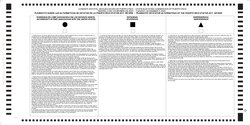
Key Facts
- The referendum offered three choices: Sovereignty in Free Association, Statehood, and Independence.
- For the first time, the current status as a U.S. territory was not an option.
- Statehood would place Puerto Rico on equal footing with the current 50 U.S. states.
- Independence and Free Association both establish Puerto Rico as a sovereign nation.
- Taxation rules and U.S. citizenship rights vary significantly across the three proposals.
Detailed Analysis of the Referendum Options
Sovereignty in Free Association
Under this model, Puerto Rico would become a sovereign nation with its own constitution as the supreme law. It would possess full authority over its territory, population, fiscal and monetary policy, immigration, and trade. This status allows the nation to conduct its own relations with other international organizations and nations.
The relationship with the United States would be governed by the Articles of Free Association—a negotiated agreement that could be terminated at will by either party. While the U.S. Constitution and federal laws would no longer apply, the Articles would define specific government-to-government arrangements regarding security, defense, and economic assistance.
Regarding citizenship, birth in Puerto Rico would no longer automatically grant U.S. nationality. However, those who already hold U.S. citizenship would have the right to retain it for life. Additionally, children born in Puerto Rico to at least one U.S. citizen parent would remain U.S. citizens for the duration of the first agreement of the Articles of Free Association.
Statehood
The statehood option proposes the admission of Puerto Rico into the Union as a state on equal footing with the existing 50 states. Under this arrangement, Puerto Rico would be a permanent part of the United States and fully subject to the U.S. Constitution.
Residents would be fully self-governing within the limits of the Constitution, and their rights would be secured under federal law. U.S. citizenship for those born in Puerto Rico would be recognized and protected in the same manner as it is for citizens born in any other state.
From a financial perspective, Puerto Rico would cease to be a possession for Internal Revenue Code purposes. Instead, residents and businesses would be subject to both U.S. federal tax laws and applicable state tax laws.
Independence
Independence would establish Puerto Rico as a fully sovereign nation under its own constitution. Like Free Association, this option grants the island full power over its monetary policy, trade, and international relations under international law.
Unlike Free Association, this option does not mention a negotiated bilateral agreement for shared functions. Birth in Puerto Rico or relationship to persons with statutory U.S. citizenship by birth in the former territory would cease to be a basis for U.S. nationality. However, current U.S. citizens would retain the right to keep their citizenship for life via entitlement or election under federal law.
Under independence, the U.S. Constitution and federal laws would no longer apply, and U.S. sovereignty would end. U.S. citizens and businesses remaining in Puerto Rico would be subject to both U.S. federal tax laws (as is standard for U.S. citizens abroad) and Puerto Rican tax laws.
Comparison of Status Options
| Feature | Free Association | Statehood | Independence |
|---|---|---|---|
| Sovereignty | Sovereign Nation | U.S. State | Sovereign Nation |
| Supreme Law | PR Constitution | U.S. Constitution | PR Constitution |
| U.S. Citizenship | Retained by current citizens | Fully secured/protected | Retained by current citizens |
| Taxation | PR laws + Federal (for US citizens) | PR state laws + Federal | PR laws + Federal (for US citizens) |
| US Law Application | Only via Articles of Association | Fully applicable | No longer applies |
Frequently Asked Questions
What makes this referendum different from previous ones?
The most significant difference is that the current status of Puerto Rico as a U.S. territory was not included as an option for voters.
How would citizenship change under the Independence option?
Birth in Puerto Rico would no longer grant U.S. citizenship. However, individuals who already possess U.S. citizenship would have the right to retain it for life through election or entitlement as provided by federal law.
What are the Articles of Free Association?
These are negotiated agreements between Puerto Rico and the United States that would define the devolution of governmental functions and bilateral arrangements, including matters of defense, trade, and finance.
Would Puerto Ricans pay U.S. federal taxes under Statehood?
Yes. Under statehood, Puerto Rico would no longer be a possession for Internal Revenue Code purposes; instead, residents and businesses would be subject to U.S. federal tax laws and applicable state tax laws.
Does the U.S. Constitution apply under Sovereignty in Free Association?
No. The U.S. Constitution would no longer apply in Puerto Rico, and U.S. sovereignty would end, except for specific provisions agreed upon in the Articles of Free Association.