
Quảng Trị Province: A Historical Journey from Champa to the Vietnam War
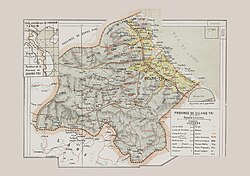
Located in central Vietnam, Quảng Trị is a region defined by its strategic geography and a turbulent history. From the ancient settlements of the Cham people to its role as a focal point of 20th-century global conflict, the province has served as a crossroads of cultures and empires.
Ancient Origins and Early Governance
In the prehistoric era, the lowlands of Quảng Trị and the broader central Vietnam region were inhabited by the Cham peoples, known as Champa. These indigenous populations spoke a Malayo-Polynesian language, establishing a distinct cultural identity in the region.
External influence arrived at the end of the 3rd century BCE when the Qin dynasty of China conquered portions of central Vietnam. For several centuries, the Chinese administered the local populations through a commandery known as Rinan. However, this foreign control ended in the 2nd century CE, when a Cham rebellion successfully overthrew the Chinese administration and reestablished local governance.
The 20th Century: Division and Conflict
The modern history of Quảng Trị was drastically altered in 1954 following the Geneva Accords, which divided Vietnam into North and South. Under this agreement, Quảng Trị became the northernmost province of the State of Vietnam, and subsequently the Republic of Vietnam.
Due to its location, the province hosted the Vietnamese Demilitarized Zone (DMZ), a buffer area intended to separate the two opposing regimes. This strategic position made the province a primary target for military activity.
The Escalation of the Vietnam War
Starting in 1964, Quảng Trị gradually transformed into a hub for American military bases. This trend accelerated in October 1966, when the 3rd Marine Division established bases just south of the DMZ. Simultaneously, the People's Army of Vietnam (PAVN) began occupying the northern regions of the province, pushing further south.
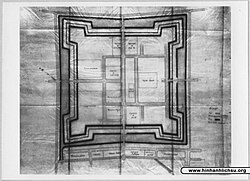
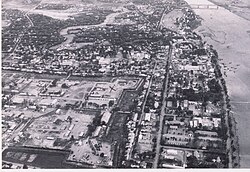
The provincial capital, Quảng Trị City, became a site of intense struggle. It was first overrun and occupied by Communist troops in April 1967. Later, during the 1968 Tet Offensive—a major coordinated series of attacks—the city was once again overrun by North Vietnamese forces before being recaptured by U.S. and South Vietnamese government troops.
Post-War Recovery
The legacy of the conflict left the region heavily contaminated with explosives. In the aftermath, organizations such as Roots of Peace have worked to rebuild the province by focusing on clearing mines from the land, allowing the community to safely return to agricultural and residential use.
Key Facts
- Ancient Inhabitants: The Cham people (Champa) originally occupied the lowlands.
- Chinese Rule: Administered as the Rinan commandery starting in the 3rd century BCE.
- Strategic Border: Served as the northernmost province of the Republic of Vietnam after 1954.
- Military Hub: Home to the 3rd Marine Division and the Vietnamese Demilitarized Zone.
- Major Battles: The provincial capital was a key battleground in April 1967 and during the 1968 Tet Offensive.
| Period/Year | Key Event | Significance |
|---|---|---|
| Prehistoric | Cham Occupation | Establishment of Malayo-Polynesian culture |
| 3rd Century BCE | Qin Dynasty Conquest | Establishment of Rinan commandery |
| 2nd Century CE | Cham Rebellion | End of Chinese control; return to local rule |
| 1954 | Geneva Accords | Became northernmost province of South Vietnam |
| 1967-1968 | Urban Warfare | Quảng Trị City occupied and recaptured multiple times |
Frequently Asked Questions
Who were the original inhabitants of the Quảng Trị lowlands?
The lowlands were originally occupied by the Cham peoples, also known as Champa, who spoke a Malayo-Polynesian language.
What was the Rinan commandery?
Rinan was the administrative division used by the Chinese Qin dynasty to govern the indigenous peoples of central Vietnam starting at the end of the 3rd century BCE.
Why was Quảng Trị strategically important during the Vietnam War?
It was the northernmost province of the Republic of Vietnam and contained the Vietnamese Demilitarized Zone (DMZ), making it a primary site for American bases and North Vietnamese incursions.
What happened to Quảng Trị City during the Tet Offensive?
During the 1968 Tet Offensive, Quảng Trị City was overrun by North Vietnamese troops before eventually being recaptured by U.S. and South Vietnamese forces.
What is the role of Roots of Peace in the region?
Roots of Peace is a group dedicated to rebuilding the province by clearing mines from affected areas.