
Quince: The Aromatic Golden Fruit of History and Cuisine
The quince (Cydonia oblonga) is a unique and aromatic pome fruit that stands as the sole member of the genus Cydonia. Part of the Rosaceae family—which also includes apples and pears—the quince is produced by a deciduous tree known for its bright golden-yellow fruit and stunning pale pink blossoms. While its appearance mimics that of a pear, the ripe quince is characterized by a hard texture and a tart, astringent flavor that makes it a prized ingredient in global culinary traditions.
Key Facts
- Scientific Name: Cydonia oblonga.
- Origin: Native to the Hyrcanian forests south of the Caspian Sea in Iran.
- Primary Uses: Processed into jams, jellies, quince cheese, and alcoholic spirits.
- Key Nutrient: High in pectin and provides a significant amount of Vitamin C (17% DV per 100g).
- Global Production: Turkey and China are the leading producers, accounting for 44% of the world total.
Botanical Description
Quinces grow as shrubs or small trees, typically reaching heights of 4 to 6 meters (13 to 20 feet) and widths of 3 to 4.5 meters (10 to 15 feet). The plant is identified by its oval leaves, which feature a downy underside, and young twigs covered in a grey down. In late spring, the tree produces solitary white or pink flowers.
The fruit itself is a large pome, sometimes weighing up to 1 kilogram (2.2 lb). It is generally pear-shaped or spherical and contains gritty stone cells throughout the flesh. A critical safety note: the seeds contain nitriles, which can produce toxic hydrogen cyanide when hydrolyzed by stomach acid. However, these are only toxic if consumed in large quantities.
History and Global Spread
Originating in Iran, the quince was spread by Neolithic farmers between 5000 and 3000 BC to regions including Turkey, Syria, Afghanistan, and Azerbaijan. From these secondary centers, it reached Europe, North Africa, China, and India. Historical records show that Charlemagne ordered quinces to be planted in orchards, and by 1275, they were recorded in England at the Tower of London.
The fruit has deep roots in ancient languages and mythology. Known as supurgillu in Akkadian and often referred to as "golden apples" by the ancients, it was associated with the city of Kydonia on Crete. Some scholars believe the golden apples associated with the hero Hercules were actually quinces.
Cultivation and Production
The quince is a hardy, drought-tolerant plant that adapts well to soils with low to medium pH. While it can tolerate shade, full sunlight is essential for fruit ripening and larger blossoms. To flower properly, the plant requires a cooling period with temperatures below 7 °C (45 °F).
Commercial propagation is typically achieved through cuttings or layering, as seed propagation is not used commercially. While the tree is self-pollinated, cross-pollination generally results in higher yields. In the wild and in gardens, the plant may form thick bushes, but commercial growers prune them into single stems to maximize fruit production.
Global Production Statistics (2023)
| Country | Production (Tonnes) |
|---|---|
| Turkey | 192,237 |
| China | 111,576 |
| Uzbekistan | 95,654 |
| Iran | 90,477 |
| Morocco | 43,523 |
| World Total | 687,036 |
Culinary Applications and Nutrition
Due to their hardness and tartness, most quince varieties are unsuitable for raw consumption, though a few cultivars like 'Aromatnaya' can be eaten fresh. Because they are high in pectin (a natural gelling agent), they are ideal for jams, jellies, and puddings. Interestingly, long cooking times with sugar cause the flesh to turn red due to pigmented anthocyanins.
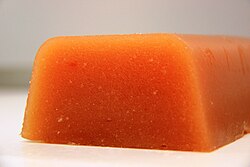
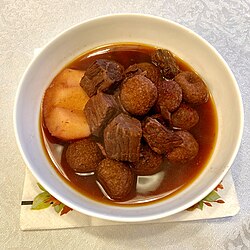
One of the most famous preparations is quince cheese (dulce de membrillo), a thick, sweet reddish paste from the Iberian Peninsula often paired with Manchego cheese. In the Levant, particularly Syria, quince is used in savory dishes such as kibbeh safarjaliyeh, a beef stew in quince sauce.
Nutritional Profile (per 100g)
- Energy: 57 kcal (238 kJ)
- Carbohydrates: 15.3 g
- Dietary Fibre: 1.9 g
- Vitamin C: 17% of Daily Value
- Potassium: 7% of Daily Value
- Water Content: 84%
Alcoholic Beverages
Quince is frequently fermented and distilled. In the Balkans, it is used to create rakija, a potent eau-de-vie. The process involves fermenting crushed fruit with yeast and distilling the mash once or twice to achieve an alcohol by volume (ABV) typically between 42% and 43%.
Frequently Asked Questions
Can you eat quince raw?
Most varieties are too hard and tart to be eaten raw and require cooking. However, a few specific cultivars, such as 'Aromatnaya' and 'Kuganskaya', are edible without cooking.
Why does quince turn red when cooked?
The red color is caused by the presence of pigmented anthocyanins, which become prominent when the fruit is cooked for a long time with sugar.
Are quince seeds dangerous?
Quince seeds contain nitriles that can produce hydrogen cyanide in the stomach. While toxic, they only pose a risk if consumed in large quantities.
What is the difference between quince and a pear?
While they look similar, quinces are generally harder, more aromatic, and more astringent than pears, and they are almost always cooked before consumption.
What is quince cheese?
Quince cheese, or dulce de membrillo, is a firm, sweet, reddish paste made by slowly cooking quince fruit with sugar until it reaches a thick consistency.