
Racial Classification Systems in Brazil and the United States
The way societies categorize race is rarely a reflection of biology alone; rather, it is a product of colonial history, political agendas, and social engineering. While both Brazil and the United States share a history of European colonization and the exploitation of enslaved Africans, they developed fundamentally different frameworks for racial classification. One adopted a fluid, ternary system, while the other leaned toward a rigid binary.
Racial Hierarchy in Brazil
Brazil's racial framework was established during its colonial period under Portuguese rule. Portugal's influence introduced Eurocentric racial ideals and integrated Brazil into the extensive African slave trade. The scale of this industry was immense; Brazil imported approximately 3.6 million Africans over three and a half centuries—ten times as many as the United States.
In the early colonial era, white settlers were a minority. By 1798, out of a population of 3 million, only about 1 million were white, while 1.5 million were enslaved, 250,000 were Native Americans, and 225,000 were "Freed Coloreds" (typically individuals of multiracial heritage).
The Ternary Racial Project
To manage this diverse population, Brazil implemented what anthropologist Gilberto Freyre called the ternary racial project. Unlike other colonial powers, Brazil did not pass anti-miscegenation laws. Instead, it viewed the mixing of races as a tool to gradually "whiten" the population. This system created three primary categories: white, multiracial, and black.
This framework gave rise to the myth of "racial democracy," the belief that Brazil was free from the systemic segregation and racial violence seen elsewhere. In reality, social status was determined by a combination of physical appearance, class, and cultural practices. Multiracial identities were further stratified by perceived desirability: mamelincos (European and Native American) and mulattos (European and African) enjoyed more social mobility than catusos (Native American and African).
The system also utilized a "mulatto escape hatch," where individuals of mixed heritage could be granted situational permission to identify as white if they possessed significant assets, such as high education levels or specialized skills. This strategy allowed elites to co-opt skilled multiracial individuals, preventing them from challenging the unequal status quo.
Modern Shifts and Affirmative Action
Identity in Brazil is not static. The Black Movement of the 1970s and the Multiracial Movement of 2001 have challenged traditional narratives. A significant shift occurred with a 2014 federal law establishing affirmative action quotas: 20% of federal university spots and civil service jobs must be reserved for black individuals.
Because Brazilian identity has historically prioritized appearance over ancestry, the government uses an anti-fraud commission to verify applicants' race based on facial features, providing a tangible incentive for citizens to reclaim their African heritage.
Racial Classification in the United States
In contrast to Brazil, the United States developed a binary racial project. This system presents "blackness" and "whiteness" as opposite ends of a spectrum, leaving little room for intermediate categories. This structure was designed to justify the enslavement of Africans and maintain a strict social hierarchy with white individuals at the top.
The One-Drop Rule and Scientific Racism
While multiracial children were born from unions between European indentured servants and African slaves, they were viewed as a threat to "racial purity." Consequently, anti-miscegenation laws were passed in the 1660s. This rigidity was later reinforced by "scientific racism" in the 19th and 20th centuries, championed by figures like Louis Agassiz of Harvard University.
The most defining feature of this binary system was the one-drop rule, prevalent during the Jim Crow era. This rule dictated that any person with any African ancestry was considered fully black. This prevented multiracial individuals from accessing the social privileges of their white relatives and erased the legal existence of a multiracial identity.
Evolution Toward Multiracialism
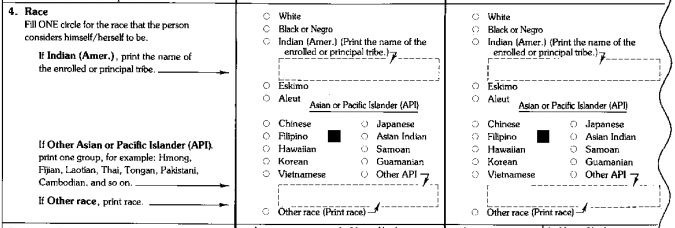
The 1960s Civil Rights Movement sparked a shift in perception. In 1967, the Supreme Court case Loving v. Virginia struck down anti-miscegenation laws, leading to a rise in biracial marriages. Legal recognition finally arrived in the 2000 U.S. Census, which allowed citizens to identify as more than one race for the first time.
The impact of this change has been significant. Between 2000 and 2015, the number of people identifying as multiracial rose by 106%, and projections suggest this population could triple by 2060. However, this shift has created tension. Organizations like the NAACP and the National Urban League initially viewed the multiracial category as a threat to black solidarity, fearing that a separate multiracial identity might dilute the political power and support of the African American community.
Key Facts
- Brazil's Slave Trade: Brazil imported approximately 3.6 million Africans, ten times more than the United States.
- Ternary vs. Binary: Brazil used a three-part system (white, multiracial, black), while the U.S. used a two-part system (white, black).
- The One-Drop Rule: A U.S. social construct where any African ancestry classified a person as black.
- Racial Democracy: A Brazilian concept suggesting a lack of systemic racism due to widespread miscegenation.
- U.S. Census Shift: The U.S. first legally recognized multiracial identities in the 2000 Census.
- Brazilian Quotas: Since 2014, 20% of federal university and civil service positions in Brazil are reserved for black citizens.
| Feature | Brazil | United States |
|---|---|---|
| Primary Model | Ternary (Three-category) | Binary (Two-category) |
| Miscegenation Laws | None; encouraged for "whitening" | Strict anti-miscegenation laws (until 1967) |
| Key Social Concept | Racial Democracy | One-Drop Rule |
| Identity Basis | Appearance, class, and culture | Ancestry/Lineage |
| Legal Multiracialism | Historically integrated | Recognized in 2000 Census |
Frequently Asked Questions
What was the "one-drop rule" in the United States?
The one-drop rule was a social and legal practice, primarily during the Jim Crow era, which asserted that any person with even a single ancestor of African descent was considered black, regardless of their physical appearance.
How does Brazil's "ternary racial project" differ from the U.S. system?
While the U.S. system was binary (black or white), Brazil's ternary system included a distinct middle category for multiracial individuals, allowing for more vertical social mobility based on appearance and class.
What is "racial democracy" in the Brazilian context?
Racial democracy is the theory that Brazil's history of miscegenation created a harmonious society free from the systemic segregation and racial violence found in other nations.
How does the Brazilian government verify race for affirmative action?
Because identity in Brazil is often based on appearance, an anti-fraud commission verifies applicants for federal quotas by evaluating their facial features to determine if they qualify as black.
Why did some U.S. organizations oppose the multiracial census category?
Groups like the NAACP feared that creating a separate multiracial category would weaken black solidarity and reduce the political support available for the African American community's agendas.