
Rapira Davies: Articulating Māori Women's Resilience
Rapira Davies is a distinguished New Zealand artist who works across the mediums of sculpture and painting to explore the complex intersections of identity, gender, and culture. Her work is deeply rooted in the empowerment of Māori women, addressing the dual challenges of perceived racism within Pākehā (European New Zealander) culture and the sexism found within the patriarchal structures of Māori tribal organization.
Through her art, Davies makes powerful statements regarding injustices faced by Māori, using her creative practice to challenge societal norms and honor the strength of her ancestors.
Key Facts
- Primary Themes: Empowerment of Māori women, resilience, and the impact of colonization.
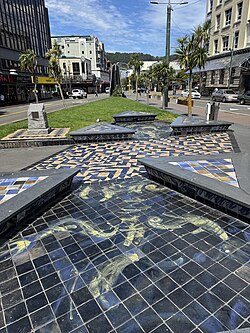
- Notable Public Work: The ceramic tile landscape sculpture at Te Aro Park, Wellington.
- Major Installation: Ngā Morehu (1988), held by the Museum of New Zealand Te Papa Tongarewa.
- Artistic Mediums: Specializes in both sculpture (including terracotta and ceramics) and painting.
Public Art and Urban Impact
Davies is widely recognized for her significant landscape sculpture commission for Te Aro Park (formerly known as Pigeon Park) in central Wellington. This permanent work, crafted from ceramic tiles, is regarded as one of the most successful public sculptures in New Zealand. Because it is situated in a narrow triangle of public space surrounded by high foot traffic and busy roads, the piece maintains a high level of visibility and engagement with the urban public.
Ngā Morehu: A Tribute to Survival
One of the most profound works in Davies' portfolio is the 1988 sculptural installation Ngā Morehu, which translates to "the survivors." Originally created for the exhibition Whakamamae ("to feel pain")—a joint show with painter Robyn Kahukiwa at the Wellington City Art Gallery—the piece is now housed at the Museum of New Zealand Te Papa Tongarewa.
The installation depicts the karanga, the ceremonial call of welcome performed by women to open official occasions. This scene is staged on an unfinished whāriki (a woven flax mat), which Davies identifies as the defining element of the work. In a poignant personal detail, the weaving of the mat was completed by Davies' daughter with minimal instruction, symbolizing the child's journey into adulthood.
The composition features a naked female child facing a group of women performing the karanga, with a kuia (female elder) seated at the end of the mat. The work uses text to create a stark contrast: the child's body is adorned with a contemporary poem and the words of a waiata (song) from the kaikaranga (the women leading the call), while the other female figures bear racial slurs.
Curator Megan Tamati-Quennell notes that Ngā Morehu reflects the rise of the political Māori voice and feminism in New Zealand art, portraying the impact of colonization while suggesting transcendence through a Māori definition of beauty, status, and worth.
Exhibition History and Legacy
Throughout her career, Rapira Davies has exhibited extensively in solo and group settings. In 2015, Te Papa hosted a focused exhibition featuring Davies alongside fellow senior artist Emily Karaka, showcasing Ngā Morehu, preparatory sketches, and more recent works.
Her more recent projects include the Ko Te Kihikihi series, which has been exhibited at the Govett-Brewster Art Gallery and the Len Lye Centre, and most recently at the Christchurch Art Gallery.
| Year | Exhibition Title | Venue |
|---|---|---|
| 1981 | Hone Heke | Art Attack Gallery, Dunedin |
| 1984 | Toku Whanau | Marshall Seifert Gallery, Dunedin |
| 1985 | Tangi | Marshall Seifert Gallery, Dunedin |
| 1985 | Wāhine, Wāhine | Marshall Seifert Gallery, Dunedin |
| 1986 | Kōrero au Taku Tamaiti | Bowen Galleries |
| 2022 | Ko Te Kihikihi / Ko Te Kihikihi Taku Ingoa | Govett-Brewster Art Gallery / Len Lye Centre |
| 2025 | Ko Te Kihikihi Taku Ingoa | Christchurch Art Gallery |
Frequently Asked Questions
What are the primary themes in Rapira Davies' art?
Rapira Davies focuses on the empowerment of Māori women, the resilience of her culture, and the impact of colonization, specifically addressing racism in Pākehā culture and sexism within Māori tribal structures.
What is the significance of the work Ngā Morehu?
Ngā Morehu ("the survivors") pays tribute to the strength of Māori women. It uses the ritual of the karanga and the symbol of the whāriki to explore themes of survival, beauty, and the trauma of racial slurs versus the beauty of waiata.
Where can the public see Rapira Davies' work?
Her permanent ceramic tile sculpture is located at Te Aro Park in Wellington, and Ngā Morehu is held by the Museum of New Zealand Te Papa Tongarewa.
What is a karanga and how is it used in her work?
The karanga is a ceremonial call of welcome performed by women. In Ngā Morehu, it is depicted through a group of terracotta figures, representing a ritual state and the cultural status of women.
Who is the kuia in the context of her sculpture?
A kuia is a female elder. In the installation Ngā Morehu, a seated kuia is positioned at the end of the whāriki, completing the generational progression from the child to the elder.