
Rapprochement in Global Diplomacy: Historical Examples of Mending Relations
In the realm of international relations, rapprochement refers to the establishment or resumption of cordial relations between two nations that were previously hostile or estranged. This diplomatic process is rarely sudden; rather, it is typically a gradual warming of ties driven by shared strategic interests, cultural affinities, or the mutual desire to avoid catastrophic conflict.
Throughout history, rapprochement has shifted the global balance of power, turning former rivals into allies and easing tensions during the most volatile periods of human history. From the colonial disputes of the 19th century to the nuclear brinkmanship of the Cold War, the following examples illustrate how nations navigate the path from friction to cooperation.
Key Facts
- The Great Rapprochement aligned U.S. and UK interests in the Western Hemisphere prior to World War I.
- The Entente Cordiale (1904) resolved colonial disputes between France and the UK, eventually countering the Triple Alliance.
- Chinese-American rapprochement culminated in the 1979 recognition of the People's Republic of China as the sole government of China.
- Détente in the 1970s reduced Cold War tensions between the U.S. and Soviet Union through arms limitation treaties like SALT I.
The Great Rapprochement: United States and United Kingdom
Leading up to World War I, the United States and the United Kingdom experienced a significant warming of relations. This shift followed a century of friction, including various influence disputes and the Anglo-American border dispute in Venezuela. Over time, their interests in the Western Hemisphere began to align.
This transition was evident during key conflicts. During the Spanish-American War, the British government remained neutral despite previous skepticism regarding American influence in the Caribbean. Similarly, the United States declined to support the Boers during the Boer War, providing only limited war materials to the UK. This shift was fueled not only by strategy but by cultural ties, with figures like President Theodore Roosevelt advocating for the UK based on a shared "Anglo-Saxon" culture.
The Entente Cordiale: France and the United Kingdom
The Entente Cordiale was a series of diplomatic agreements signed in 1904 between the United Kingdom and France. The primary catalyst for these negotiations was the need to resolve disputes over North African colonies.
By agreeing to colonial concessions, both powers prevented direct conflict in Africa. While not initially a formal military alliance, the agreement evolved into one as diplomatic crises mounted. This unity was notably demonstrated during the Moroccan Crisis, where France and Britain stood together against the German Empire, eventually creating a military counterweight to the Triple Alliance during World War I.
Chinese-American Rapprochement
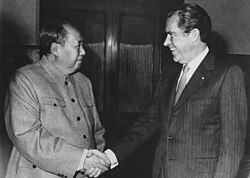
The relationship between the United States and the People's Republic of China underwent a dramatic transformation starting in 1972 under President Richard Nixon. This period of mending relations sought to bridge a deep diplomatic divide.
The process reached a turning point in 1979 with the Joint Communiqué on the Establishment of Diplomatic Relations. This agreement ended official U.S. recognition of the Republic of China, led to the withdrawal of American troops from Taiwan, and recognized the People's Republic of China as the sole government of China, fundamentally altering bilateral relations in the modern era.
Détente: The U.S. and the Soviet Union
During the 1970s, the United States and the Soviet Union entered a period known as détente, a French term meaning "relaxation." This era focused on reducing the risk of nuclear war between the two superpowers.
A central component of détente was the signing of treaties to limit strategic weapons, most notably SALT I (Strategic Arms Limitation Talks). These agreements were partly a response to the development of missile defense systems, which threatened to create a "first strike" capability—where one nation could launch an attack and block the retaliation. By capping and eventually seeking to reduce strategic weapons systems, both nations fostered more cordial relations.
Summary of Historical Rapprochements
| Event | Primary Parties | Key Driver | Major Outcome |
|---|---|---|---|
| Great Rapprochement | USA & UK | Western Hemisphere interests & culture | Alignment prior to WWI |
| Entente Cordiale | UK & France | North African colonial disputes | Military counterweight to Triple Alliance |
| Chinese-American Rapprochement | USA & PRC | Strategic diplomatic shift | Recognition of PRC as sole government |
| Détente | USA & Soviet Union | Nuclear arms race stability | SALT I and reduced tensions |
Frequently Asked Questions
What is the difference between rapprochement and détente?
While both involve the warming of relations, rapprochement is a general term for the restoration of cordial ties between estranged parties. Détente specifically refers to the "relaxation" of tensions between the U.S. and the Soviet Union during the 1970s, characterized by arms limitation treaties.
How did the Entente Cordiale affect World War I?
The Entente Cordiale began as a way to resolve colonial disputes in North Africa, but it evolved into a military alliance that provided a critical counterweight to the Triple Alliance during the conflict.
What was the significance of the 1979 Joint Communiqué?
The Joint Communiqué officially established diplomatic relations between the U.S. and the People's Republic of China, resulting in the U.S. withdrawing troops from Taiwan and recognizing the PRC as the sole government of China.
Why was SALT I important during the period of détente?
SALT I was crucial because it limited the number of strategic weapons, reducing the feasibility of a "first strike" attack and lowering the overall risk of nuclear escalation between the superpowers.