
Rate-Capping Resistance: The 1985 Local Government Budget Crisis
In the mid-1980s, a fierce ideological and legal battle erupted between the UK central government and several local authorities. At the heart of the conflict was rate-capping—a government policy that limited the amount of revenue local councils could raise through rates (local property taxes). In response, a coalition of Labour-led councils adopted a "no rate" strategy, refusing to set a legal budget in defiance of these limits to protect public services from deep cuts.
This strategy was not merely a financial disagreement but a political stand. Councils across London and the North of England found themselves caught between the demands of their constituents, the pressure of trade unions, and the looming threat of legal action from the District Auditor.
Key Facts
- The Strategy: Multiple councils passed motions declaring an inability to set a rate to protest government spending limits.
- Legal Consequences: The District Auditor initiated extraordinary audits and surcharges (personal financial penalties) against councillors.
- Judicial Rulings: High Court rulings in cases like Hackney and Greenwich confirmed that councils had a legal duty to set a rate within the cap.
- Internal Conflict: The "no rate" stance caused significant splits within Labour groups, leading to resignations and leadership changes.
- Financial Impact: Some councils suffered significant losses in interest and faced bankruptcy warnings due to their defiance.
The London Boroughs: Defiance and Division
Lewisham and the "Standing Together" Campaign
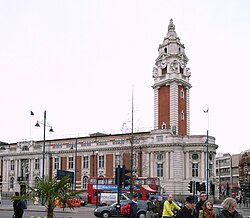
Under leader Ron Stockbridge, Lewisham joined Lambeth, Southwark, and Greenwich in a joint publicity campaign called "Standing Together." However, their defiance ended abruptly on April 4 when trade union protesters invaded the council chamber. While Labour councillors retreated to discuss tactics, Conservative councillors remained, convened a meeting, and passed a budget that actually reduced rates by 6%.
Hackney's Legal Battle
Hackney exhibited some of the strongest resistance. This led resident Mourad Fleming to seek a judicial review—a court proceeding to challenge the lawfulness of a decision. Mr. Justice Mann and later Mr. Justice Woolf ruled that the council's refusal to set a rate was unlawful. Despite this, the council delayed until May 23, when a legal budget was finally passed after a chaotic meeting involving building lockouts and chamber invasions.
Islington, Camden, and Tower Hamlets
Islington, led by Margaret Hodge, was a primary architect of the no-rate strategy, supported by a local poll showing 57% public approval. In Camden, the deadlock broke on June 5 when ten Labour rebels voted for a budget that used accounting tricks and the GLC's "stress borough" fund to appear balanced. Tower Hamlets faced internal turmoil, expelling nine rebel councillors, which left the Labour group in the minority until a rate was finally set on May 14.
Southwark and Greenwich
Southwark's struggle lasted until May 30, following hours of angry debate and warnings from District Auditor Brian Skinner. Greenwich attempted a judicial review against the government's capping decision but lost the case in both the High Court and the Court of Appeal, eventually setting a rate on June 8.
Major City Conflicts: Liverpool and Sheffield
Liverpool's Deficit Budget
Liverpool took a different approach by approving a deficit budget—a budget where planned spending exceeds projected income. On June 14, the council approved £265m in spending despite only having £236m in revenue. This was a tactical move to buy time, even as District Auditor Tim McMahon warned that the failure to set a legal rate had already caused a loss of £106,103.
Sheffield's Strategic Delay
Led by David Blunkett, Sheffield passed a budget that exceeded the cap by £31.1m, using reserves to cover part of the gap. Rather than setting a rate immediately, the council waited to see the outcome of the Greenwich judicial review, positioning itself as a prominent voice for Labour in local government.
The Case of Lambeth
Lambeth was at the forefront of the resistance. The conflict became personal when District Auditor Brian Skinner found his photo on a mock "Wanted" poster in a local supermarket. The council's defiance cost it over £270,000 in lost interest.
The tide turned when councillor Mike Bright resigned in June, citing the futility of "martyrdom." Following a formal notice of an extraordinary audit, 32 councillors were held liable for a surcharge of £126,947, leading to the creation of a "Fighting Fund" supported by prominent actors.
The standoff ended on July 3 after a volatile meeting. A legal rate was passed by a single vote (32 to 31), aided by additional housing subsidies and GLC funds.
Summary of Council Outcomes
| Council | Primary Strategy | Outcome | Key Turning Point |
|---|---|---|---|
| Lewisham | No Rate | Budget passed (6% reduction) | Conservative opportunistic meeting |
| Hackney | No Rate | Legal budget passed May 23 | High Court ruling (Justice Woolf) |
| Liverpool | Deficit Budget | Approved £265m spending | Extraordinary audit by Tim McMahon |
| Lambeth | No Rate | Legal rate passed July 3 | Surcharge of £126,947 on councillors |
| Greenwich | Judicial Review | Rate set June 8 | Loss in Court of Appeal |
| Camden | No Rate | Budget passed June 5 | Labour rebellion (10 councillors) |
Frequently Asked Questions
What was the "no rate" strategy?
The "no rate" strategy was a political tactic where local councils refused to set a legal budget or rate of taxation to protest the central government's limits on their spending (rate-capping).
What is a surcharge in the context of local government?
A surcharge is a personal financial penalty imposed on councillors by a District Auditor when they are found to have caused a financial loss to the council through willful misconduct or illegality.
How did the deficit budget in Liverpool differ from the no-rate strategy?
While the no-rate strategy involved refusing to set any budget, Liverpool's deficit budget formally approved spending that exceeded their available income, attempting to comply with the law in a technical sense while still maintaining spending levels.
What role did the District Auditor play?
The District Auditor acted as the legal watchdog, issuing statutory reports, conducting extraordinary audits, and initiating surcharges to force councils to comply with financial laws.
Did the councils eventually succeed in their goals?
Most councils eventually set legal rates. However, some, like Lambeth, claimed financial success because they managed to avoid spending cuts through additional government subsidies and external grants.