
Ray Wood: The Resilience of a Manchester United Legend
The history of English football is filled with stories of grit and determination, but few embody these traits as clearly as Ray Wood. A talented goalkeeper who rose through the ranks of the English league, Wood became a pivotal figure for Manchester United during one of the most triumphant and tragic eras in the club's history.
Early Career and Rise at Manchester United
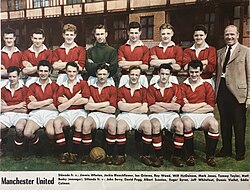
Ray Wood began his journey as an amateur with Newcastle United. While he did not make a first-team appearance there, he moved to Darlington in 1949. His stay at Darlington was brief, lasting only three months before he was signed by Manchester United.
Wood made his first-team debut on December 3, 1949, in a league match against Newcastle at Old Trafford. Over the following seasons, he established himself as a reliable presence between the posts, eventually displacing the veteran Jack Crompton to become United's primary goalkeeper.
International Recognition
His rapid ascent in the domestic game did not go unnoticed. In 1954, at the age of 23, Wood achieved the prestigious honor of being selected to play for the England national team.
The 1957 FA Cup Final and Career Challenges
One of the most dramatic moments of Wood's career occurred during the 1957 FA Cup Final against Aston Villa. In the sixth minute, Wood claimed a cross but was hit by a shoulder charge—a maneuver that was legal at the time—from Villa's Peter McParland. Because Wood ducked to avoid the impact, the collision resulted in a broken jaw.
In an era before substitutes were permitted, the incident forced a tactical shift: Jackie Blanchflower took over in goal. After receiving treatment, Wood returned to the pitch, though he played as a forward for the remainder of the match. Manchester United ultimately lost the game 2–1. Despite the defeat, Wood's success during this period included winning two Football League First Division title medals.
The Munich Air Disaster and Later Years
The trajectory of Wood's career changed significantly in December 1957 when Manchester United signed Harry Gregg from Doncaster Rovers for £23,500, which was the world record fee for a goalkeeper at the time. This signing limited Wood's opportunities in the first team.
On February 6, 1958, Wood was among the survivors of the Munich air disaster. He suffered minor injuries in the crash, but the aftermath of the tragedy marked the end of his tenure at Old Trafford. He played only one more first-team game for United before being sold to Huddersfield Town within a year.
Wood found stability at Huddersfield Town, where he spent seven seasons and made over 250 first-team appearances, though the club failed to secure promotion to the First Division. His later career saw him venture abroad to play for Toronto Inter-Roma in the Eastern Canada Professional Soccer League in 1965, followed by a season at Bradford City and two final seasons at Barnsley.
His quality remained evident long after his departure from Manchester United; manager Matt Busby later attempted to re-sign him when Harry Gregg was injured, though the move did not materialize.
Key Facts
- Debut: December 3, 1949, against Newcastle United.
- International Cap: Selected for England in 1954 at age 23.
- Major Honors: Two Football League First Division title medals.
- Record Transfer: Displaced by Harry Gregg, who cost a record £23,500.
- Resilience: Survived the Munich air disaster on February 6, 1958.
- Longevity: Made over 250 appearances for Huddersfield Town.
| Club/Team | Key Detail/Achievement |
|---|---|
| Newcastle United | Started as an amateur |
| Darlington | Stayed for three months (1949) |
| Manchester United | First-choice goalkeeper; 2 First Division titles |
| England | Selected for national team in 1954 |
| Huddersfield Town | 250+ first-team appearances |
| Toronto Inter-Roma | Played in Eastern Canada Professional Soccer League (1965) |
| Bradford City & Barnsley | Final stages of professional career |
Frequently Asked Questions
What happened to Ray Wood during the 1957 FA Cup Final?
Ray Wood suffered a broken jaw after being shoulder-charged by Aston Villa's Peter McParland. Because there were no substitutes, he eventually returned to the game as a forward while Jackie Blanchflower played in goal.
How did the signing of Harry Gregg affect Ray Wood?
Harry Gregg was signed for a world-record fee of £23,500 in December 1957, which significantly limited Wood's opportunities to play in the Manchester United first team.
Was Ray Wood involved in the Munich air disaster?
Yes, Ray Wood was one of the survivors of the crash on February 6, 1958, sustaining minor injuries.
Which clubs did Ray Wood play for after leaving Manchester United?
After leaving Manchester United, Wood played for Huddersfield Town, Toronto Inter-Roma, Bradford City, and Barnsley.
Did Matt Busby ever try to bring Ray Wood back to Manchester United?
Yes, several years after Wood had left the club, Matt Busby unsuccessfully attempted to re-sign him to cover for an injured Harry Gregg.