
RBC Bank USA: The Rise and Transition of a Southeastern Banking Power
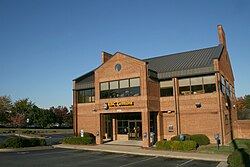
From its inception as a strategic entry into the American market to its eventual acquisition by a financial giant, RBC Bank USA played a significant role in the retail banking landscape of the Southeastern United States. Operating as a subsidiary of the Royal Bank of Canada, the institution evolved through rebranding and aggressive expansion before transitioning its US customer division to PNC Financial Services.
Key Facts
- Founded: June 5, 2001, as RBC Centura.
- Headquarters: RBC Plaza, Raleigh, North Carolina.
- Parent Company: Royal Bank of Canada.
- Primary Market: Southeastern United States.
- Exit Strategy: Sold to PNC Financial Services in March 2012 for $3.45 billion.
- Legacy: Rebranded as PNC; RBC later re-entered US retail banking via City National Bank in 2015.
Foundations and Rebranding
The origins of RBC Bank USA date back to November 2, 1990, when Peoples Bancorp and Planters Corp. of Rocky Mount, North Carolina, merged to create Centura Bank. This entity served as the predecessor to RBC's American venture. In June 2001, the Royal Bank of Canada acquired Centura Bank, rebranding the operation as RBC Centura.
As the bank sought to align its identity more closely with its parent company, it announced on January 17, 2008, that it would drop the "Centura" name. By April 2008, the unit began operating simply as RBC Bank.
Strategic Growth and Acquisitions
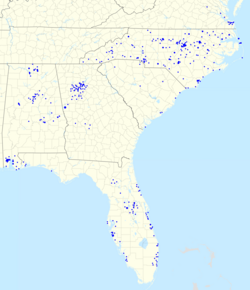
RBC Bank USA expanded its footprint through a series of targeted acquisitions designed to increase its customer base and geographic reach across the Southeast.
Expanding into Georgia and Alabama
In 2002, RBC Centura acquired Eagle Bancshares, the parent company of Tucker Federal Bank, which provided a stronger foothold in the Atlanta area. This followed a smaller 1998 purchase of Security First Network Bank. The bank further solidified its Georgia presence by merging with Flag Bank.
The bank entered the Alabama market on March 9, 2007, by acquiring 39 branches of the Birmingham-based AmSouth Bank. This expansion was accelerated by the acquisition of Alabama National BanCorporation (ANB). Following U.S. approval on February 5, 2008, 51 ANB branches reopened as RBC Bank by April 14, with the remaining branches transitioning by June 2008.
Community Impact in Raleigh, North Carolina
RBC established a deep presence in Raleigh, North Carolina, through both infrastructure and sports sponsorship. In 2008, the bank constructed the RBC Plaza (now known as PNC Plaza) to serve as its headquarters.
Beyond corporate offices, RBC invested in the local community by purchasing the naming rights to the Raleigh Entertainment & Sports Arena in 2002. Under a 20-year lease costing $80 million, the venue became the RBC Center. This arena became a landmark of sporting success, hosting the NHL's Stanley Cup Finals in June 2006, where the Carolina Hurricanes defeated the Edmonton Oilers to win the championship.
The Dunmore Homes Controversy
Despite its growth, the bank faced legal challenges involving the "Dunmore Homes" project in Sacramento, California. Construction on the project halted on August 8, 2007, due to liquidity issues. The home builder was subsequently sold to a mortgage loan officer for $500 and filed for bankruptcy in Manhattan.
RBC Centura, a major creditor that had financed four projects from Bakersfield to Yuba City, sued on November 7, 2007. The bank alleged that the $500 sale was intended to defraud creditors. RBC had loaned Dunmore Homes $105 million and was still owed $39 million at the time of the dispute. In total, nine major lenders were owed approximately $196 million across 26 new-home communities.
The Transition to PNC Financial Services
The era of RBC Bank USA concluded on June 19, 2011, when PNC Financial Services agreed to purchase the entity from the Royal Bank of Canada for $3.45 billion. The sale closed in March 2012.
Following the acquisition, all RBC Bank branches were rebranded as PNC branches. While the retail banking brand became dormant in the US, RBC maintained its presence through RBC Insurance, RBC Wealth Management, and RBC Investing. The Royal Bank of Canada eventually returned to the US retail banking sector in 2015 by acquiring the Los Angeles-based City National Bank.
| Period | Entity Name | Key Event |
|---|---|---|
| 1990 – 2001 | Centura Bank | Formed by merger of Peoples Bancorp and Planters Corp. |
| 2001 – 2008 | RBC Centura | Acquired by Royal Bank of Canada. |
| 2008 – 2012 | RBC Bank (USA) | Rebranded to align with parent company. |
| 2012 | PNC Financial Services | Acquired RBC Bank USA for $3.45 billion. |
Frequently Asked Questions
What happened to RBC Bank USA?
RBC Bank USA was sold to PNC Financial Services in March 2012 for $3.45 billion, and its branches were rebranded as PNC.
Did Royal Bank of Canada leave the United States entirely?
No. While the retail banking division was sold to PNC, RBC kept its Wealth Management, Insurance, and Investing subsidiaries. It later re-entered US retail banking by acquiring City National Bank in 2015.
What was the RBC Center in Raleigh?
The RBC Center was the naming rights designation for the Raleigh Entertainment & Sports Arena, home to the Carolina Hurricanes and NC State basketball. It was renamed PNC Arena in March 2012.
How did RBC Bank expand its presence in the South?
The bank grew through several acquisitions, including Eagle Bancshares (2002), Flag Bank, 39 AmSouth Bank branches (2007), and Alabama National BanCorporation (2008).
What was the Dunmore Homes legal dispute?
RBC Centura sued Dunmore Homes after the builder sold its assets for $500 during a bankruptcy process, which RBC alleged was an attempt to defraud creditors to whom they were owed $39 million.