
Religious Education in North America
Across North America, the landscape of religious education varies significantly between the United States and Canada, reflecting different legal frameworks and cultural approaches to the intersection of faith and learning. While some systems operate entirely independently of the state, others are integrated into the public funding model.
Religious Education in the United States
In the United States, state-funded educational systems generally do not teach religion. However, schools are required to allow students to pursue religious studies as an extracurricular activity, treating them the same as any other non-academic club or interest group.
Despite the secular nature of public schooling, religious education remains a major pillar of the American private sector. Over 4 million students—approximately 1 in 12 children—attend religious schools, the vast majority of which are Christian. These institutions exhibit a wide array of educational and religious philosophies, mirroring the diversity of denominations across the country.
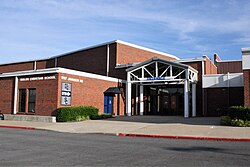
Catholic and Mainline Protestant Systems
The Catholic Church operates the largest Christian education system in the U.S. As of 2011, this network included 6,841 elementary and secondary schools serving roughly 2.2 million students, primarily administered through local parishes and dioceses.
Other significant Protestant systems include:
- Lutheran: The Lutheran Church–Missouri Synod (LCMS) runs the largest Protestant system. By 2018, the LCMS operated 1,127 early childhood centers, 778 elementary schools, and 87 high schools, educating over 200,000 students. Additionally, the Wisconsin Evangelical Lutheran Synod operated 403 early childhood centers, 313 elementary schools, and 25 high schools as of 2018.
- Episcopal: With approximately 1,200 schools, the Episcopal Church educates about 115,000 students (0.22% of the total U.S. school population). Many of these are independent prep schools, such as the Groton School in Massachusetts and St Paul's in New Hampshire. These schools often command higher tuition—sometimes exceeding $15,000 annually—compared to the average for Roman Catholic high schools (approx. $6,000) or other non-Catholic religious schools (approx. $7,100).
- Baptist and Methodist: The Southern Baptist Convention coordinates schools through the Southern Baptist Association of Christian Schools, while the United Methodist Church and Allegheny Wesleyan Methodist Connection operate various parochial schools and colleges.
Conservative Evangelical Education
Many conservative Evangelicals use the term "Christian school" specifically for institutions affiliated with their denominations, often excluding Catholic schools. These are privately run and funded through tuition or church subsidies, unless they participate in government voucher programs.
Some fundamentalist-sponsored schools explicitly reject government funding to avoid state scrutiny and legislation regarding church teachings on controversial subjects, such as homosexuality or abortion. While this prevents government management, these schools must still adhere to state academic curricula, performance standards, and teacher qualification inspections.
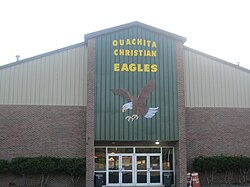
Key associations in this sector include:
- Association of Christian Schools International (ACSI): A global network of 5,300 member schools in about 100 countries, enrolling nearly 1.2 million students.
- American Association of Christian Schools (AACS): Founded in 1972, this group emphasizes biblical literalism and creationism, enrolling over 100,000 students.
- Christian Schools International: An association comprising approximately 500 schools and 100,000 students.
- Classical Christian School movement: Represented by the Association of Classical & Christian Schools, this movement focuses on traditional subjects and forms of education, serving about 34,000 students across 230 institutions.
Other Religious Traditions
The Seventh-day Adventist Church operates what it describes as the largest Protestant school system globally, with 6,709 institutions worldwide. In the North American Division, they oversee 1,049 schools serving 65,000 students across the U.S., Canada, and Bermuda. Additionally, the Eastern Orthodox Church, the Church of Jesus Christ of Latter-day Saints, and groups such as the Amish and Conservative/Old Order Mennonites (who have used their own curricula since the 1960s) operate private schools.
Religious Education in Canada
Unlike the U.S., Canada permits and sometimes requires public funding for religious education. Schools may be non-denominational or affiliated with specific branches such as Catholic, Protestant, or Orthodox faiths. Catholic schools generally receive the highest level of government funding, often covering both secular and religious instruction.
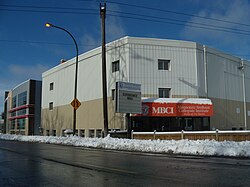
Historically, Canadian education split between public schools (representing the majority Protestant faith) and separate schools (representing the minority Catholic faith). While many provinces have abolished this distinction, Ontario, Alberta, Saskatchewan, and the Northwest Territories still maintain separate Catholic and Public School Boards.
In some regions, the integration of faith and public funding has evolved further. In Alberta, many private Christian schools have been absorbed into public districts as "alternative Christian programs," allowing them to retain their staffing, curriculum, and philosophy while receiving full public funding.
Key Facts
- U.S. Participation: Over 4 million students (1 in 12) attend religious schools in the U.S.
- Largest U.S. System: The Catholic Church is the largest provider, with 2.2 million students as of 2011.
- Funding Differences: U.S. religious schools are primarily private/tuition-based, whereas Canadian religious schools (especially Catholic ones) often receive public funding.
- Global Reach: The Seventh-day Adventist system is the largest Protestant school system worldwide, with over 1.2 million students.
- Canadian Structure: Separate school boards for Catholic and Public education still exist in Ontario, Alberta, Saskatchewan, and the Northwest Territories.
| System/Denomination | Primary Region | Key Characteristic | Approx. Scale/Reach |
|---|---|---|---|
| Catholic | USA & Canada | Largest system in US; high public funding in Canada | 2.2M students (US, 2011) |
| LCMS (Lutheran) | USA | Largest Protestant system in the US | 200,000+ students (2018) |
| Episcopal | USA | Strong influence on American prep schools; higher tuition | 115,000 students |
| Seventh-day Adventist | Global/North America | Largest Protestant system worldwide | 1.2M students globally |
| Conservative Evangelical | USA | Often reject govt funding to maintain autonomy | Various (ACSI, AACS, CSI) |
Frequently Asked Questions
Do public schools in the U.S. teach religion?
No, state-funded educational systems in the U.S. generally do not teach religion, though they must allow students to study it as an extracurricular activity.
How does funding for religious schools differ between the U.S. and Canada?
In the U.S., religious schools are mostly private and rely on tuition or church subsidies. In Canada, public funding for religious education is permitted, and Catholic schools often receive government funding for both secular and religious curricula.
What is the "Classical Christian School" movement?
It is a growing movement among U.S. Evangelical schools that focuses on a return to traditional subjects and forms of education, represented by the Association of Classical & Christian Schools.
Why do some Evangelical schools in the U.S. refuse government subsidies?
Some schools believe that accepting government money would lead to increased state scrutiny and legislation, potentially forcing them to change their church teachings or admission requirements to comply with civil rights laws.
What are "separate school boards" in Canada?
These are distinct school boards for Catholic and non-Catholic students. While abolished in many provinces, they are still maintained in Ontario, Alberta, Saskatchewan, and the Northwest Territories.