
Rising Damp: Causes, Diagnosis, and Treatment Methods
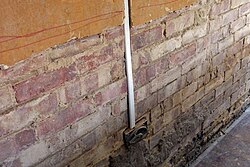
Rising damp is the term used to describe the upward movement of water through the lower sections of walls and other ground-supported structures. This occurs via capillary action—a process where water is drawn up through the tiny, porous holes in building materials, much like water climbing up a sponge. A global issue that leads to the gradual deterioration of buildings, it is particularly prevalent in older structures that lack modern protective barriers.
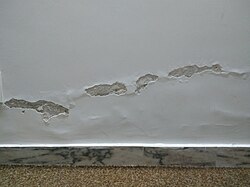
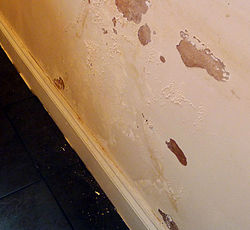
While most instances of rising damp rarely exceed 1.5 metres (4.9 ft) in height, extreme cases have been observed reaching up to 5 metres (16 ft). Because it often presents as wall stains, it is frequently misdiagnosed by those who misinterpret visual evidence or moisture meter readings.
Key Facts
- Cause: Capillary action in porous masonry materials.
- Typical Height: Usually below 1.5 metres, though can reach 5 metres.
- Historical Context: Recognized since ancient Greek and Roman times; mandated protections in the UK Public Health Act 1875.
- Primary Solution: Installation or restoration of a Damp Proof Course (DPC).
- Common Misdiagnosis: Wall stains are often mistaken for rising damp when other moisture sources may be responsible.
The Science of How Rising Damp Occurs

The physics of rising damp is governed by Jurin's Law, which states that the maximum height water can rise is inversely proportional to the capillary radius (the size of the pores in the material). Theoretically, with a pore radius of 1 μm, water could rise 15 metres; however, in real-world conditions, evaporation significantly limits this height.
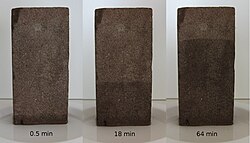
Research by Christopher Hall and William D Hoff indicates that the actual height of the damp depends on several variables: the thickness of the wall, the sorptivity (the rate at which a material absorbs water) of the structure, and the rate of evaporation from the surface. Other contributing factors include the salt content of the soil and masonry, groundwater saturation levels, and the use of internal heating.
A Brief History of Damp Prevention
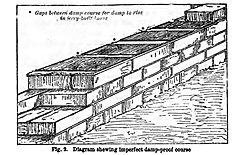
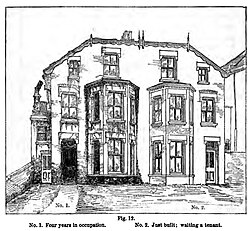
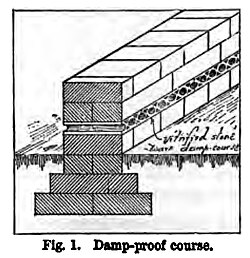
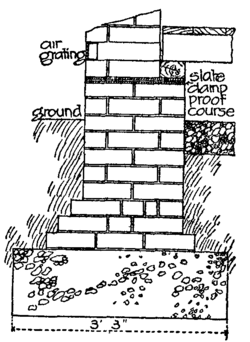
The struggle against moisture is ancient. The Roman architect Vitruvius provided early guidance on constructing buildings to avoid rising damp. By the Victorian era, the issue was well-documented in medical and social literature. The Public Health Act 1875 eventually introduced the legal requirement for a damp-proof course (DPC)—an impervious barrier built into the wall to stop water from climbing.
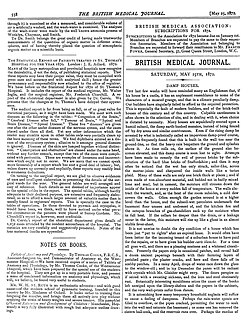
Sir Henry Burdett, a Victorian philanthropist, emphasized the necessity of using vitrified stoneware or layers of slate laid in cement to bar the upward progress of moisture. He warned that poor workmanship, such as leaving gaps between slates, rendered these protections useless.
Diagnosing the Problem
When a "tide mark" appears on a wall and no DPC is present, professional diagnosis is required. According to BRE Digest 245, the most accurate method is destructive: drilling into the wall to extract mortar samples for analysis of moisture and salt content. Because homeowners often dislike this method, electrical moisture meters are commonly used. However, these were originally designed for timber and cannot accurately measure masonry moisture; they serve only as indicators of dampness patterns.
Treatment and Remedial Solutions
For buildings over 100 years old or those with failed barriers, several treatment options exist:
Physical and Chemical Damp Proof Courses
- Replacement Physical DPC: Replacing the physical barrier in the wall.
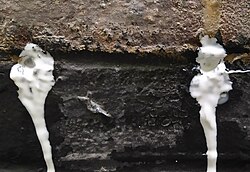
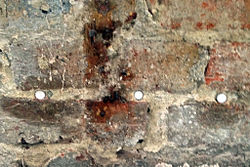
- DPC Injection: The most common modern method, involving the injection of liquids or creams (silane/siloxane) into the mortar to repel water.
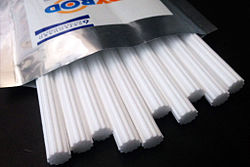
- Damp-proofing Rods: Rods inserted into drilled holes that diffuse active ingredients along the mortar line.
Alternative Methods
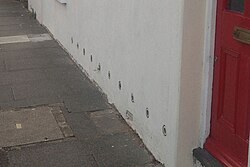
- Porous Tubes: Ceramic tubes installed to encourage evaporation and reduce the rise of damp.
- Land Drainage: Installing a "French drain" (a trench with a porous pipe and aggregate) to reduce the amount of water available for the wall to absorb.
- Electrical-osmotic Systems: Using electrical currents to repel water.
Effectiveness and Industry Debate
There is ongoing debate regarding the effectiveness of these treatments. The Building Research Establishment (BRE) generally recommends DPC injection or physical replacement. However, the Royal Institute of Chartered Surveyors (RICS) has expressed caution, arguing that some third-party accreditation tests use masonry panels that do not accurately replicate real-world walls.
Research from Belgium (CTSC) suggests a hierarchy of effectiveness: physical DPCs perform best, followed by chemical DPCs, with electro-osmosis and atmospheric syphons being the least effective.
Replastering and Redecoration
Treatment is often followed by replastering, especially if hygroscopic salts (salts that attract moisture from the air) have damaged the existing finish.
Plastering Options
- Sand-Cement Render: A hard render used to block salts from migrating to the surface.
- Porous Renders: Based on German WTA specifications, these allow salts to crystallize within the pores of the plaster rather than on the surface, preventing decorative damage.
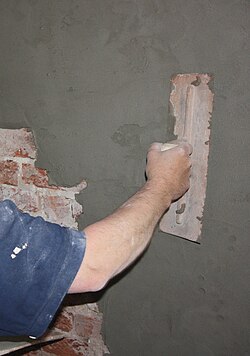
Experts recommend delaying redecoration for as long as possible to allow the wall to dry. When painting, porous decorations such as matt emulsions or water-based paints should be used to allow the wall to "breathe." Gloss paints, vinyl paints, and wallpapers should be avoided for at least one year following treatment.
| Method | Mechanism | General Effectiveness |
|---|---|---|
| Physical DPC | Impervious barrier (slate/stoneware) | Highest |
| Chemical Injection | Silane/siloxane pore lining | High (if installed correctly) |
| Damp-proofing Rods | Diffused chemical barrier | Moderate to High |
| Porous Tubes | Increased evaporation | Moderate |
| Land Drainage | Reducing water source | Supportive/Preventative |
| Electro-osmosis | Electrical repulsion | Lower |
Frequently Asked Questions
How high can rising damp actually go?
While typically remaining below 1.5 metres (4.9 ft), there have been documented cases where moisture has risen up to 5 metres (16 ft) depending on the material's porosity and evaporation rates.
Can a moisture meter accurately diagnose rising damp?
Not entirely. Most electrical moisture meters were designed for timber and cannot accurately measure the moisture content of masonry. They provide patterns that indicate dampness but should be used alongside other diagnostic methods.
What is the difference between liquid and cream DPC injections?
Both use silane/siloxane active ingredients to repel water. However, creams have become more popular since the early 2000s because they are easier to apply and do not leak from injection holes as easily as liquids.
Why is it important to use matt emulsion paint after treatment?
Matt emulsions are porous, meaning they allow the wall to "breathe" and release remaining moisture. Non-porous options like gloss or vinyl paints can trap moisture, potentially leading to further issues if applied too soon.
What are hygroscopic salts?
These are soluble salts carried into the masonry by groundwater. Once the water evaporates, the salts remain and actively attract moisture from the air, which can keep walls feeling damp even after the primary water source is blocked.