
Ritualist Controversies in the 19th Century Church of England
During the 19th century, the Church of England was gripped by a series of intense conflicts known as the Ritualist controversies. These disputes centered on the introduction of ceremonial practices and liturgical forms associated with Roman Catholicism into Anglican worship. What began as a theological debate evolved into a cultural war, leading to legal battles, the imprisonment of priests, and a fundamental reimagining of English religious identity.
Origins of the Ritualist Movement
Ritualism emerged from the "second generation" of Anglo-Catholicism. This movement followed the initial Oxford Movement, which had been led by figures such as John Henry Newman, Edward Bouverie Pusey, and John Keble. While the first generation focused primarily on theology and ecclesiology—arguing that the Church of England was fundamentally Catholic rather than Protestant—they generally adhered strictly to the Book of Common Prayer.
After 1845, when Newman left the Church of England for Roman Catholicism, the focus shifted. Later Anglo-Catholics began to believe that theological convictions required liturgical expression. While they generally avoided the widespread use of Latin, they championed rituals that visually and physically signaled the church's Catholic heritage.
Interestingly, Edward Bouverie Pusey, a leader of the first generation, initially had little sympathy for the preoccupation with ritual. However, his stance shifted toward solidarity when ritualist priests began to be prosecuted and imprisoned under the law.
The "Six Points" and Controversial Practices
Between the 1850s and 1890s, specific practices—often colloquially dismissed as "bells and smells"—became flashpoints for conflict. The most significant of these were known as the six points:
- Eucharistic vestments: The use of the chasuble, stole, alb, and maniple.
- Incense: The use of a thurible to burn incense during services.
- Lights: Placing six candles on the high altar.
- Unleavened bread: Using wafers for communion instead of common bread.
- Eastward facing celebration: The priest facing the altar (and east) with the congregation, rather than standing at the "north side" of the table as mandated by the 1662 Book of Common Prayer.
- Mixed chalice: Mixing water with the sacramental wine.
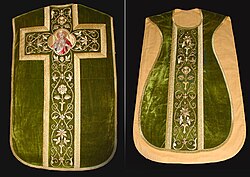
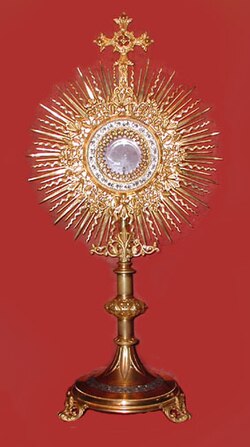
Beyond the six points, other contentious practices included the use of the term "Mass" for the Eucharist, the ringing of bells during the elevation of the host, liturgical processions, and the decoration of churches with icons and statues of saints. The movement also promoted the restoration of chancels and the use of robed choirs accompanied by pipe organs.

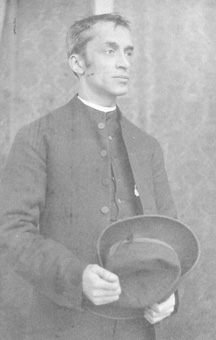
These practices were not merely aesthetic choices; they were often illegal. The Public Worship Regulation Act 1874 was designed to curb these rituals, leading to the prosecution of priests such as Arthur Tooth (1876), Sidney Faithorn Green (1879), and Richard William Enraght (1880).
The Debate Over the "North Side"
The requirement for the priest to stand at the "north side of the Table" was a point of significant confusion and conflict. Interpretations varied from standing at the north end of a fixed table to standing at the north end of a free-standing table facing the nave. Ritualists sought to return to the practice of facing the altar, mirroring pre-Reformation traditions.
Ritualism as a Cultural and Political Threat
Opposition to ritualism often transcended theology, touching upon English national identity. To many, Catholic ritual was seen as "un-English," associated with the perceived autocracy of foreign powers like Spain, France, and Ireland. Protestantism was viewed as the bedrock of anti-despotic values, while complex rituals were seen as a "disguise" for authoritarianism.
Ritualists countered this by emphasizing the "Englishness" of their practices. They kept the liturgy in English and revived the Sarum Rite (the pre-Reformation liturgy of Salisbury) and Gothic architecture, which they viewed as authentically English, as opposed to the Baroque style associated with the Continental Counter-Reformation.
Social and Political Dimensions
Despite accusations of supporting despotism, ritualism had a diverse political base. While some supporters were high-ranking conservatives, many clergy working in impoverished "slum parishes" became radicalized, leading to the rise of Christian socialism. These priests argued that visually rich liturgy provided a powerful, symbolic contrast to the drabness of poverty and was more accessible to illiterate populations than cerebral, text-heavy worship.
The Reaction: Muscular Christianity
Some opponents viewed the aestheticism of ritualism as a sign of "effeminacy," labeling clergy as "man milliners" more interested in lace than doctrine. This backlash contributed to the growth of muscular Christianity, a movement emphasizing physical health, manliness, and a more straightforward, less theatrical approach to faith.
Summary of Ritualist Controversies
| Category | Key Elements / Figures | Primary Conflict |
|---|---|---|
| The Six Points | Vestments, incense, candles, wafers, eastward facing, mixed wine | Legal prosecution via Public Worship Regulation Act 1874 |
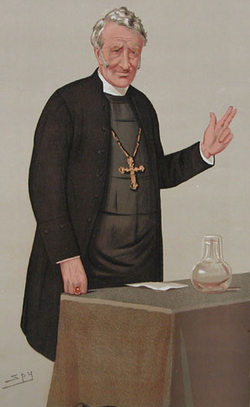
| Key Figures | Arthur Tooth, Sidney Faithorn Green, Edward King | Imprisonment and legal battles over liturgical practice |
| Cultural Clash | Protestant identity vs. Anglo-Catholicism | Perception of ritual as "un-English" or autocratic |
| Social Impact | Christian socialism, slum parish outreach | Using symbol and action to reach the urban poor |
Frequently Asked Questions
What were the "six points" of ritualism?
The six points were the most contentious liturgical practices: the use of Eucharistic vestments, incense, six altar candles, unleavened wafer bread, eastward facing celebration of the Eucharist, and mixing water with the sacramental wine.
Why were ritualist priests prosecuted?
Priests were prosecuted primarily under the Public Worship Regulation Act 1874, as their practices were seen as violations of the Book of Common Prayer and a threat to the Protestant identity of the Church of England.
How did ritualism relate to the urban poor?
Many ritualists served in impoverished slum parishes, arguing that aesthetically rich liturgy was more effective for outreach than text-heavy services, providing beauty and symbolic meaning to those with low literacy rates.
What was the relationship between ritualism and the Oxford Movement?
Ritualism was the "second generation" of the Oxford Movement. While the first generation focused on theological and ecclesiological arguments about the church's Catholic nature, the ritualists sought to express those beliefs through physical worship and ceremony.
What is the lasting legacy of the ritualist movement?
The ritualists largely succeeded; practices that once sparked riots—such as the use of vestments, candles, and wafer bread—became normative or widespread in the Church of England throughout the 20th century.