
Rome: The Eternal City's Journey from Ancient Empire to Modern Capital
Known as the Urbs Aeterna (Eternal City) and Caput Mundi (Capital of the World), Rome is a city where millennia of human history are etched into every stone. As the capital of Italy and the heart of the Lazio region, it serves as a living museum, blending the remnants of a global empire with the vibrancy of a modern European metropolis.
From its legendary founding to its current status as a global hub of religion, art, and politics, Rome continues to exert a profound influence on Western civilization.
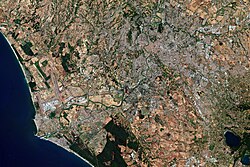
Key Facts
- Founded: Traditionally dated to April 21, 753 BC by King Romulus.
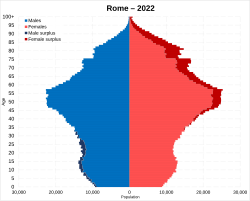
- Population: Approximately 2,746,984 in the municipality (2025), ranking 1st in Italy and 8th in Europe.
- Global Status: A UNESCO World Heritage Site since 1980.
- Economy: Metropolitan GDP (nominal, 2023) of €201.290 billion.
- Education: Home to Sapienza University of Rome, the largest university in Europe with 122,000 students.
- Governance: Managed by a Strong Mayor–Council system, currently led by Mayor Roberto Gualtieri.
The Evolution of a Metropolis
Ancient Foundations and the Empire
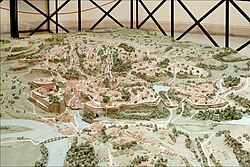
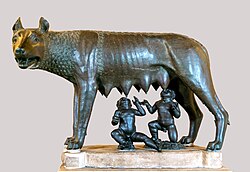
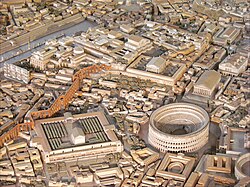
The origins of Rome are steeped in myth, most notably the story of the twins Romulus and Remus. Over centuries, the city evolved from a small settlement into the center of a vast empire. The Roman Forum served as the nerve center of this civilization, housing the political, legal, and economic institutions of the state.
![The Roman Forum contains the ruins of the buildings that represented the political, legal, religious and economic centre of ancient Rome, constituting the "nerve centre" of all Roman civilisation.[33]](/images/63/25/6325b48061902d1e2af718b33824768bb243fad7385a62d316dd7efcd5b5f519.jpg)
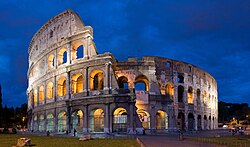
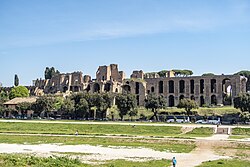
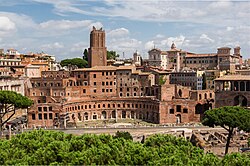
The architectural ambition of the Empire is still visible today in the Colosseum, the Imperial fora (monumental public squares), and the lavish palaces of the Palatine Hill, which showcased the wealth of emperors from Augustus through the 4th century.
Middle Ages to the Renaissance
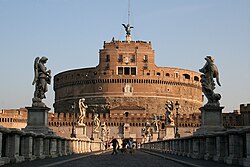
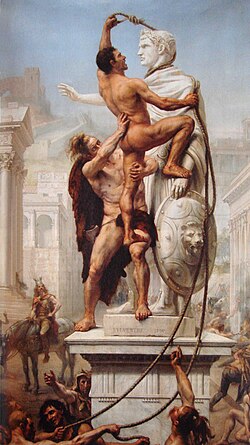
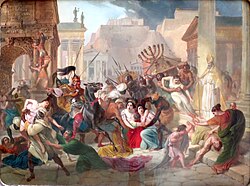
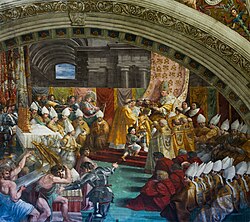
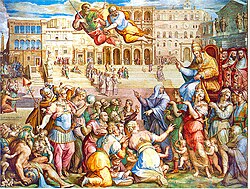
Following the decline of the Empire and subsequent sacks by the Visigoths in 410 and the Vandals in 455, Rome transitioned into a center of ecclesiastical power. The city became the "Throne of St. Peter," with the Papacy playing a central role in its governance and urban development. The Middle Ages saw the transformation of monuments, such as Hadrian's Mausoleum becoming the Castel Sant'Angelo.
Modern Unification and Contemporary Rome
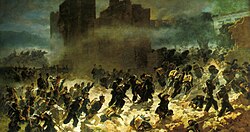
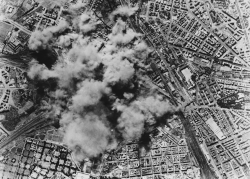
The modern era was defined by the Italian unification process, culminating in the Capture of Rome in 1870 when Bersaglieri troops breached the Aurelian Walls at Porta Pia. In the 20th century, the city survived the hardships of World War II, including Allied bombardments in 1943, to emerge as a modern capital.
Geography and Urban Landscape
![The Temple of Portunus, god of grain storage, keys, livestock and ports,[32] built in 120–80 BC](/images/1a/6a/1a6a8507c0cef661be1098d04d837bc811324d3f59981d089b841d89dea4cdbc.jpg)
Climate and Environment
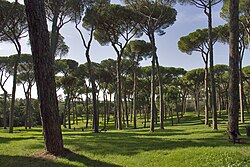
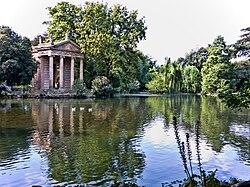
Rome experiences a Mediterranean climate. The city has seen extreme weather events, including a record high temperature of 42.9 °C (109.2 °F) on July 18, 2023. Its landscape is dotted with expansive green spaces, such as the Villa Borghese and Villa Doria Pamphili, characterized by iconic stone pines.
City Infrastructure and Economy
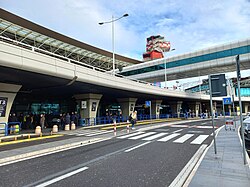
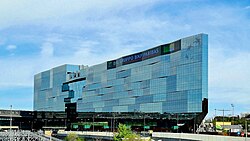
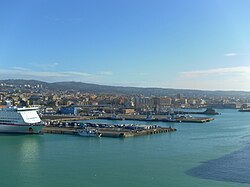
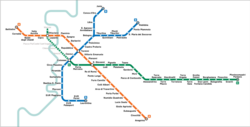
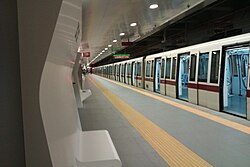
Today, Rome is a diversified economic center. It hosts the headquarters of global entities like the Food and Agriculture Organization (FAO), as well as corporate giants such as Eni and Enel. The city's transport network includes a comprehensive metro system and the Leonardo da Vinci–Fiumicino Airport, connecting the capital to the world.
Culture, Art, and Lifestyle
Architectural Wonders
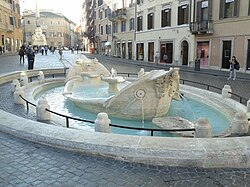
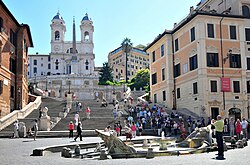
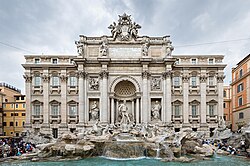
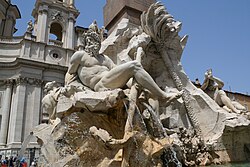
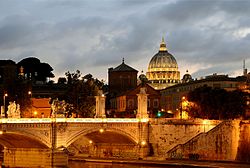
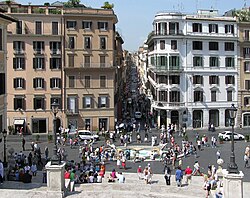
Rome is world-renowned for its fountains, such as the Trevi Fountain and Bernini's Fontana della Barcaccia, and its historic bridges. The city also houses the Vatican Museums, which, as of 2022, are the second most visited art museums globally.
![As of 2022, the Vatican Museums are the second most visited art museum in the world.[167]](/images/85/ef/85ef9dce3d187b6083481dd6077bda7a454e3ddd86d398504563a9aa5c3c2ebf.jpg)
Culinary and Social Life
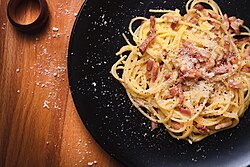
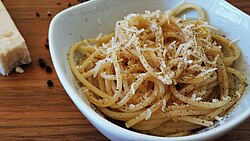
Roman culture is deeply tied to its cuisine, with traditional dishes like Spaghetti alla carbonara and Cacio e pepe remaining staples of the local diet. The city also remains a powerhouse of cinema, hosting Cinecittà, the largest film studio in Europe.
Rome at a Glance
The following table summarizes the key demographic and geographic data for the city.
| Category | Municipality (Comune) | Metropolitan City |
|---|---|---|
| Population | 2,746,984 | 4,223,885 |
| Area | 1,287.36 km² | 5,363.28 km² |
| Population Density | 2,133.81/km² | 787.556/km² |
| Nominal GDP (2023) | N/A | €201.290 billion |
| GDP Per Capita | N/A | €47,665 |
Frequently Asked Questions

![Palazzo Senatorio, seat of the municipality of Rome. It has been a town hall since 1144, making it the oldest town hall in the world.[126]](/images/cf/c2/cfc26a18bebd51086859f286aee1ea51b0fe7177bd9480e4fbdad7b6fde382f6.jpg)
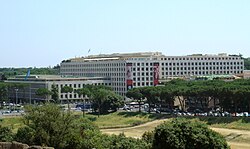
![Palazzo Eni, in the EUR business district, is the headquarters of Eni, considered one of the world's oil and gas "supermajors".[157]](/images/9b/09/9b09580da241e9d63904912c96b85273754a6c6c7f7c477ed7bb52667a01d1b8.jpg)
![Enel's headquarters in Rome, the second largest power company in the world by revenue after the State Grid Corporation of China.[158]](/images/39/7a/397a7c19cba18ba9d9c8b80a6a1231c1b9f516569d9244cc46c381c20dd478b2.jpg)
![Sapienza University of Rome. It was founded in 1303 and is as such one of the world's oldest universities,[181] and with 122,000 students, it is the largest university in Europe.[182]](/images/fb/6c/fb6c7aa1e52d51632aef66886b128fc7ef092993485dda37b2c05f261c7df1c3.jpg)
![Entrance to the Cinecittà studios, the largest film studio in Europe[209]](/images/71/db/71db7d3b5b28ea277ba5a6b7a5a069f7288926a2899841bee29c1d4b97bc040f.jpg)
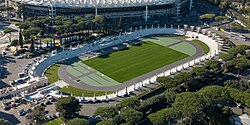
![Stadio Olimpico, home of AS Roma and SS Lazio, is one of the largest sports stadiums in Europe, with a capacity of over 70,000.[212]](/images/99/11/9911f14e61d4b59c940bb58c2e10c2bf4d0fe70e8ccd56aad7fccb639668e85b.jpg)
When was Rome founded?
According to legend, Rome was founded on April 21, 753 BC, by King Romulus.
What is the largest university in Europe?
Sapienza University of Rome is the largest university in Europe, with an enrollment of 122,000 students.
Which city is Rome's exclusive twin partner?
Since April 1956, Rome has been exclusively and reciprocally twinned with Paris, France.
What are some typical Roman dishes?
Typical Roman cuisine includes Spaghetti alla carbonara and Spaghetti cacio e pepe.
What is the significance of the Roman Forum?
The Roman Forum was the political, legal, religious, and economic center of ancient Rome, acting as the "nerve center" of Roman civilization.