
Russian and Turkish New Year's Tree Traditions
While the image of a decorated evergreen tree is often synonymous with Christmas, in Russia and Turkey, this tradition serves a different purpose. In these regions, the New Year's tree is a central symbol of secular celebration, blending historical European influences with local political and cultural shifts. Though they resemble Christmas trees in appearance—typically using spruce varieties—these trees are stripped of religious connotations to fit the social fabric of their respective nations.
Key Facts
- Yolka is the Russian term for the New Year's tree, a tradition introduced by Peter the Great in the 17th century.
- The Soviet Union transitioned the Christmas tree into a secular New Year's tree to remove religious associations.
- Yılbaşı Ağacı is the Turkish New Year's tree, adopted during the modernization of Turkey in the late 1920s.
- Both traditions primarily use spruce trees and secular decorations.
- In Turkey, the tradition is widely adopted despite a predominantly Muslim population.
The Evolution of the Russian Yolka
The practice of decorating a Yolka (fir tree) began in the 17th century when Peter the Great imported the custom from Europe. In 1699, he decreed that the New Year would be celebrated on January 1st rather than September 1st, ordering that pine, juniper, and fir branches be used to decorate homes and main streets.
However, the tradition faced significant interruptions. In 1916, the Synod banned the Yolka because it was viewed as a German tradition during World War I. Following the 1917 Revolution, the Soviet antireligious campaign further suppressed Christmas and Easter. The League of Militant Atheists actively campaigned against these holidays, even establishing an antireligious holiday on the 31st of every month.
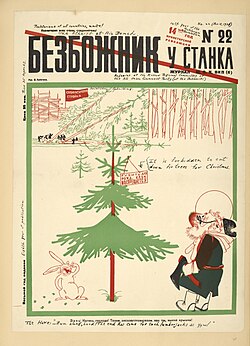
The Secular Rebirth of the Tree
The tree returned to public favor in 1935 following a letter by Pavel Postyshev published in Pravda. Postyshev argued that the tree should not be dismissed as a "bourgeois indulgence" but should instead be provided to all children of the working class in schools, orphanages, and clubs. This shift effectively transformed the religious Christmas tree into a secular New Year's tree.
By 1937, a New Year's tree was installed in the Moscow House of the Unions, making an invitation to this event a point of pride for Soviet children. Following the collapse of the USSR, the stigma surrounding religion faded, though the secular New Year's tradition remains prominent.
The Turkish Yılbaşı Ağacı
In Turkey, the Yılbaşı Ağacı (New Year's tree) mirrors the appearance of a Christmas tree. Because approximately 95% of the population is Muslim, the tree is specifically associated with the New Year rather than the Christian holiday.
The tradition gained traction in the late 1920s during Turkey's modernization period, when the Gregorian calendar replaced the Islamic and fiscal calendars. While Christian communities in Turkey already used Christmas trees, these began to be sold and adopted by the general public as New Year's trees.
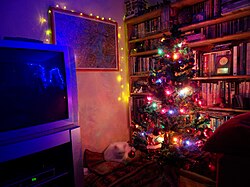
Today, these trees are typically displayed from early December through late January. The custom of gift-giving, originally associated with Christmas, has similarly transitioned into a New Year's tradition. This practice is often viewed as a blend of Western influence and Turkish cultural adaptation.
Modern Cultural Tensions
Despite its popularity, the tradition occasionally faces opposition. In 2024, students at Yıldız Technical University in Istanbul encountered Islamically motivated protesters who argued that the tree had no place in Turkey. Despite these protests and prayers held in front of the tree, the students successfully completed the decorations.
Comparison of New Year's Tree Traditions
| Feature | Russian Tradition (Yolka) | Turkish Tradition (Yılbaşı Ağacı) |
|---|---|---|
| Primary Meaning | Secular New Year celebration | Secular New Year celebration |
| Historical Origin | 17th Century (Peter the Great) | Late 1920s (Modernization era) |
| Key Driver | Soviet state secularization | Adoption of Gregorian calendar |
| Common Tree Type | Spruce | Spruce |
| Religious Context | Replacement for banned Christmas tree | Secular alternative for Muslim majority |
Frequently Asked Questions
Why is the Russian tree called a New Year's tree instead of a Christmas tree?
The transition occurred during the Soviet era when religious celebrations were prohibited. To maintain the joy of the tradition for children while removing religious symbols, the state rebranded the Christmas tree as a secular New Year's tree.
Who reintroduced the tree to Soviet children?
Pavel Postyshev is credited with the reintroduction after publishing a letter in Pravda on December 28, 1935, urging the installation of trees in schools and community centers for the working class.
When is the Yılbaşı Ağacı typically displayed in Turkey?
The tree is usually put up between the beginning of December and the end of January, with New Year's Eve serving as the midpoint of the celebration.
Is the Turkish New Year's tree considered a religious symbol?
No, it is generally viewed as a secular tradition or an example of westernized Turkish culture, as the majority of the population is Muslim and does not celebrate Christmas.
What happened to the Yolka tradition during World War I?
In 1916, the Synod banned the Yolka because it was perceived as a tradition originating in Germany, which was Russia's enemy during the war.